|
Yesterday was Child Exploitation Awareness Day. The national theme this year is preventing abuse through exploitation by working in partnership, reinforcing that safeguarding children is a shared responsibility across agencies, communities and the wider public.
Child exploitation is a form of abuse where children and young people are manipulated, coerced, threatened or groomed into sexual or criminal activity. Children are always victims, and exploitation can happen online or in the physical places and spaces where children spend their time.
The day highlights the issues surrounding CE and encourages everyone to think, spot, and speak out against abuse, promoting zero tolerance for adults forming inappropriate relationships with children or for the exploitation of children by their peers, and reinforcing the importance of remaining vigilant at all times.
Key Child Exploitation Messages for Partners to Share
- Child exploitation is happening in Cumberland - all children can be vulnerable.
- Everyone has a role in noticing concerns, sharing information, and helping to disrupt harm
- Use professional curiosity - every contact with a child or family is an opportunity to spot changes and act early.
-
Share intelligence with the police and partner agencies is one of the most effective ways to prevent and disrupt exploitation.
-
The language we use matters - children must always be seen as victims, never blamed. Children and young people cannot consent to their own exploitation.
- Partners are encouraged to actively promote these messages across teams, networks, and communities.
|
Youth Connect Team – Support for Children Vulnerable to Grooming or Exploitation
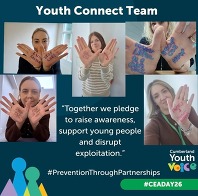
When a child is identified as vulnerable to grooming or exploitation, the Youth Connect Team provides direct support to help them build safe, positive and trusted connections.
Our Youth Connect Workers:
- Provide one‑to‑one support to children who are vulnerable to, or at risk of, exploitation.
- Support families, siblings (where affected), carers and the wider professional network to strengthen safety and protective factors.
- Undertake Return Home Chats with children who have been reported missing, helping to understand risks and reduce future harm.
- Work closely with health services, education providers, care homes and community settings (such as youth zones or cadets) to raise awareness, promote safety and disrupt exploitation.
Spotting the Signs of Exploitation
- Going missing from home or care.
- Frequent absences from school.
- Receiving gifts from unknown sources.
- Signs they are under the influence of alcohol or drugs.
- Self-harming.
- Committing theft or shoplifting.
- Becoming more secretive or distant.
- Physical injuries.
- An extra mobile phone, which cannot be accounted for.
- Other unexplained items, such as money or clothes.
- Signs of sexual activity, such as condoms, contraceptive pills or pregnancy tests.
- Relationships with older people.
- Abandoning their usual friends and social circle.
|
Other support available for a child, their family and the local community

Cumbria Constabulary Child Centred Policing Team raise awareness within schools, the local community and work directly with children who are vulnerable to exploitation.
The Ivison Trust offers advice a guidance for parents and carers. Delivers free training sessions to raise awareness of exploitation.
The Children’s Society offers a wealth of information and resources as well as direct support for children that are exploited.
|
 |
|
The Philomena Protocol is a safeguarding tool used across Cumbria to help locate cared for children and young people quickly if they go missing. These children and young people have usually had a history of missing episodes or CE concerns. This protocol shares any information which would support Police to quickly locate a child if they were reported missing. Further guidance on the Philomena Protocol can be found here
National Philomena Protocol Form.docx
|

Child Exploitation Level 1
CE Level 1 training is available through our Virtual College Platform and provides a foundation in recognising child exploitation and extra‑familial harm. Practitioners are encouraged to complete this module before attending any Level 2 training.
To access the CE Level 1 e‑learning course, you will need to create an account via the CSCP website. All details can be found here.
Child Exploitation Level 2 Training
The CE Level 2 training which is face to face, builds on the foundational knowledge from Level 1 and develops practitioners’ skills and confidence in recognising, assessing and responding to child exploitation and extra‑familial harm.
The course provides a deeper understanding of:
- Signs, indicators and behaviours that may suggest exploitation.
- Risk factors and vulnerabilities that increase the likelihood of harm.
- How to apply safeguarding frameworks, processes and legal duties effectively in practice.
It also strengthens multi‑agency working, helping practitioners understand roles and responsibilities across the partnership and supporting them to create safe, proportionate and appropriate plans for children who may be at risk.
Future CE Level 2 dates:
Monday 18th May - Carlisle (venue to be confirmed) 10:00 am – 12 pm
Wednesday 23rd September - Workington (venue to be confirmed) 1:00 pm – 3 pm
Thursday 28th January 2027 - Millom (venue to be confirmed) 1:00 pm – 3 pm
Booking will be available via the CSCP website once venues are confirmed.
|
|
|
|
|