Day 3 - Creating a Safe Sleep Environment: Airway, Temperature & Position
Today we turn to one of the most important aspects of safer sleep: creating an environment that supports a baby’s natural breathing and protects them from avoidable risks.
Professionals emphasise that safe sleep is not just about individual items, but about how those items are arranged and used within the environment. Clear, practical messages from practitioners can make a significant difference to how families prepare sleep spaces.
A safe environment is built on consistency, small decisions made day and night that, together, reduce the risk of Sudden Infant Death Syndrome (SIDS).
Protecting the Baby’s Airway
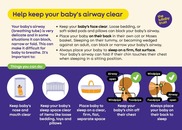
A young baby’s airway (breathing tube) is extremely delicate. In certain positions or situations, it can block, narrow or fold, making breathing more difficult. The Lullaby Trust Airways Easy Read Card is an important tool for helping families understand how easily this can happen and how to prevent it.
Things to do to support the airway:
- Keep baby's nose and mouth clear
- Keep your baby's sleep space clear of items like loose bedding, toys and pillows
- Place baby to sleep on a clear, firm, flat, separate space
- Keep your baby’s chin off their chest
- Always place your baby on their back to sleep
Things to avoid:
- Avoid using loose bedding that could cover your baby's face
- Never place your baby to sleep on their tummy or on their side
- If your baby falls asleep in a sitting position move them onto a clear, flat, firm surface
Maintaining a Safe Room Temperature
Safer sleep guidance recommends keeping the sleep environment between 16–20°C, as overheating is a recognised risk factor for SIDS.
|
Safer Sleep in Settings
The safest place for babies to sleep is on a clear, flat and separate sleep space such as a:
- moses basket
- cot
- crib
- travel cot
- carrycot
We advise against sleeping babies in a seated or inclined position such as in
- pushchairs/buggies
- car seats
- bouncy chairs
- swings
- hammocks
Advice for Early Years settings, sleeping space for babies - Poster for Childcare Providers (Lullaby Trust)
Useful Reminders for Families:
- Babies do not need extra layers, hats or thick blankets indoors.
- If using a sleep bag, families should choose an appropriate tog based on the room temperature.
- Overheating can be caused by soft bedding, padded sleep products or excessive clothing
- Caregivers can check for signs of overheating by feeling the baby’s chest or back of the neck (hands and feet can naturally feel cooler).
Practitioners may wish to demonstrate what “light sleepwear” looks like in practice, as many carers overestimate how warm a baby needs to be.
- Keeping the Sleep Space Clear
A clear sleep space is one of the most effective ways to reduce sleep-related risks.
The sleep space should NOT contain:
- Soft toys
- Cushions
- Bumpers
- Rolled blankets
- Free-hanging blankets
- Sleep positioners
- Pods, nests or loungers
- Spare bedding or clothing
These items can restrict airflow and contribute to overheating or suffocation risks.
Keeping babies in the same room as their caregivers for sleep, both day and night and ideally for the first six months, is strongly recommended and is shown to significantly reduce the risk of SIDS.
Why room sharing matters:
- Caregivers can respond quickly if the baby’s breathing or position changes.
- It avoids accidental risks associated with sofa or chair sleeping, which increases risk by up to 50%
- Families can monitor room temperature, breathing cues and feeding patterns more easily.
Professionals can encourage families to view room sharing as an important part of safer sleep practice.
Supporting Families in Real Homes
Families want practical, judgement‑free guidance tailored to their home environment. Many households may have space constraints, multiple siblings, or limited storage. The simplest advice is often the most helpful:
- Focus on the sleep surface first - clear, flat, safe.
- Remove items gradually if families feel unsure or worry about “comfort.”
- Help them understand that safety outweighs decoration or aesthetics.
- Encourage regular checks - is the sleep space still safe after feeding, settling or moving the baby?
These gentle, achievable steps can help build safe routines.
If your baby falls asleep in a product like these move them onto a clear, flat, firm space.
- Bouncer
- Baby swing
- Baby bean bag
- Sleep positioner and pillow
- Pod/nest
- Hammock
Useful Resources for Practitioners
|