Welcome to the Cumberland HDRC November update!
We're excited to share with you highlights, features and updates from our annual event - Connecting for Change. We teamed up with Westmorland and Furness Council to showcase some of the brilliant work being carried out across Cumbria and it was an inspiring day filled with great conversation, learning, and growing.
A special thank you to all the presenters who shared their work, insights, and experiences. We’re grateful for the time, engagement, and enthusiasm all our attendees brought to the event. Looking forward to Cumberland HDRC 2026!
Our fantastic project officer Lianna Barrie started off the day with a wonderful presentation on our community engagement project The Art of Wellbeing, with artist Stefan Escreet leading our attendees to create their own puppets. What is a better way to learn about the sessions than having a go yourself!
Our Art of Wellbeing project visited over 15 locations across Cumberland, offering free, hands-on sessions where participants of all ages could craft their own paper puppets and invented character biographies for them. Attendees then imagined these characters lived in the community the session was held which prompted discussion about health and wellbeing provision in that place and reflections about mental health, physical wellbeing, and the everyday challenges people face.
Stefan recorded these contributions and has edited this into an audio backdrop to the exhibition of all the puppets at Rosehill Theatre in October 2025. Our huge community of 130 puppets (130 to be exact!) were arranged into tableaux with the puppets having fun, reflecting the fun that was had in the creative sessions.
You can hear audio here:
Our puppets are currently having a rest from their time in the spotlight, but we are looking for other opportunities where they can shine. If you have any exhibition space available, please contact Communications and Engagement officer Sam:
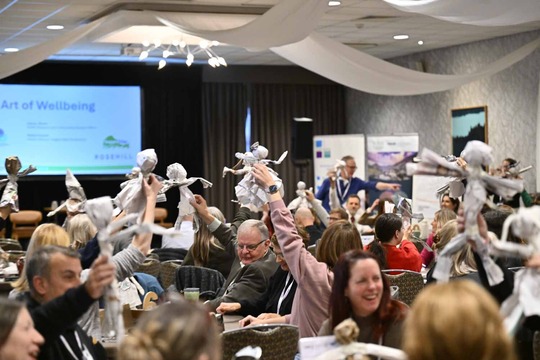 Attendees and their puppet creations
Our training officer Dr Jae-Llane Ditchburn shared a look at Cumberland HDRC’s training programme throughout 2025, with 47 sessions delivered and 365 attendees taking part. Alongside delivering the training, she supported on training and evaluation for Port of Workington colleagues and facilitated the development of a training evaluation form with ODTW team using the Delphi method. She also shared a sneak peek of what’s in store for 2026, our new Research Culture, Capability and Capacity training programme! Stayed tuned for more information in the new year.
Speakers also included Professor Tom Grimwood from University of Cumbria on University Collaboration in Cumberland HDRC Training and Cumberland Council colleagues Emma Mackie and Ali Bragg who are working towards their MRes in rethinking food waste policy and the impact and effectiveness of suicide prevention training and tools in general practice in North Cumbria.
Promoting Autonomy and Change Ltd (PAC Therapy) Development Manager Jenna Sutherland joined the session to share their Theory of Change, completed following attending Cumberland HDRC’s training sessions. PAC therapy provide therapeutic interventions for Children and Young People aged between 7-25 years old within Cumbria. Their vision is a world where Cumbrian young people can access the support they need, when they need it in order to live their best life and reach their full potential.
Jody Ferguson from Cumbria Local Nature Partnership and Nancy Holt from Cumberland Council took to the stage to discuss Cumbria’s Natural Health Service. They aim to develop a plan for encouraging participation in the natural world, develop opportunities for natural and green social prescribing and identify and develop opportunities for collaborative projects that benefit nature, people, and health.
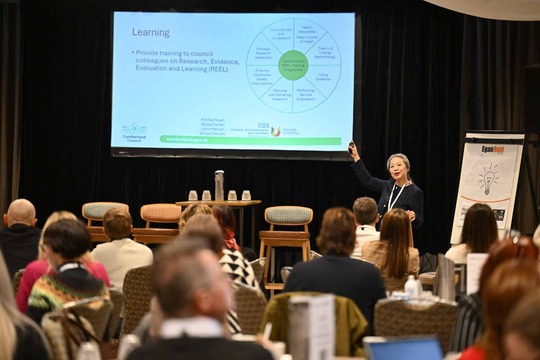 Training officer Jae-Llane Ditchburn
Elizabeth Harper – Local Authority Research Practitioner (LARP) at Westmorland and Furness Council shared how LARPs help councils improve research use and evidence-based decision-making. Highlights included smoking and vaping insight work, evidence reviews for substance use recommissioning, research briefings and Children & Young People health needs assessments.
Kate Rees, Assistant Head of Service Healthwatch Cumbria and Lancashire, presented for Healthwatch Westmorland and Furness, and highlighted women’s health engagement and co-creation following the North East and North Cumbria NHS ICB project with the NENC Healthwatch Network: The Big Conversation. Their next steps include creating safe, inclusive, and tailored services, involving women in service design, and building peer support for under-represented women.
Hannah Wright showcased the impact of community-based mental health support through Growing Well Cumbria, delivered through inclusive, evidence-based mental health and horticultural activities in natural environments. They provide swift support for individuals experiencing mental ill health, reducing pressure on health services and beneficiaries showed significant improvements: 68% made a significant step change in their wellbeing, 92% reported positive effects on mental health, and 95% felt positively challenged.
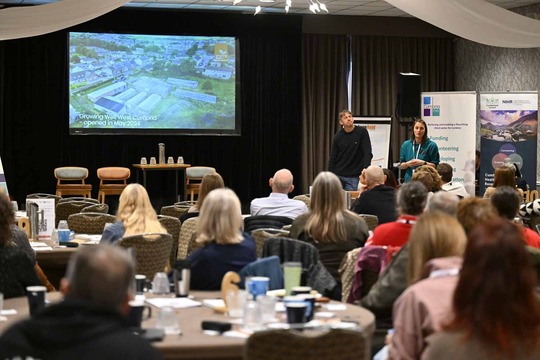 Growing Well
Research officer Dan gave us a fantastic update on Cumberland Council's Research Plan and our plans for delivering primary research and testing interventions over the upcoming years. He gave attendees a first look at the University of Cumbria research priority delivery groups and their roadmap for what's next. These new groups bring together expertise from the council, academia and our community to develop research questions, plans, and apply for funding to tackle the determinants of health.
Attendees took part in structured group dialogues to reflect on the research delivery groups:
- Poverty, obesity, food insecurity and housing
- Social care, including children cared for
- Mental health, neurodiversity and substance use
- Employment and education
Through discussing four key questions:
- What is your perspective on these issues?
- What are residents’ experiences of these challenges?
- Where are the evidence gaps?
- Why does this matter for decision-making?
We had fantastic group discussions and your feedback, ideas and perspectives are invaluable, helping shape our work to be more relevant, more inclusive, and ultimately, more impactful.
Cumberland HDRC’s data analyst Peter is now analysing the insights, and once complete, the findings will be shared with attendees and the research delivery groups to support next steps.
A big thank you to our session facilitators:
Joy Duxbury, Dr Erica Lewis, Sally Elton-Chalcraft and Elaine Bidmead at University of Cumbria
Colin Cox, Alex FitzGerald, Valerie Ayre and Chantahl Rodwell at Cumberland Council
Professor Kaz Stuart (Consultant)
Becca Dunlop at Cumbria Community Foundation
Dr Suzanne Wilson at University of Lancashire
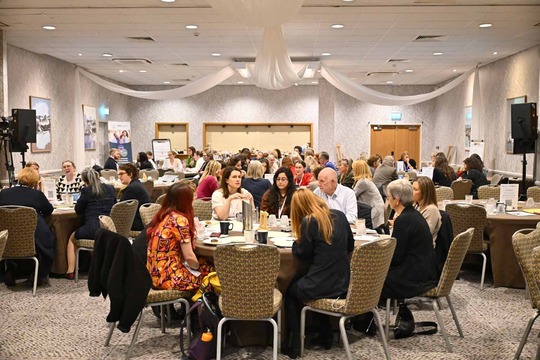 Attendees discussion
If you'd like to know more about presentations from the day, our research groups and how to be involved, get in touch here!
You can now find us on Facebook and Instagram, give us a follow!
In addition to our newsletter, we also share news on our LinkedIn page and are in the process of updating our website. You can also find us on Cumbria Observatory.
You can always find us at the end of an email so don’t hesitate to contact us at hdrc@cumberland.gov.uk with any questions, comments or if you’d like to invite us round for a cup of tea and a catch up. We love being invited to any events that might be a good fit or let us know if we can use your space and always eager to chat with the people who use your services!
|