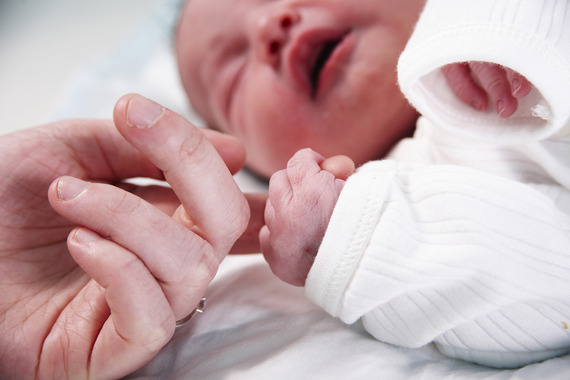
 Close up of newborn baby holding parents finger
This survey looked at the experiences of pregnant women and new mothers who used NHS maternity services in 2024.
Women who gave birth between February 1 and February 29, 2024 (and in January for trusts with fewer than 300 eligible births in February), were invited to take part. The fieldwork was conducted from May to August 2024, with 18,951 responses received, resulting in a 41% response rate.
Overall, the results highlight areas of improvement over the past year, especially in access to mental health support during pregnancy. However, it also reveals ongoing challenges in maternity care, with reports of poorer experiences in certain aspects. These include communication during labour and birth, the information provided during hospital care after birth, and involvement in postnatal care - areas where feedback suggests a longer-term decline in positive feedback.
In September we published our maternity improvement resource, informed by findings from our National Maternity Inspection Programme. This shares practical examples of where providers can drive improvement in triage, incident management, leadership and culture, and health equity.
Share for Better Care
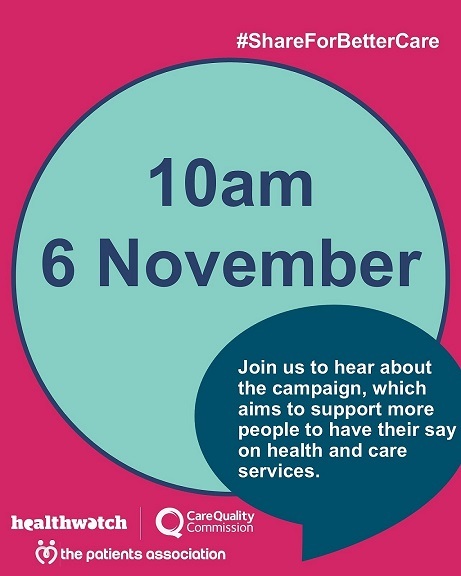
We recently we held a webinar with Healthwatch England, hosted by one of our campaign partners the Patients Association.
Attended by 180 people, a mixture of the public, health and social care staff and other stakeholders – it was a really engaging event with challenging but fair questions.
Peoples’ experiences can provide vital lessons for the health and care sector, helping it understand what is working and what needs improvement.
Watch the webinar and:
- hear about their campaign, which aims to support more people to have their say on health and care services
- understand the barriers that exist to giving feedback and potential solutions
- listen to patients explain first-hand their experience of providing feedback and how this improved their care
- discuss the current ways people provide feedback and what more can be done to ensure peoples' voices are heard.
Please look out for our joint blog with National Voices coming out in the next few weeks.
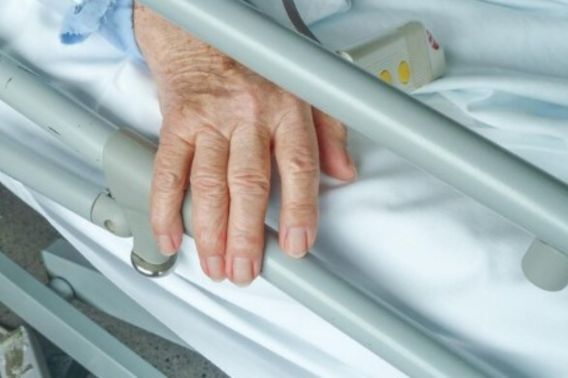 Close up image of hand holding bed rail
Profiling, adjustable or medical beds (beds) are used extensively in hospitals, care homes and people’s own homes. It is essential that these beds and associated equipment are used correctly and safely to minimize the risk of injury or death to bed occupants.
The Medicines and Healthcare products Regulatory Agency (MHRA) continue to receive reports of adverse incidents involving beds and equipment, the most serious leading to injury and death.
The following guidance, published by the MHRA sets out good practice, aimed at anyone with responsibility for the provision, prescription, use, maintenance, and fitting of beds and associated equipment. This includes the importance of appropriate staff training, correctly following manufacturers' instructions and adequate service and maintenance of beds and equipment.
Useful links:
It may not be immediately obvious to consider a bed as a medical device and it is worth noting although the medical device guidance doesn’t list profiling/adjustable beds as a medical device, the accompanying checklist does.
 Close up image of finger pointing at laptop
We are advising you of a change to some immigration documents. Biometric residence permits (BRP) and biometric residence cards (BRC), are being replaced with digital proof of immigration, called an eVisa.
From 31 October, new visa applicants are being issued with eVisas, and existing visa holders who currently prove their rights with a BRP, BRC or a passport containing a visa vignette or ink stamp, will need to create a UKVI account to access their eVisa. This needs to be completed by 31st December 2024.
Some helpful guidance on how to create an eVisa account:
-
Information on what people need to do and by when, including for those who hold a physical immigration document, and a list of grant funded organisations offering support
-
Guidance videos explaining how to access and use eVisa
- Download the eVisa Partner Pack - this includes factsheets and guides for organisations, helpful materials to inform your colleagues/organisations you may collaborate with of the transition to eVisa, including a suggested email to send and drag and drop copy for intranets.
|