 Row of grey figures. The blue figure in the centre is in a magnifying glass.
We have recently published a regulatory policy position on modern slavery and unethical international recruitment. In it we make it clear that such practices are illegal and are incompatible with our values.
Joyce Frederick, Director of Policy and Strategy, and Rebecca Bauers, Director for people with a learning disability and autistic people, have written a joint blog to introduce the policy position.
 A pair of microphones
Listen to the latest episode of our podcast, CQC Connect. Looking back at the Smiling Matters progress report, published earlier this year, we talk to Dr David Shiers. His daughter’s experience in her residential home prompted his work to highlight the importance of oral health for people with a severe mental illness.
David is joined by the manager of the home where his daughter now lives. We hear about an interesting example of how healthcare has been provided to care home residents in Salford, and also speak with dentistry, health, and adult social care colleagues from CQC.
You can share your experience and ideas on this topic too via our CitizenLab platform.
 Image of a mobile phone with social media app icons displayed
We now have a WhatsApp channel where we will be sharing the latest updates on our new regulatory approach.
Please note that as WhatsApp Channels may not be available to all users yet we won't be posting content that hasn't already been shared by other means.
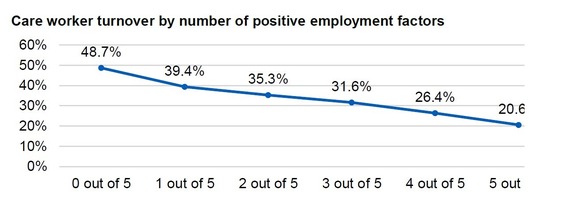 A graph of care worker turnover by number of positive employment factors
Skills for Care launched their latest data in the annual State of the Adult Social Care Sector and Workforce in England report.
The report shares new insight into retaining staff. It found 5 factors that had the greatest impact:
- being paid more than the minimum wage
- not being on a zero-hours contract
- being able to work full-time
- being able to access training
- having a relevant qualification.
Workers who could say ‘yes’ on all 5 metrics had a turnover rate of 20.6%. Comparatively, the turnover rate was 48.7% for workers without any of these things in place. This shows the impact of improving terms and conditions and investing in training.
The data used to produce this insight was from the ASC-WDS.
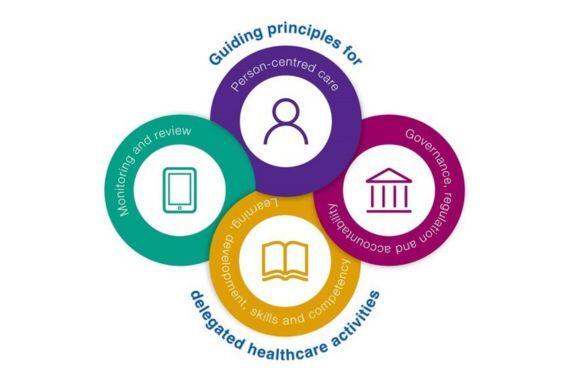 (Image description) Infographic: Four coloured circles with titles, each containing an (icon). L-R: Monitoring and review (tablet), Person-centred care (person), Learning, development, skills and competency (book), and Governance, regulation and accountability (building). Text frames the infographic: Guiding principles for delegated healthcare activities
Delegated healthcare activities to social care workers have been happening for many years. It can enable people who draw on care and support to have more choice and control. This can mean a better experience of care, if the delegation is person-centred, safe and appropriate with the right training, guidance and support.
The voluntary guiding principles, co-developed by Skills for Care with the Department of Health and Social Care and the social care sector, explore delegated healthcare activities across 4 areas:
- Person-centred care
- Governance, regulation and accountability
- Learning, development, skills and competency
- Monitoring and reviewing
The full guiding principles include easy read and accessible versions, plus videos and other supporting resources.
To help gather feedback to make ongoing improvements and inform next steps, you’re invited to undertake this short online survey. The survey will be open until January 2024 to give you time to review and use the principles before completing the survey.
You can request a conversation with the researchers via telephone or video call if you would prefer. or email your feedback to delegatedhealthcare@yorkconsulting.co.uk.
|