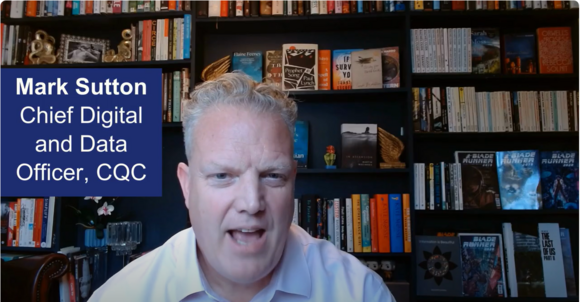
 A screenshot of Mark sutton with text on the righthand side that reads: Mark Sutton, Chief Digital and Data Officer, CQC.
Our Chief Digital and Data Officer, Mark Sutton, talks in this new video about Digital Social Care Records and why we're championing their introduction across the adult social care sector in England.
 A series of different coloured boxes linked together, each box with the outline of a person within.
We previously confirmed that the 2 integrated care systems (ICSs) where we are piloting our new assessments are.
- Birmingham and Solihull Integrated Care System
- Dorset Integrated Care System
The assessment process has now started, and each pilot system has received a request for information from us. This is so we can collect the evidence that we need to review. As part of our assessment, we are speaking directly with people using health and care services and with staff working in the ICS about their experiences.
We will also carry out on-site interviews for each ICS in the pilot. Specialist advisors and executive reviewers, who are experts in different health and care sectors, will be part of the team carrying out the assessments.
During the pilots, we will be testing our assessment methods, including how we:
- work with partners and stakeholders, including NHS England
- use feedback from providers and people using services
- involve Experts by Experience effectively in our assessments
- use our tools and methods, including the information return
- enable efficient ways of working
For each of the pilots, we want to look at:
- how leadership works
- whether systems are integrated
- progress towards reducing inequalities
- how quality and safety is managed across local services.
We will provide a report of the findings from the assessment for each ICS in the pilot. However, the Department of Health and Social Care has agreed that we should not generate ratings for these pilots.
We will complete a full evaluation of the pilot assessments and incorporate our learning into our formal assessments which will start in 2024.
Our approach to formal assessments may be subject to further government approval, as required by the Health and Care Act 2022.
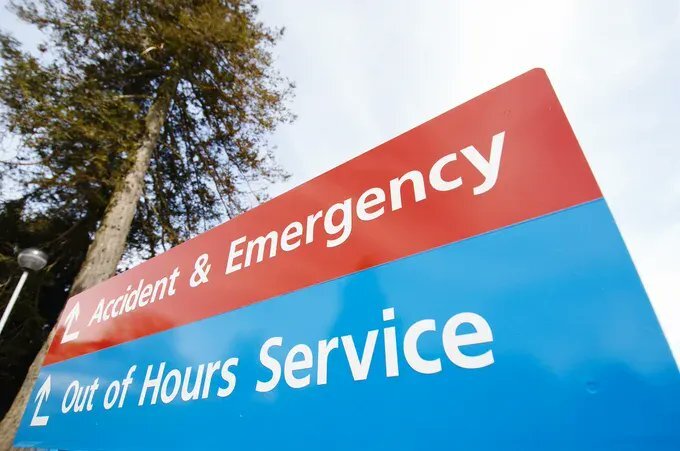 Photograph of a hospital road sign that reads from the top: Accident & Emergency (below) Out of Hours Service
“We want to help organisations understand where they need to focus. We’re not doing this to be punitive or catch people out. We’re doing it so organisations can have a better appreciation of areas they may need to focus on so that people get good quality, safe care. We want to be able to help providers to pinpoint the key issues – some of which aren’t always immediately obvious — so they can direct efforts to where they are needed most”. — Dr Sean O'Kelly
We know winter is one of the most difficult times of year for the health and care system.
We speak to Dr Sean O’Kelly, Chief Inspector of Healthcare, and Dr Prem Premachandran, Emergency Medicine Consultant, Frimley Health NHS Foundation Trust and CQC National Professional Advisor – Urgent and Emergency Care, about some of the challenges and the role of the regulator in encouraging system working and maintaining standards of quality.
 Animation of a person with glasses holding a laptop with chemical bottles and green leaves in the background
Did you know that health and social care services produce around 5% of all carbon dioxide in the UK? The largest proportion of this comes from medicines and equipment. Medicines account for 25% of the NHS’s total carbon emissions. This includes all stages in medicines use, for example production, choice, prescribing, and waste disposal, so this impacts every service that uses medicines.
The CQC Medicines Optimisation Team has secured funding to conduct research and support providers, local systems, and businesses to drive innovation and to shape our regulatory approach to medicines sustainability.
Together, we can accelerate change to ensure the sustainable use of medicines and decrease the environmental impact of medicines use. Please take part in our short survey and support this research. Even if you are not actively working on this just now, we are keen to hear your views. The survey is open until 30 November 2023.
|
October is Cyber Security Awareness Month. These webinars may help you review your digital arrangements and think about some less obvious risks.
Better Security, Better Care’s webinar, in partnership with the Homecare Association, explores how to minimise the impact of a cyber attack and the time it takes to recover from one. The session on 17 October 2023 will cover:
- Typical cyber-attacks and how to reduce the risk of falling victim to an attack
- The impact of a cyber-attack on social care services – with a particular focus on homecare
- Steps you can take to reduce the risk and impact
- National, regional, and local support for care providers, including the Data Security and Protection Toolkit and Better Security, Better Care.
|
|
 |
|
Their webinars will help you complete the Data Security and Protection Toolkit (DSPT), whether that’s for the first time, or to review and update your existing listing.
Competing the DSPT for the first time – 24 October 2023, 3-4pm
Review and republish the DSPT – 31 October 2023, 3-4pm
|
|
 |
|