|
In autumn 2020, the Care Quality Commission (CQC) carried out a series of reviews to look at how providers were working together to deliver urgent and emergency care services during the pandemic.
Urgent and emergency care services are currently under exceptional pressure because of a combination of regular winter pressures and the pandemic. These provider collaboration reviews (PCRs) are an important opportunity to support local, regional and national improvement.
Collaboration in urgent and emergency care shares individual examples of good practice and innovation across eight local areas or specific organisations. We felt it was important to share these examples of collaboration at this time to support learning across the country. We plan to publish a full report of our findings in March.Click to edit this placeholder text.
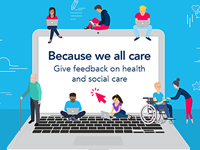
The latest part of our Because we all care campaign focuses on unpaid carers.
Unpaid carers are often the ones holding families and communities together. We want to hear about carers' experiences - whether that's their own care or that of their loved one.
Our research tells us unpaid carers are more likely to give feedback on health and social care experiences on behalf of loved ones, compared to the general population
Can you support and promote the next phase of the campaign? Access the campaign toolkit via the Because we all care campaign homepage
We hope to build on the success of the campaign in partnership with you all.


Our COVID-19 Insight reports highlight the coronavirus-related pressures faced by the services we regulate.
This month's report shares further data on the designated settings scheme for adult social care, and also looks into more detail on data on deaths from COVID-19.
We also share additional data looking at deaths in adult social care, in terms of learning disability and ethnicity.
Press release: Supporting people's care needs after they leave hospital
|
During the coronavirus (COVID-19) pandemic, our core purpose of keeping people safe has not changed – safety is still our priority.
It's more important than ever that we hear your feedback about services you've used or worked at.
You can use our give feedback on care service to let us know about your experience of care - good or bad.
|
All Care Quality Commission offices are now closed. This means that we have stopped communicating by post, and ask that you do not send post to us. Please use other methods to contact us, details of which are available on our websiteClick to edit this placeholder text.
|