Independent review into regulation of Whorlton Hall
CQC has commissioned clinical psychologist Professor Glynis Murphy to undertake an independent review of its regulation of Whorlton Hall between 2015 and 2019.
The review will make recommendations for how CQC’s regulation of similar services can be improved, in the context of a raised level of risk of abuse and harm.
This follows our previous announcement concerning a separate independent review into concerns raised by a previous CQC inspector in relation to the regulation of Whorlton Hall.
You can find more information on the situation regarding Whorlton Hall here. And the interim report as part of our review of restraint, prolonged seclusion and segregation for people with a mental health problem, a learning disability and or autism.
 |
|
Mental Health Act Code of Practice
A CQC review of how well the Mental Health Act Code of Practice has been implemented and used across mental health services since it was last updated in 2015 has found variation in providers' understanding and how it should be applied.
We have recommended that the Department of Health and Social Care develop standardised resources, support and training for patients, carers and staff to help them understand the Code and when it should be applied.
Read the full report on our website.
|
Effective staffing
Having enough staff with the right skills is key for any provider in delivering safe and effective care.
We have published a suite of resources highlighting examples of where innovative approaches to staffing have delivered positive outcomes for patients and NHS providers.
The case studies look across care settings and specialisms and include examples of NHS rtusts collaborating across the health and social care system.
You can find more on how regulations relate to staffing here.
|
|
 |
 |
|
Join our digital engagement platform
To help us make sure we are an effective and efficient regulator we want your views on how we develop the way we work. One way you can share your views is on our new digital engagement platform, signing up is quick and simple and there is loads for you to comment on.
|
Immediate Life Support training requirement
Since 2008 it has been a requirement for all providers of mental health or learning disability services to have steps in place in relation to Immediate Life Support training for clinical staff. Read more about this requirement in the Rapid Response Report issued by National Patient Safety Agency.
In addition to this, mental health or learning disability service that use restrictive interventions also need to have in place the necessary emergency medication and resuscitation equipment, as well as providing the clinical staff that carry out this work with intermediate life support.
In our inspections of these services we have found that a number of providers aren’t fully compliant with these requirements. We will continue to ask you on inspection and will expect to see how you are meeting these requirements.
Declare your care
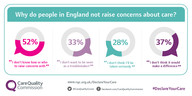
CQC is running a year round campaign to encourage more people to share their experiences of care both with ourselves and providers. We will be focusing on different population groups throughout the campaign including people from black and minority ethnic communities.
You can find out more here, and if you would like to support you can find campaign materials here.
|
|
 |
Listening to your feedback
We updated our guidance on how to submit factual accuracy corrections in draft inspection reports in April and have listened to your feedback. As a result, we have removed the character limit on the response form that you need to use to submit any corrections
Other news

Follow us on Twitter!
Follow @CQCProf on Twitter to get regular updates about the work we are doing with professionals and provider organisations in England.
|
Did this bulletin work for you?
|