|
In this issue:
As highlighted in our previous landlord newsletter, the Government has now introduced the Renters’ Rights Bill, which has officially passed into law as the Renters’ Rights Act 2025. This represents the biggest overhaul of the private rented sector in more than 30 years and will affect over 11 million tenants and 2.3 million landlords across England.
From 1 May 2026, the reforms will begin to take effect. As a reminder, the key measures include:
 |
|
Abolition of Section 21 ‘no fault’ evictions – from 1 May 2026, landlords must provide a valid ground for possession, giving tenants greater security and reducing homelessness risk. |
 |
|
Move to periodic tenancies – fixed-term contracts will be replaced with rolling tenancies, with tenants able to give two months’ notice at any time. |
 |
|
Stronger renter protections – including limits on rent increases (once per year, with two months’ notice), a ban on bidding wars, and a new right for tenants to request pets. |
 |
|
Decent Homes Standard and Awaab’s Law – extended to the private rented sector, creating new obligations around addressing serious hazards such as damp and mould within defined timeframes. |
 |
|
Updated Rent Repayment Orders – councils will have strengthened powers to reclaim rent from landlords who breach legal requirements. |
 |
|
New Ombudsman and Property Portal – a national redress scheme and online database aimed at improving transparency and accountability. |
The Government has recently released further information confirming the phased rollout of the Act from May 2026, and additional guidance is available.
We will soon be issuing a dedicated landlord newsletter focusing solely on the Renters’ Rights Act, including how Coventry City Council will incorporate the new legislation into our policies and procedures.
We have created a webpage dedicated to Renters Rights Act and endeavour to keep this updated as and when changes are implemented. However, All information on this webpage comes from Government Guidance and may be subject to change.
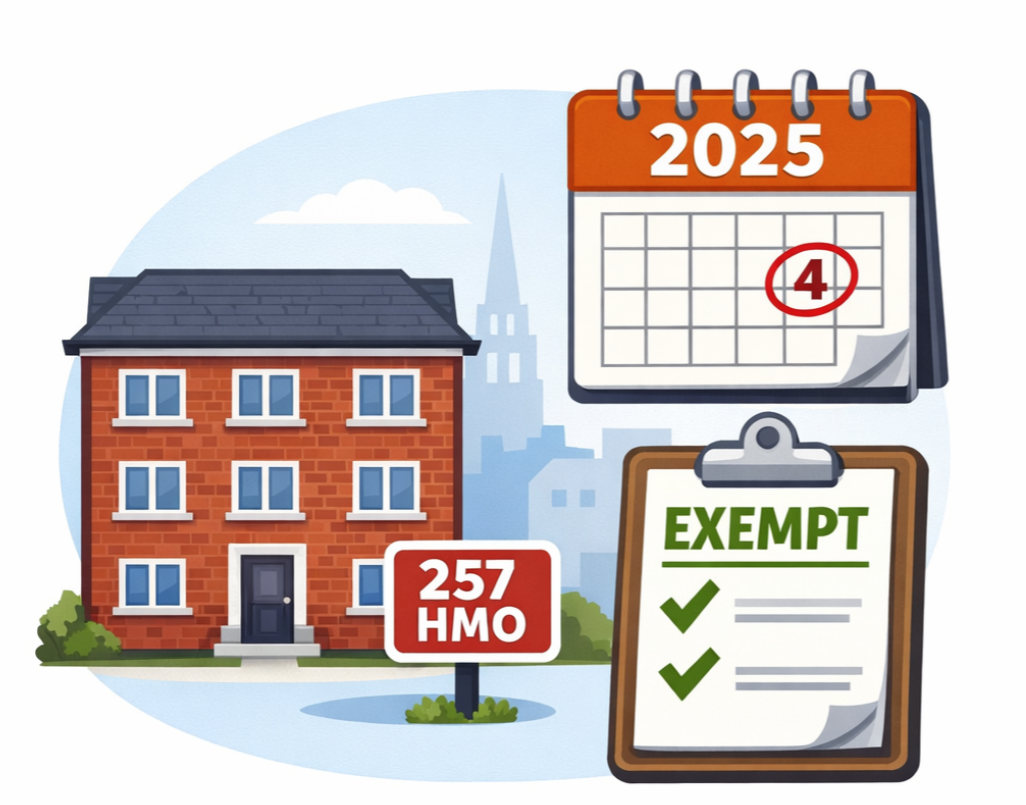
On 4 May 2025 the new Additional Licensing Scheme for HMOs across the whole of Coventry came into force. With the new scheme came some changes to what Section 257 HMOs required licensing. A Section 257 HMO refers to a property converted into a block of self-contained flats. This means the building:
- Consists of only self-contained flats
- Was converted before 1 June 1992 and did not and still does not comply with the 1991 Building Regulations.
- Or, was converted on or after 1 June 1992 and did not and still does not comply with the Building Regulations that existed at the time of the conversion.
- Less than two-thirds of the flats are owner-occupied
- The building is occupied by three or more people, from two or more households
Under Coventry’s 2025–2030 Additional Licensing designation. Section 257 properties are exempt from licensing where they:
- consist solely of two self-contained flats with no commercial premises above or below; or
- have no shared internal or external common parts and are no more than two storeys high.
If your property meets either of these exemptions, you do not need to apply for a licence.

Environmental Health Officers from Coventry City Council, supported by West Midlands Police, executed two warrants at separate addresses in Coventry last week as part of ongoing action to tackle suspected unlicensed Houses in Multiple Occupation (HMOs). Arrests were made by the Police at both addresses in Coventry, and enquiries are continuing. At one address, an occupant attempted to escape through a rear ground floor window but was swiftly apprehended by Police at the scene.
|
At the second address, while no HMO was identified, officers discovered evidence of a cannabis grow and an occupant was arrested. As active investigations are under way, no further operational details can be provided at this time.
Repeat offending and next steps The landlord responsible for one of the properties is a repeat offender: this is the third time the Council has identified them operating an unlicensed HMO, and they have outstanding unpaid financial penalties.
In light of this persistent non‑compliance, the Council will now consider additional powers, including seeking a banning order and making an entry to the national Rogue Landlord Database.
The operation forms part of ongoing, collaborative working by the Council’s HMO Enforcement Team—working alongside police partners—to protect local communities, uphold housing standards and disrupt criminality linked to poor quality, unregulated accommodation.‑quality, unregulated accommodation.

We want to give our current CLAS members an opportunity to have their say and influence how the scheme develops. With major Renters’ Rights legislation being introduced in stages, it is important to us that landlords and agents in Coventry are supported and prepared for the changes ahead.
Our focus is on strengthening our relationship with accredited landlords and agents, improving how training is delivered, and exploring opportunities to work with partners and sponsors to add more value for members. We would really appreciate your feedback on what you value most about CLAS and what you would like to see change. Please take a few minutes to complete our short survey and help shape an improved CLAS that reflects your needs and expectations. CLAS Renovation – Landlord & Agent Survey – Fill in form
 |
West Midlands Police have reported a recent rise in burglaries in HMOs across Coventry, alongside a small rise in burglary and attempted burglary incidents across the wider region. Although the overall risk to households remains low, properties could face a temporary increase in vulnerability. To help keep communities safe, police have increased local patrols and continue to work closely with residents and partners. Landlords are encouraged to share the following guidance with tenants to help reduce risk:
Immediate security tips
- Always close and lock doors and windows when you’re out or in another part of the house
- Make your home look occupied when you’re away. Use timer switches in different rooms if possible
- If you have an alarm system, ensure it is working and set whenever you leave
- Keep tools and ladders stored securely and out of reach
- Lock all side gates, as well as your garage and/or shed, when not in use
- Keep valuables out of sight from windows and doors
- Let trusted neighbours know if you’re going away, so they can keep an eye on your property
- If you are going away, avoid posting about it on social media until you return
- Make sure you’re in to receive parcels or request for any deliveries to be made to a secure locker or parcel shop, so your parcels aren’t left outside
Long-term security recommendations for landlords
- Fit British Standard deadlocks or anti-snap locks to external doors
- Install locks on all windows
- Secure patio doors with purpose-made locks
- Consider installing cameras or smart doorbells for added deterrence
- Keep hedges and fencing low at the front of your property to improve visibility
- Fit external security lighting or low-wattage garden lights
- Mark your valuables with your postcode and house/flat number using a UV pen
Registering CCTV or doorbell cameras
CCTV or Doorbell Cameras Residents can help policing efforts by registering their CCTV or smart doorbell cameras on the secure West Midlands Police CCTV map. If footage may assist an investigation, the owner will receive a request and can choose what to share.
Reporting information
-
Call 101 with any information about the recent burglary.
- Report anonymously via Crimestoppers: 0800 555 111.
- Call 999 in an emergency or if a crime is in progress.
Further crime prevention guidance is available at the West Midlands Police website, and residents can sign up for updates at wmnow.co.uk ‑prevention guidance is available at the
West Midlands Police have provided a letter that can be displayed in HMOs in a suitable communal area with all of the above guidance for tenants.
Your tenants may request to have smart water meters installed, so they only have to pay for the water they use. Fairer for them, fairer for everyone. But what does this mean for you?
Smart water meters can:
- Report unusual water usage which can help identify leaking pipes, and protect your properties from costly damage, damp, and mould
- Help you stay in control of what you pay when a property is vacant, without having to disconnect the water – saving you money on bills and reconnection fees
- Show that you are committed to modern, responsible property management – particularly to eco-conscious tenants
To find out more, visit stwater.co.uk/smartlandlords – and if you’d like a smart water meter fitted in your own home, apply online.

Coventry City Council is working with E.ON Energy to help make properties warmer, more energy efficient and increase their value. If you rent out a property in Hillfileds, Upper Stoke or Lower Stoke you could qualify for a Warm Home Grant.
Through Warm Homes Local Grant, landlords only need to contribute 30% of the total cost toward approved energy efficiency improvements. These upgrades are designed to future-proof your property by increasing its Energy Performance Certificate (EPC) rating to a minimum of C.
The Renters’ Rights Act will mean landlords will need to upgrade properties to meet EPC B and C so it’s time to act now.
What you need to know
Each property will receive a Retrofit Assessment to identify the most cost-effective measures to improve energy efficiency. Depending on suitability, funded solutions may include:
- solar panels
- low-carbon heating systems
- insulation upgrades
- and more energy-saving improvements
Eligibility criteria
To qualify for the scheme:
- the property must currently have an EPC rating of D, E, F, or G, subject to exemptions,
- your tenants must qualify for funding
Find out more
To check eligibility and see how this scheme could benefit your rental property, visit: eonenergy.com/grant-finder
Or contact E.ON’s Advice Team on: 0333 202 4820
Let’s Rent offers the rent guarantee and other benefits such as a managed scheme for peace of mind, deposit, bonus payment to private sector landlords who want to work with the Council by providing tenancies to alleviate homelessness in the city. Let’s Rent is a completely free service so contact us to find out more. Email the team: LetsRentCoventry@coventry.gov.uk
They will guarantee rent payments up to the Local Housing Allowance (LHA) rate for the period of the tenancy (up to 2 years).
The rent will be topped up to the average market rate.
Coventry City Council is joining councils across the country in recognising Empty Homes Week 2026. This week highlights the importance of bringing long‑term empty properties back into use — helping to improve neighbourhoods and increase the supply of much‑needed housing across the city.
Why empty homes matter
Long‑term empty properties can quickly become a problem for local communities. When homes stand unused, they can attract anti‑social behaviour, fly‑tipping and general neglect. At a time when demand for housing in Coventry is high, every empty home brought back into use makes a real difference.
Council Tax premiums
Owners should be aware that additional Council Tax premiums apply to long‑term empty and second homes in Coventry.
- The charge increases the longer a property remains empty.
- These premiums are designed to encourage owners to bring homes back into use as soon as possible.
Report a suspected empty home
If you believe a property is empty, neglected or becoming a hotspot for anti‑social behaviour, please report it online or by email emptyhomes@coventry.gov.uk
This helps the Council to:
- investigate and take appropriate action where needed
- support owners to bring their properties back into use
- improve the quality and safety of neighbourhoods
Together, we can work to ensure that empty houses become the homes Coventry families need.
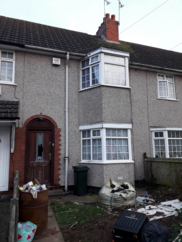
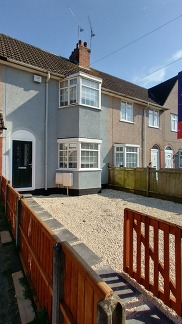
A terraced property in Coventry had been unoccupied and unfurnished for over five years after renovation plans appeared to have stalled.
During this time, the home became a target for anti‑social behaviour and repeated fly‑tipping, causing concerns for residents.
The Council stepped in by:
- Serving a Prevention of Damage by Pests Act (PDPA) notice
- Applying the empty homes Council Tax premium
- Tracing the owner and applying consistent pressure over several years
As a result, the owner cleared the site, completed the long‑overdue renovation works and sold the property earlier this year. The home is now occupied, bringing a valuable property back into use.
 |
|
Before |
 |
|
After |
We want to work with you to improve housing in the city. If you want to get in touch with any questions please, contact the team:
Email: hmo@coventry.gov.uk
Telephone: 024 7697 5467
|