|
In this issue:

The Government has introduced the Renters’ Rights Bill, now officially law as the Renters’ Rights Act 2025, marking the most significant reform to the private rented sector in over 30 years. First presented to Parliament on 11 September 2024, the Act affects over 11 million tenants and 2.3 million landlords across England.
From 1 May 2026, major reforms under the Renters’ Rights Act will transform renting in England.
Key measures include:
- abolition of Section 21 ‘no fault’ evictions – landlords will no longer be able to evict tenants without a valid reason from 1 May 2026, giving renters greater security and reducing the risk of homelessness
- transition to periodic tenancies – fixed-term contracts will be replaced with rolling tenancies, allowing tenants to give two months’ notice at any time.
- stronger protections for renters – including limits on rent increases (once per year, with two months’ notice), a ban on rental bidding wars, and a new right to request pets
- updated Rent Repayment Orders – enforcement powers have been strengthened, allowing councils to reclaim rent from landlords who breach legal obligations
- decent Homes Standard and Awaab’s Law – extended to the private sector, requiring landlords to address serious hazards like damp and mould within set timeframes
- new Ombudsman and Property Portal – a national database and redress scheme will improve transparency and accountability
What landlords should do:
- review tenancy agreements and prepare for the shift to periodic tenancies
- stay informed about the phased rollout, that will begin on 1 May 2026.
- ensure properties meet the new minimum standards
- register with the new Ombudsman and Property Portal when available
- seek advice if unsure about compliance or possession grounds
For full details, see the Government’s guide to the Renters’ Rights Act.
The government have also released an article confirming a phased roll out beginning on 1 May 2026.
In the future we will be sending out a landlord newsletter specifically on the Renters’ Right Act updating you as and when it is implemented into our policies and procedures.

Coventry City Council has successfully prosecuted a landlord for illegally evicting his tenants.
A landlord of a property in Holbrooks, Coventry changed the locks to the property on the 2 September 2023, whilst his tenants were on holiday without obtaining a possession order.
An investigation by the Council’s Landlord and Tenant Liaison Officer discovered evidence that the landlord had been in receipt of rent from the tenant less than a week before he changed the locks unlawfully.
Although the landlord stated he believed the tenants no longer lived at the property he admitted in interview that he had received the money from the tenants and that the tenants still had belongings in the property.
On the 30 October 2025 at Coventry Magistrates Court the offence of illegal eviction, as per the Protection from Eviction Act 1977, was proven before a district judge with both the Council Officer and tenants giving evidence.
The landlord was ordered to pay £3991.66, including the Council’s costs.
Illegal eviction offences are locally and nationally under reported with victims often being vulnerable, so prosecutions are rare. The Landlord and Tenant Liaison Officer who led the investigation has praised the bravery and fortitude of the tenants who acted as witnesses through the investigation and trial.
Councillor Abdul Salam Khan, Cabinet Member for Policing and Equalities and Deputy Leader of the Council, said:
“This is an important case because it shows that tenants must be treated fairly and that landlords have a responsibility to act within the law to maintain good standards. I hope that this case acts as a reminder to a minority of landlords that, the Council will intervene to support tenants and do all it can to protect its residents from unlawful eviction and harassment whenever there is evidence that either raise issues around housing standards or illegal treatment.
"It also reflects our commitment to ensuring homes in the private rented sector are properly managed and that tenants are afforded the security that they need.”
Anyone who feels that they may be being illegally evicted or harassed by their landlord can contact the Council on housingenforcement@coventry.gov.uk
Landlord and Tenant Liaison Officers James Stringer and Monica Zaccardelli wanted to remind landlords to take extra care when carrying out evictions and to always seek legal advice or the opinion of the council if unsure.
Opinions can be sought by emailing Housingenforcement@coventry.gov.uk

The Fire Risk Assessment Prioritisation Tool, introduced in support of the Fire Safety Act 2021, has played a key role over the past four years in helping Responsible Persons prioritise reviews of fire risk assessments—particularly in relation to external wall systems. This tool was developed to reflect the clarification that the Regulatory Reform (Fire Safety) Order 2005 applies to a building’s external walls.
Please note that this tool has been retired on 30 September 2025, as the contract has come to an end. The Ministry of Housing, Communities and Local Government (MHCLG), which assumed responsibility for fire safety functions following the Machinery of Government changes on 1 April 2025, has confirmed that the contract will not be renewed.
The decision reflects a decline in usage, as most Responsible Persons should now have updated their fire risk assessments to include external wall considerations.
Additionally, the regulatory landscape has evolved. The Government’s Remediation Acceleration Plan and its July 2025 update outline steps to speed up remediation efforts, including stricter fire assessment standards to reduce delays and clarify the scope of required works.
As of 30 September 2025, landlords and Responsible Persons must continue to refer to official fire safety guidance to ensure ongoing compliance. This guidance is available here.
If you have any questions or require further clarification, please contact: firesafetyreform@communities.gov.uk

We would like to remind landlords and agents of their legal responsibilities around occupancy and property use, particularly where subletting may result in a change of classification, reclassifying a property into a House in Multiple Occupation (HMO).
If a property originally let as a single-family home is sublet to unrelated individuals forming more than one household, it may legally become an HMO. This change can trigger mandatory or additional licensing requirements, depending on the number of occupants and the nature of the accommodation.
Why accurate records matter:
Landlords should keep up-to-date records of who is living in their properties.
This includes:
- Names and contact details of all occupants
- Start and end dates of tenancies
- Any changes in occupancy or household composition
Failure to maintain accurate records can lead to the below enforcement action, especially if a property is found to be operating as an unlicensed HMO.
- fines of up to £30,000
- rent repayment orders
- prosecution
- Management Order
What landlords should do:
- review tenancy agreements to ensure they reflect actual occupancy
- monitor subletting activity and intervene if it risks reclassification
- apply for an HMO licence if your property meets the criteria
- engage with the Council if unsure about your obligations

We would like to remind landlords and agents that when an HMO Licence has been granted, and you have any of the below listed changes to circumstances you must notify us within 7 days.
Failing to notify us within the specified time limit is a breach of your licence conditions and could result in your HMO Licence not being eligible for a 2- or 5-year licence length. If your HMO Application is still in the application stage, then an email to hmo@coventry.gov.uk detailing the changes will be sufficient. However, if you have a granted HMO Licence then you would need to apply to have the Licence Varied.
The below Schedule 2A Standard Discretionary Conditions are on every granted HMO licence in Coventry and must be adhered to:
5) Changes Within the House
The licence holder must notify the Safer Housing and Communities team in writing of any change in the HMO (apart from the change of occupants) that has or is likely to affect the operation or management of the HMO. This notification must be received within 7 days of any such change.
6) Changes to Personal Circumstances
So far is as reasonable to expect, the licence holder must notify the Safer Housing and Communities team in writing of any change to the circumstances of each relevant person (except any mortgage provider) named on the licence application form if the new circumstances are likely to affect the ability of such a person to carry out any function concerning the operation or management of the HMO. This notification must be received within 7 days of any such change.
7) Changes to Address Details
So far is as reasonable to expect, the licence holder must notify the Safer Housing and Communities team in writing of any change to the address or contact details of each relevant person (except any mortgage provider) named on the licence application form. This notification must be received within 7 days of any such change.
You must notify us if there are any changes to these circumstances:
- the licence holder's address changes
- the manager's address changes
- the existing manager is removed
- a new manager is appointed (If you wish to appoint a new manager, you will need to certify that they are a fit and proper person)
In addition, you can apply to us to if you wish to change the following details on your licence:
- increase the maximum permitted persons (this may require an inspection from one of our officers to check that the property has the correct amenity and facilities)
- increase the maximum permitted households (this may require an inspection from one of our officers to check that the property has the correct amenity and facilities)
- amend or remove specific conditions from Schedule 2
There is no charge to apply to vary your licence.
You can Apply for a Licence Variation on our webpage.
Coventry City Council is actively requesting Electrical Installation Condition Reports (EICRs) from landlords—both proactively and in response to complaints. However, we've noticed that some certificates have been issued by individuals who are not qualified to carry out these inspections.
What you need to know
When hiring an electrician to complete an EICR, it’s important to ensure they are properly qualified to carry out inspection and testing work. As a landlord or manager, it is your responsibility to confirm that the electrician is competent and certified for the job.
How to check an electrician’s credentials
-
search for a qualified electrician
-
check what types of work they are registered to carry out
If the Inspection column shows “No,” the contractor is not registered to perform EICR testing. You can double-check this by visiting the relevant scheme websites:
If your electrician is not scheme-registered
They must still be able to demonstrate the following:
- adequate insurance: at least £2 million public liability and £250,000 professional indemnity
- up-to-date qualifications: covering the current wiring regulations (BS 7671)
- inspection and testing certification: Specific to periodic inspection and testing of electrical installations
- experience: At least 2 years of hands-on experience in periodic inspection and testing
Ensuring your electrician meets these standards helps protect your tenants and your property—and ensures compliance with legal obligations
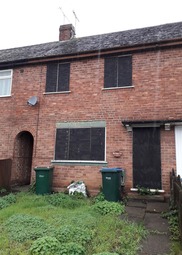
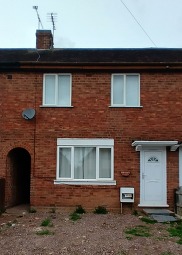
A long-leasehold property had been unoccupied since 2018 after the owner passed away, and no next of kin could be traced to manage the estate. The property fell into disrepair, with overgrown gardens and significant disrepair to the windows and doors, prompting complaints from neighbours.
Planning Enforcement served a Section 215 notice in spring 2022 requiring the land to be tidied and the building secured. This action prompted the freeholder to begin resolving title and lease complications.
The Empty Dwellings Officer responded to solicitor enquiries to help clarify the situation with the estate, which helped move the legal process forward.
The property was finally sold in spring 2025. The new owner has since renovated the home, and it is now occupied, successfully bringing the property back into use.
 |
|
Before |
 |
|
After |
The research team at E.ON need to hear your views on the coming changes to the MEES regulation for private-landlords (minimum EPC rating C by 2030). Use this 5-minute survey to shape the support services you want to see.
E.ON is the strategic energy partner to Coventry City Council. They want to develop support services for landlords in the area to help manage the practical challenges of government-proposed energy efficiency upgrades. They also want to explore options that help landlords protect their returns whilst enabling tenants to heat and care for the properties more affordably.
If you have views or questions on the incoming MEES (minimum energy efficiency standard) changes that will require you to upgrade all private rental properties to EPC rating C, then please complete this 15 question, 5 minute online survey to have your say. Your response will be used to create the products and services you'll want to review before committing to any costly upgrades.
Take the survey here.
We’ve noticed that many applicants are struggling to complete and return the declaration form correctly as part of the HMO Licence Application process.
To help, we’ve created a simple step-by-step guide: 'How to sign the declaration form'. Please follow this guide to make sure your form is signed properly and your application isn’t delayed.
We want to work with you to improve housing in the city. If you want to get in touch with any questions please, contact the team:
Email: hmo@coventry.gov.uk
Telephone: 024 7697 5467
|