|
Welcome to the West Midlands Social Work Teaching Partnership Newsletter.
In this newsletter, we will keep you informed on updates, developments, events, masterclasses, best practice and research, within the West Midlands Social Work Teaching Partnership.
In this edition:
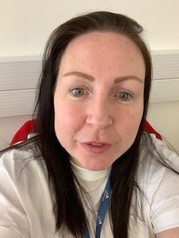
I worked for Warwickshire County Council Adult Mental Health services since qualifying as a social worker in 2010. As a Lead Practitioner with Warwickshire Council County, I was very much focused on raising the standards of social work practice in a multidisciplinary setting. Supervising social workers, I consistently promoted professional development. As soon as I heard about the West Midlands Teaching Partnership, I wanted to be involved and I was delighted to secure a position as a Consultant Social Worker.
My first weeks in post as a Consultant Social Worker for the Teaching Partnership have been both busy and edifying. The project team have been welcoming and supportive and I have started to develop productive links with our partners by attending the recent programme board meeting and workstream meetings. I have been assigned to the Admissions, Teaching, Learning and Research workstream and very quickly I have identified that through set aims and objectives the Teaching Partnership has the very real potential to make a difference to social work teaching and practice education across the region. And I feel very privileged to be part of this project!
My initially focus has been on admissions and the requirement to attract and recruit the highest calibre of social work students onto qualifying social work programmes. A key aim is therefore the recruitment of students who possess a unique blend of intellectual, personal attributes and attitudes, and the abilities needed undertake social work education and training and thrive in the profession. To recruit such candidate’s specific admissions and recruitment processes are required. Thus my focus for the coming weeks is meeting with our Higher Education partners to identify best practice and establish consistency in admissions across the region. But this is only the beginning…..
Lucy Cairns, Consultant Social Worker, West Midlands Teaching Partnership
|
The West Midlands Teaching Partnership has funded a number of masterclasses to share knowledge and learning. They provide an excellent opportunity for social work professionals to continue professional development. Book your place via our EventBrite page.
All of our HEI partners are arranging further masterclasses so watch this space for further updates.

Unless one is naturally gifted, writing a book as a single author can be a daunting task. Writing a book as an editor with contributions from leading scholars and activists from across all the five continents has been a huge challenge. However, given the demonisation, targeting and neglect of vulnerable populations that is taking place across the world by governments, to not highlight this was not a choice for me.
In the current period of neo-liberalism, we are seeing the dangerous rise of old and new right wing authoritarian nationalisms. This is accompanied with the normalisation of racism that is illustrated so blatantly with overt racism of Donald Trump and the polarisation of the UK political system over the issue of immigration and Brexit. In the current period, along with the devastating effects of austerity, we are greater levels of surveillance of minority populations, fragmentation of social protection systems and a rise in overt and convert racism. Against this backdrop, as well as illustrating ways in which old and new racisms impact racialised group, this book looks at how across different international contexts, anti-racist social work has responded .
After three years of hard work and a rigorous peer review process, the book is now with the copy editors and I am hopeful it will be out before the new academic term, so watch this space!
Gurnam Singh, Associate Professor of Social Work, Coventry University
|
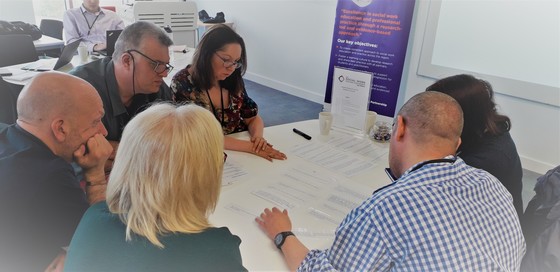 Two workshops, held at Stoke-On-Trent and Birmingham City University, took place last month to look further at the current social work admissions process.
Lucy Cairns, Consultant Social Worker for the Teaching Partnership, led key discussions on the application and interview process. This ties in to key outcomes for the Partnership - to raise the standard and consistency for entrants on to social work education programmes.
Within the application process, attendees looked at the entry requirements for social work students and discussed the need for students to have a good mix of skills such as emotional resilience and academic ability. The group discussed the need for personal statements to be better structured and suggested universities could embrace technology so social work is more accessible.
As part of the discussion around interviews, the group recognised the need for a suitable environment and appropriate representation from service users and practitioners on the interview panel. Both groups identified that applicants to social work programmes need to be of a high calibre to ensure future generations of capable, confident social workers.
Following the workshops and other research, a best practice guide will be created and actions will be taken to implement this across all 27 regional partners.

Dr Robin Miller, from University of Birmingham, brings together the latest research, practice and theory to explore integration within both child and adult services, in his new book Social Work and Integrated Care.
Although all the home nations in the UK view integrated care as a top priority within health and social care policy, many people continue to experience fragmented care.
The book sets out the case for integration, considers the evidence of its impact, and discusses the implementation challenges that must be overcome.
Providing a comprehensive and accessible overview of integrated care policies and practice, this book helps future and current social workers to collaborate better with other professions and services.
|

Because of the likely benefits for all stakeholders involved, the West Midlands Teaching Partnership will be proposing the setting up of Mend the Gap Projects.
Shaping Our Lives UK (a national disabled people’s and service user’s organisation) together with Lund University (Sweden) and Lillehammer University (Norway) began the PowerUS network in 2011.
Together they established the Mend the Gap approach in social work education to promote more equal methods of participation for citizens with lived experience.
They also did this because, there are gaps between the perspectives, experiences, rights, needs and wants of people with lived experience and the policies, procedures, understanding and approaches of social workers, social work educators, social work students and policy makers. There are gaps between social work education and social work practice.
Mend the Gap projects are a new way of learning. They identify gaps, explore these, and find ways of mending them.
Further updates on Mend the Gap will be featured in our July newsletter.
Albert Moylan, Senior Lecturer, Birmingham City University
|
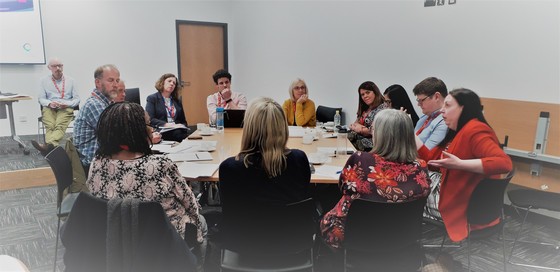 The PE and CPD workstream held a workshop in Wolverhampton to explore the future direction of CPD content and progression pathways across the region, practice frameworks, and practice leadership. The groups discussed current progression routes for social workers working with Children and Adults and what learning and experience should be required for progression. There was also discussions about strengths-based practice frameworks and how current CPD training supports this and could be developed further.
Practice leadership with adults and children’s services was discussed and there was a consensus of those present that leadership qualities are important to encourage the development of teams and to improve staff retention. It was discussed that leadership is not only defined within management roles and it is important to encourage positive leadership at all levels.
Further discussions centred on innovation in CPD and models of co-delivery. The next steps of the workstream are; developing an overall framework for CPD and progression routes in Adults and Children’s across the Teaching Partnership; exploring ways to develop leadership through training, identifying any gaps in relationship and strengths-based approaches and supporting Local Authorities with this; creating a brochure of post-qualifying learning opportunities across partnership HEIs.
|

‘Placements’ – just hearing the word will make most people involved in the coordination of them shiver. So what’s the deal here, why are placements so important and what can we all do collectively to support the growth of placements, growth both in terms of quality and capacity?
Strengthening placement quality and increasing the capacity of placements is a key outcome for the West Midlands Social Work Teaching Partnership (WMSWTP). The quality of a placement and the opportunities it offers to a student will have an impact on the students transfer of learning from the classroom to the front line and readiness to practice as a social worker. Securing a statutory placement for a student is recognised as advantageous to a student’s growth and development, in terms of skill development, knowledge and experience.
A recent survey of placement need and capacity evidenced that we require a wide scale campaign to engage new, existing and inactive practice supervisors and practice educators. The current need for placements outweighs the supply on offer by our statutory partners across Local Authorities and Trusts. To grow the number and quality of placements we need you!
Dates for training are now available across the WMSWTP, to become a practice supervisor, educator or to refresh your knowledge. If you are interested in joining in the placement growth strategy, please speak to your manager. Placements will need to be agreed prior to the summer break, so we are all ready for the placement period beginning in September 2019.
The placements workstream is currently working on:
- Exploration of student units
- Development of split placements guidance
- Exploration of regional student guidance and paperwork
- Collation of all placement dates to produce a placements calendar
As a result of this work, a number of pieces of guidance and supporting documents will be developed, please look out for these.
The WMSWTP intend to deliver a number of Practice Educator Conferences in the Autumn to explore the issues of practice education locally, informed by the NOPT Conference. More details to follow.
Donna Chapman, Placements Workstream Local Authority Lead, Shropshire County Council
|
 |
|
We all feel pride and shame but what we feel pride and shame for can be shaped, manipulated, and controlled.
Dr Matthew Gibson's new book outlines how the media and political spheres purposely seek to evoke pride and shame in the wider public, specific organisations, and individuals in attempts to shape, manipulate, and control policy, procedure, and practice. Furthermore, it outlines how organisational leaders and managers strategically organise systems, processes, and interactions to evoke pride and shame in practitioners. It outlines how individual professionals seek to evoke pride and shame in family members in attempts to change their behaviour. This book gives examples of how these have been achieved and the consequences, with some resisting such attempts to make them feel proud or ashamed. Read about the new book.
|
|