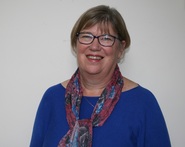
 It is a pleasure to
introduce our third newsletter. We have included updates from different
safeguarding services, which I hope you will find useful. If you weren’t able
to join us at our conference in November take a look at our conference report
and see what you missed! The views of professionals and service users are
important to us so if you have any ideas/articles for inclusion in future
editions please get in touch with the Safeguarding Team, contact details are at
the end of this newsletter Equally please get in touch, if you have a forum
where service users meet and would like a Board member to come along and talk
about the work of the Board.
|
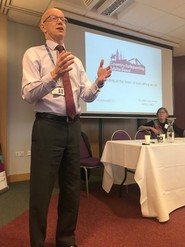 This year the theme of our conference was Safeguarding is Everyone’s Business. We welcomed over 70 senior leaders, managers and front line practitioners from across the city to the conference, which was opened by Martin Reeves. They enjoyed discussing the impact of the Care Act on Safeguarding Adults with Chief Social Worker, Lyn Romeo and were inspired by Jill Manthorpe’s presentation on effective safeguarding adults reviews (SARs). Jacqueline Barnes also shared the latest news and work from NHS England.
|
 During the afternoon there was the opportunity to engage more directly
with a range of subject matter experts at interactive workshops exploring
Domestic Violence and Coercive Control, Making Safeguarding Personal,
Self-Neglect and Safeguarding Investigations, Report Writing and the Law. We
all went away buzzing with new ideas and thinking of ways that we could speak
up about what needs to change and drive ideas for solutions, as a result of
Martin Reeves encouraging us all to be bold and be disruptive
|
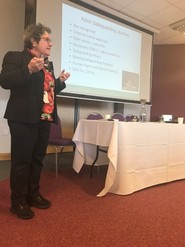 There was also time to reflect on how compassionate persistence is key to engaging with people properly to support them to remain safe and how community work, particularly asset based community development is the future for keeping more adults safe. If you haven’t already, take a look at our twitter feed for more information about what we got up to #CSABconf2017.
|
West Midlands Fire Service (WMFS) has published Fire Safety
Guidance for Professionals and Carers who work with Adults with Care and
Support Needs. It will help you to identify service user’s fire risk and
vulnerability, provide support them to reduce it and to make referrals to WMFS
to for a Safe & Well Visit.
A Safe & Well Visit provides services users and you as
professionals and carers with fire safety support and guidance.
Firefighters can make recommendations for resources, adaptations and equipment
that will reduce fire risk and vulnerability, for example, fire retardant
bedding for an individual who smokes in bed.
In 2016-17 WMFS conducted 28 Serious Incident Reviews (SIR).
They found that almost half of the people involved had care and support
provided to them and in a third of the fires, the smoke alarm did not
work. The reviews identified that the following factors increase the risk
of serious injury or death: - living alone, being over 65, smoking,
reduced mobility, mental ill health and alcohol consumption.
WMFS conduct SIRs following accidental fires in the home when someone
has died, is likely to die, is over 65 or is a child with burns. The creation of
this guidance is a recommendation from an SIR following a fatal accidental fire
in Coventry.
Coventry Safeguarding Adults Board has guidance on its website.
 Originating in the recommendations of
the Social Work Reform Board. Most Local Authority areas now have a Principal
Social Worker (PSW) for Adults and Children’s, supported by national and
regional networks. Furthermore, in 2013 the Government appointed a
Chief Social Worker for Children and Families and a separate Chief
Social Worker for Adults. These roles are held respectively by Isabelle Trowler
and Lyn Romeo. Both are qualified social workers and providing independent expert advice
to ministers on social work reform and leadership to the network of principal
social workers to improve practice and influence national policy making and
delivery.
Lyn Romeo the Chief Social Worker for
Adults produces an annual report which sets out progress in
improving the education, training and practice of social work with adults.
Local Authorities themselves appoint PSWs to
support good practice and be a voice for social workers in the organisation.
The role is multifaceted but includes tasks such as;
- Taking a
professional lead across an organisation, with responsibility for supporting
and advising on the quality of practice.
- Championing
the importance and significance of professional social work practice
- Influencing
strategic decision making across the organisation to ensure that any
developments reflect the needs of frontline practice
For Adults the role is also
included in the Care Act 2014 Statutory Guidance which advises that
Local Authorities should make arrangements to have a qualified and registered
social work professional practice lead or PSW.
So what happens in Coventry City Council? The role of the Adults PSW is
undertaken by myself as Head of Practice Development and Safeguarding (and by
colleague Lee Pardy-McLaughlin for children’s). These are senior management
role and I report directly to the Director of Adult Services. My role as the
PSW provides leadership
across the whole of the adult social care workforce. It is not just about
qualified practitioners. My role is diverse and involves supporting newly
qualified social workers, developing practice quality assurance frameworks,
ensuring we have the right learning and developing opportunities, being a
member of the Safeguarding Adults Board and working closely with local
universities to ensure we have support the future social work workforce.
If you want to
know more about the role, I’m more than happy for you to drop me a line andrew.errington@coventry.gov.uk.
|
Until 2014, self-neglect in
England was located outside adult safeguarding systems and procedures. The
implementation of the Care
Act 2014 changes this. The Act gives a
broad definition of adults in need of care and support and clearly
articulates duties towards them. Safeguarding Adults Boards (SABs) have a
statutory objective to help and protect adults with care and
support needs who are experiencing or at risk of abuse and neglect, and are
unable (as a result of those needs) to protect themselves. The
Statutory Guidance to the Act (DH, 2016) includes self-neglect within the list
of circumstances that constitute abuse and neglect, thus locating it firmly
within SABs’ remit.
So what is
self-neglect? This can include:
- Lack of self-care (e.g. personal hygiene, nutrition,
hydration and/or health) and /or
- Lack of care of the domestic environment (e.g. squalor
or hoarding) and /or
- Refusal of services that would mitigate risk to safety
and well-being
Figures
indicate self-neglect occurs mostly in the older peoples group and in younger
people is connected to mental health issues. Working with people who
self-neglect can be very challenging
for practitioners due to its varied presentation and the high risks it
poses, both to the individual and sometimes to others.
Our
Coventry Safeguarding Adults Board (CSAB) has existing practice guidance and
procedures for responding to self-neglect concerns and enquires. This guidance
is detailed and comprehensive, includes case examples and describes the
interface between needs assessments and interventions under adult safeguarding.
The
CSAB Business Plan 2017-19 has identified ‘self-neglect’ as being a strategic
priority ‘The Board to ensure that self-neglect as a safeguarding category is
understood and that people are supported to maintain their independence and
choice, and stay safe’.
When
people self-neglect there are almost always many dimensions involved, requiring
the involvement and collaboration of different agencies and practitioners.
Serious case reviews have frequently identified failings in multi-agency
coordination as contributing to negative outcomes in self-neglect, so it is
important to ensure that the necessary elements for effective collaboration are
in place in any individual situation.
Research
and best practice identify the conditions that support best practice in
self-neglect.
and
the key questions for organisations to consider when reviewing self-neglect
policy and procedures;
- How
clear are the inter agency organisational arrangements for responding to cases
of self-neglect?
- How
are the ethical tensions in cases of self-neglect approached by the agencies
that surround the team involved with the individuals and by the workers within
the team?
- How
is the right support made available to adults who self-neglect?
Under the Care
Act any adult who has substantial difficulty in engaging in their assessment,
review or safeguarding process (and does not have an appropriate person to
support them) has the legal right to support from an independent advocate. This referral must be made by a social worker
to AgeUK or Grapevine.
Who is eligible?
A social worker
will make the decision if an independent advocate is required based on the
following 4 points
- Can
the person or their carer understand the relevant information?
- Can
they retain the information
- Use
or weigh up the information as part of their engagement
- Communicate
their wishes and feelings
Where an
individual has substantial difficulty they require assistance. If there is no appropriate person to do this
the social worker must refer to an Independent Advocate.
What will the Advocate do?
The Care Act
Advocate will support the individual to take part in the meeting and will
ensure that their views, wishes and feelings are heard and their rights
upheld. If the individual is unhappy
with the outcome of the meeting for any reason the advocate will support them
to make a complaint or follow any appeals process.
How to Access Support
Referrals for a
Care Act Advocate must be made by a social worker. Call the Care Act Advocacy Intake team on 024
7625 2480 or email caa@ageukcoventry.org.uk
ACUTE FRAILTY UNIT
A new Short Stay Unit for Frail and Elderly patients
The number of patients aged 75 and over being admitted to
hospital has grown at a greater rate than any other age group over the past
decade. Frail older people represent a larger proportion of acute admissions
and an increased risk of complications and protracted length of stay mean that
only those patients that require hospitalisation should be admitted.
A new service, the 12 bedded Acute Frailty Unit (AFU) on
ward 21 Medicine opened on Monday 9 January
2017. This unit is supported by the Integrated Frailty Service (IFS) a
multi-disciplinary team comprised of hospital and community services and has
been introduced to provide a comprehensive assessment for frail older adults
attending the hospital as an emergency. Members of the IFS team will
assess patients in emergency admitting areas and identify those suitable for
further assessment in the AFU and arrange their transfer.
This area is designed specifically for frail elderly
patients who, with specialist intervention, could be discharged without the
need to be admitted to a Gerontology ward.
A Comprehensive Geriatric Assessment includes medical,
psychological, and functional capabilities and needs of the person and
identifies a coordinated and integrated plan for treatment and follow-up.
Patients who would not benefit from hospital admission
are provided with alternative support including: home with rapid response,
transfer to a community bed or social respite care or with voluntary sector
support.
The service is expected to improve the quality of care we
provide to frail older adults by better identification and awareness of people
living with frailty, as well as early proactive assessment and management.
For more information about this service please contact
Vicky Williams Consultant Nurse Gerontology Vicky.Williams@uhcw.nhs.uk.
Keep
the Date
- CSAB Learning Event – Coercive Control
- Date: Tuesday 13 March 2018
- Time: 2:00 - 4:30 pm
- Venue: Friargate rooms M1. 3 - 5 Coventry CV1 2GN or CV1 2GT if using a SAT nav.
Safeguarding Adults- it’s everyone’s business
The City Council website provides additional information on adult safeguarding:
Safeguarding Adults webpage.
If you have concerns about safety and how others treat you / someone else, contact:
Adult Social Care
Tel: 024 7683 3003
Email: ascdirect@coventry.gov.uk
Mental Health - Single Point of Entry
Tel: 0300 200 0011
Email: cwp-tr.specoventryadult@nhs.net
You can also get in touch with the Safeguarding Boards Team regarding matters relating to the Safeguarding Adults Board:
Tel: 024 7683 2568
Email: Coventrysab@coventry.gov.uk
|