|
Can't see the images below? If you're working from a computer, right-click your mouse on the red 'X' and select 'Download Pictures'. Alternatively, view this email online follow this link.
 |
|
|

Winter can bring some of the most challenging conditions of the year, from icy roads and snowfall to storms and flooding. From October to April, we monitor conditions around the clock and use detailed weather forecasts and road surface temperature data to make gritting decisions.
This winter, 21 gritters and more than 5,200 tonnes of salt are ready to help keep Cheshire East moving. Alongside our gritting operations, dedicated teams are on standby to respond to flooding, storm damage and other severe weather incidents.
While it is not possible to grit every road, our 17 gritting routes focus on key roads that help keep communities connected and provide access to essential services across the borough. Around 500 grit bins are restocked as part of our preseason preparations and are available to help residents treat localised icy conditions on public roads and pavements.
|
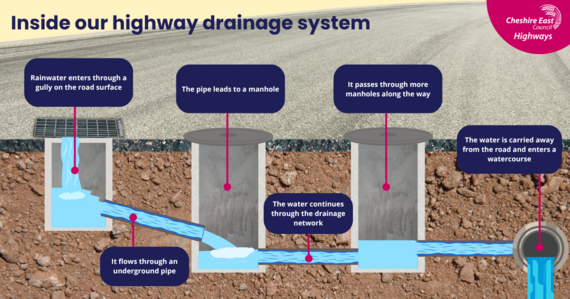
A highway gully is just one part of a much wider drainage system. During very heavy rain, water can reach the network faster than it can be carried away, causing temporary surface water on the road.
If the water starts to clear as the rain eases, the drainage system may be working as intended. If it remains for a prolonged period after the rain has stopped, repeatedly occurs in normal rainfall, or creates a safety risk, please report this to us so we can investigate.
Factors including rainfall intensity, underground pipe capacity, nearby watercourses and water flowing from surrounding land can all affect how quickly water drains away. That’s why surface water issues are not always caused by a blocked gully, and investigations sometimes need to look beyond the gully itself.
 📍 Report flooding and drainage issues here: traCE
⚠️ If flooding presents an immediate danger, please call us on 0300 123 5025.
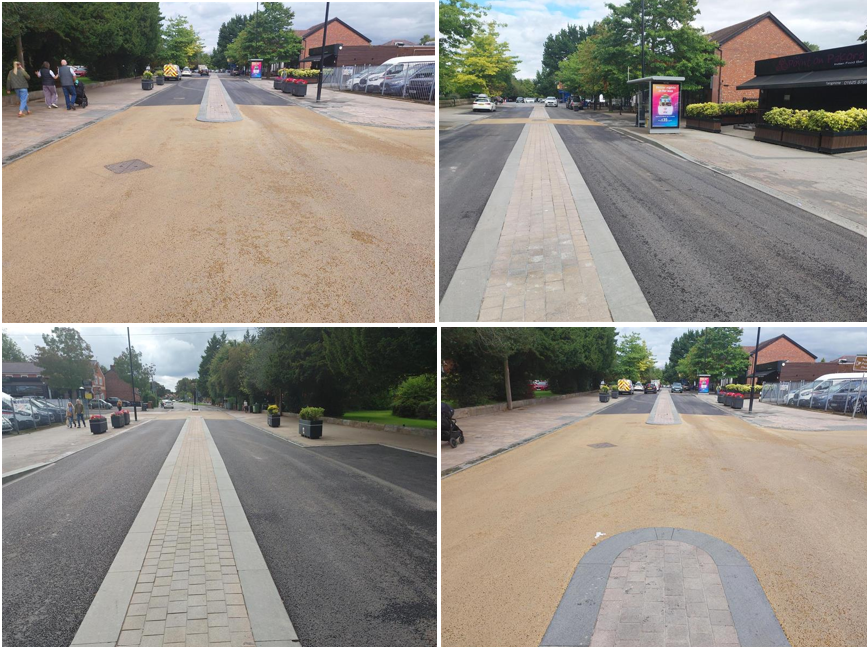
A major programme of improvement works on Poynton Shared Space scheme has now been completed. Over recent months we have delivered essential upgrades to the highway, drainage and street lighting, alongside improvements to Fountain Place.
Resurfacing works throughout the shared space area have also been completed, with the existing block paving replaced by a buff-coloured asphalt surface. The new surface is more durable and easier to maintain, while retaining the distinctive character of Poynton Shared Space and providing good contrast for all users, including people with visual impairments.
During the scheme, further investigations identified the need for additional drainage improvements at the junction of London Road South and extending into George’s Road West. The works will be carried out once the design phase has been completed. Local residents and businesses will be provided with updates ahead of the works starting.
Our resurfacing programme started in October across the borough. The works involve removing worn road surfaces, repairing defects, laying a new road surface and reinstating the road markings. Resurfacing helps extend the life of the road, improves skid resistance, and reduces the need for future maintenance.
Some temporary disruption is possible while works are completed, and dates may change due to weather or other factors. You can check the latest updates on the resurfacing webpage and look out for advance warning signs in affected areas.
Some of the roads included in this year’s programme are Groby Road Crewe, Flag Lane Crewe, and Chapel Lane Wilmslow. View the full list of roads included on the programme:
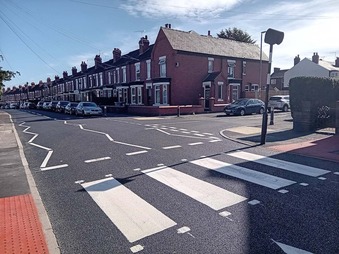
We recently completed our footway improvement and road resurfacing works on Stewart Street in Crewe, between Alton Street and Langley Drive.
The scheme included improvements to the footways, resurfacing of the road, and the renewal of road markings.
The works were delivered in phases to minimise disruption. Thank you for your patience and understanding while these essential improvements were carried out.
|
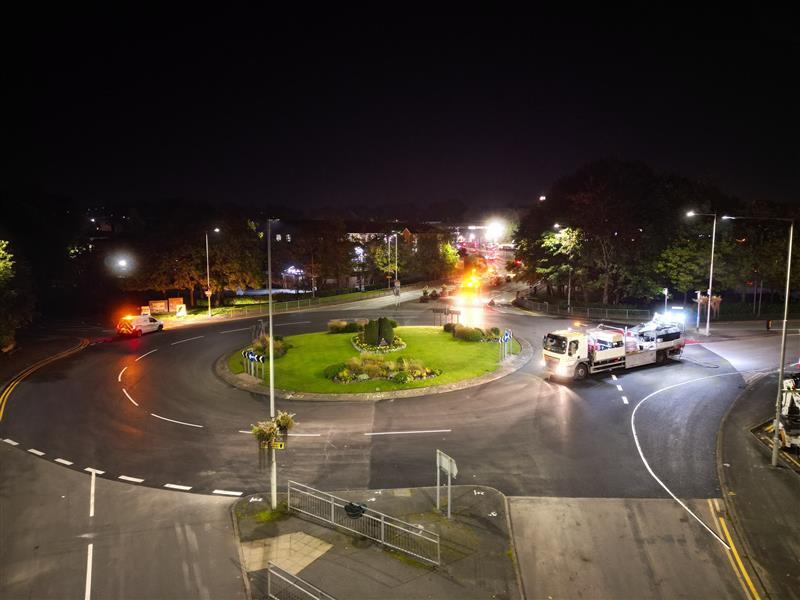
Resurfacing works on Rood Hill roundabout have now been completed, providing smoother journeys for all road users. Delivered over three nights, the scheme included renewing the road surface and reinstating road markings across the junction.
Completing the work overnight helped minimise disruption on this busy route, while allowing the improvements to be carried out safely. The new surface will help keep this key route in good condition for years to come, and we thank everyone affected by the works for their patience.
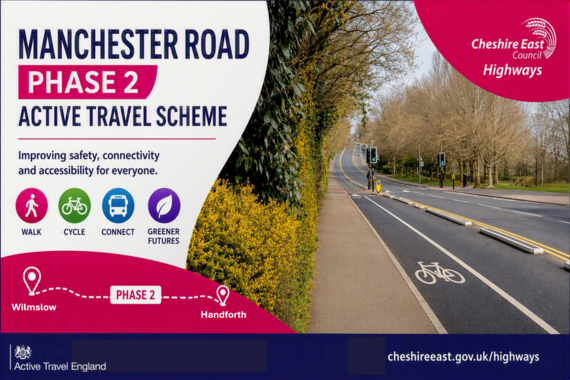
Works started on 5 October 2026 and will continue through to Spring 2027, to improve the walking and cycling route between Wilmslow town centre and Handforth.
The scheme is designed to help residents travel more sustainably while improving connections between communities, schools, shops, public transport and local facilities. As part of the works, the existing segregated cycleway will be extended along Manchester Road, creating a safer route for cyclists separated from traffic.
Several other improvements will also be delivered, including upgrades to the Network Rail bridge, new cycle bypasses at bus stops, and two new zebra crossings at Bluebell Way and Styal Road to help pedestrians and cyclists cross the road more safely.
We have recently faced some bridge related challenges, with damage, structural defects and deterioration affecting some routes across the borough.
While each structure presents its own engineering challenges, work is continuing to keep road users safe while long-term solutions are developed.
 |
|
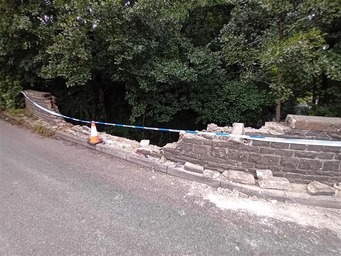
Reeds Bridge, Kettleshulme
Following a road traffic accident, the bridge parapet on the B5470 Macclesfield Road was dislodged and fell into the stream below.
Work to repair and reinstate the parapet will begin in November and will take around three weeks. The road will need to be fully closed while the work is carried out.
|
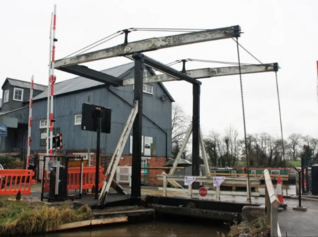
Wrenbury Lift Bridge, Wrenbury
We are working closely with the Canal & River Trust, the owners of the bridge, which has been shut following a road traffic collision that caused significant structural damage.
Temporary repairs are underway, which will allow the bridge to reopen. More extensive permanent repairs are expected next year.
|
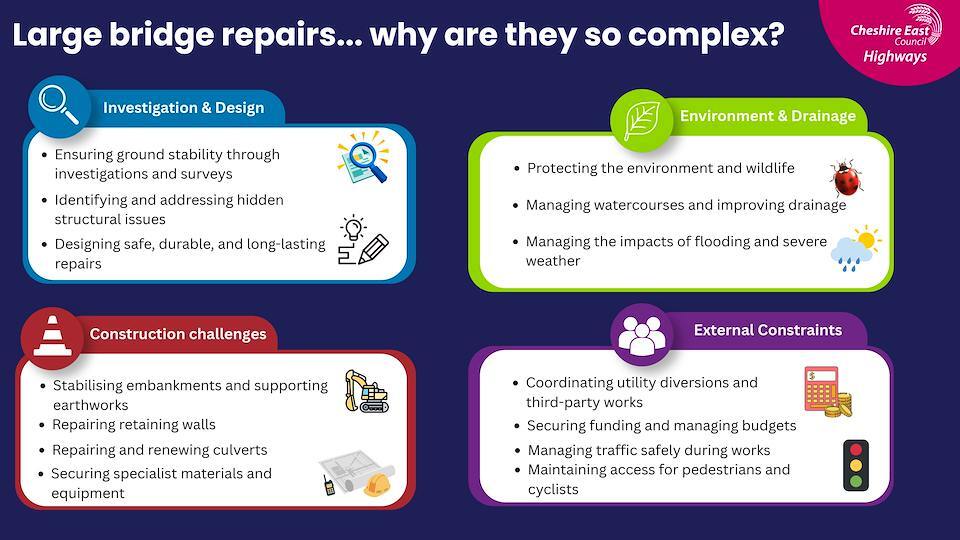
These schemes highlight the complexity of maintaining our bridge network, where investigations, design, funding and traffic management all play a key role in delivering safe, long-term solutions. The graphic below explains the steps we have to consider when planning repairs to our bridge structures around the borough.
Between April and September 2026, we have delivered a wide range of improvements across the borough. The figures below highlight the scale of the work completed by our teams to maintain and improve our roads.
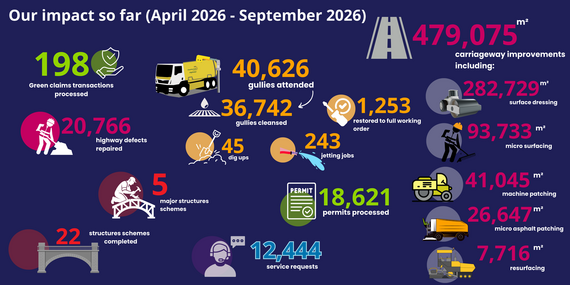
We are committed to being open and transparent about our performance, and our dashboard is designed to help you see how we are doing. If there is anything you would like to see included on the dashboard, please contact us with your feedback or suggestion at letusknow@cheshireeast.gov.uk or call us on 0300 123 5038.
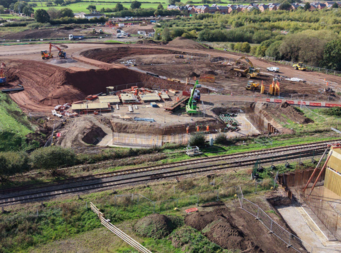
The Middlewich Eastern Bypass continues to take shape, with major progress made across the site in recent months.
Key milestones include the start of construction of new railway bridges, roundabout, installation of a culvert to accommodate the River Croco and the first sections of the new road are also underway.
To support the next phase of the project, Cledford Lane will close where the bypass crosses it from 26 October until summer 2027, allowing construction to continue safely.
As work progresses, more of the bypass will become visible across the landscape, bringing this important scheme a step closer to completion.
|
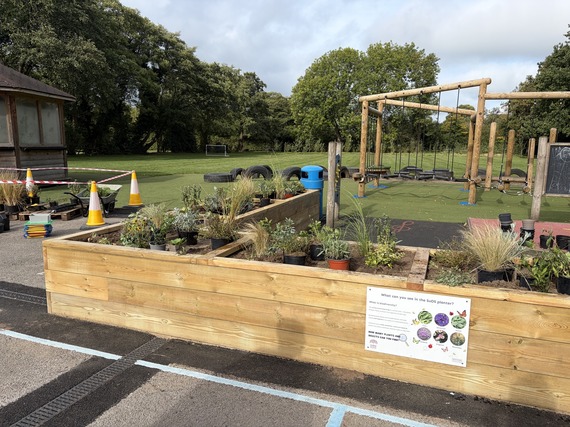
Working closely with Lindow Primary School in Wilmslow, we've created a new rain garden and sustainable drainage (SuDS) planters that help manage surface water while creating an outdoor learning space for pupils.
The scheme provides more than 20,000 litres of new water storage capacity, helping to slow and manage rainfall during heavy downpours. Filled with drought and flood-resistant plants, it will also boost biodiversity and bring even more nature into the school grounds.
Pupils got stuck into planting workshops, learning about sustainable drainage and helping bring the project to life. New interpretation signs will also help the children discover how these features work and the role they play in managing water naturally.
A great example of how nature-based solutions can help reduce flood risk while delivering benefits for education, wildlife and the wider environment. 🌱
 |
|
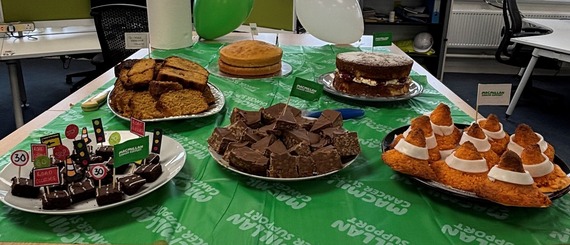
Highways colleagues across our offices and depots recently came together to raise money for Macmillan Cancer Support through a coffee morning event.
The teams enjoyed homemade bakes, competitions and fundraising activities, raising around £500, all in support of a charity that provides vital services for people living with cancer and their families.
|
|