|
March's edition of Cefas Monthly News, once again, highlights the breadth of Cefas’ recent work.
From advancing innovation in fisheries monitoring, to improving data on seaweed production and building capability overseas; we have a range of stories to enjoy. You’ll read about international partnerships helping communities understand and adapt to coastal change, progress on Remote Electronic Monitoring and new ways we’re gathering evidence as part of the Sustainable Blue Economies programmes. We’ve also shared how we marked British Science Week and how we are making more use of drones in our science.
I hope this edition gives you a sense of the impact of the work we do and the people behind it.
Neil Hornby, Cefas Chief Executive
|
|
|
Media Spotlight
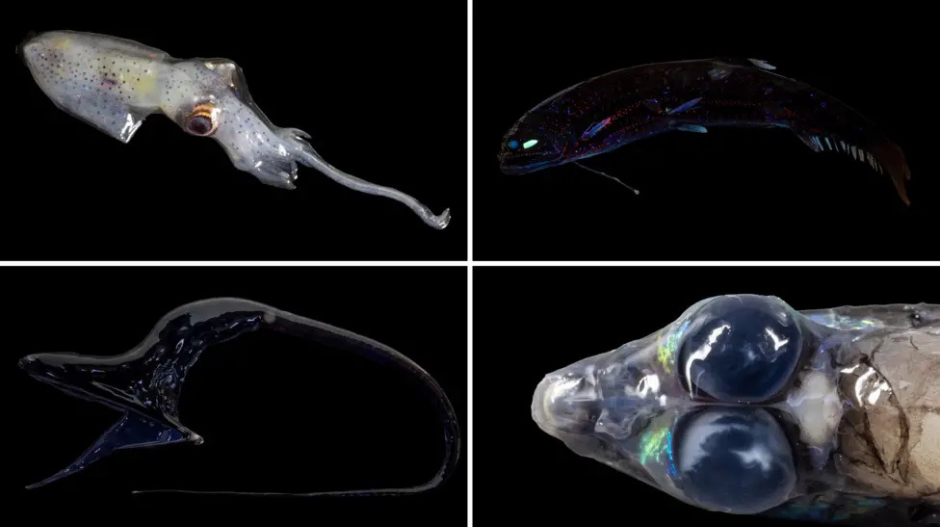
The Beyond the Reef Expedition makes waves around the world
 Lawrence Eagling and the Blue Belt Programme
The Blue Belt Programme’s 10th expedition has made it in headlines across the world. From Argentina to New Zealand, media outlets have shared the creatures inhabiting the deep-sea world of Anguilla, Turks and Caicos and the Cayman Islands. Exciting finds from each leg of the expedition have received global attention including the mesophotic reef found in Anguilla, a 70km underwater mountain range and new blue hole in Turks and Caicos, and uniquely healthy coral reefs in the Cayman Islands.
Closer to home, the expedition was featured on BBC breakfast and in this BBC online article written by Georgina Rannard on March 8th.
|
|
Cefas celebrates British Science Week 2026
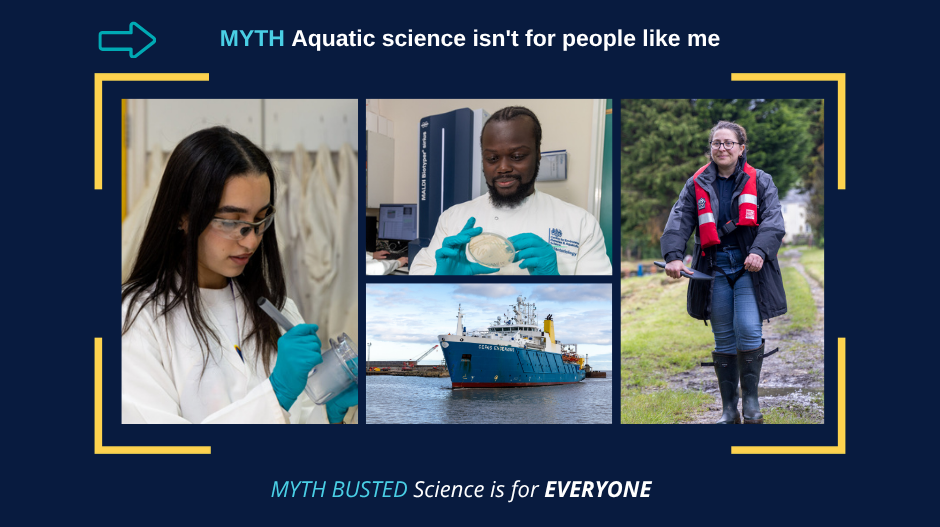 To celebrate National Careers Week (2-7 March) and British Science Week (6-15 March) this year, Cefas focused on the theme of Smashing Stereotypes, a British Science Association led campaign. Research shows that marine science is among the least diverse degree subjects in the UK.
Our new blog, Opening up the Ocean: Why Diverse Voices are Vital for the Future of Marine Science, examines the evidence behind the underrepresentation and sets out the steps Cefas is taking to address it, alongside other organisations across the sector. Throughout the week, we shared a series of myth-busting posts on social media as part of #BSW26.
|
|
Remote Electronic Monitoring - End of trial phase
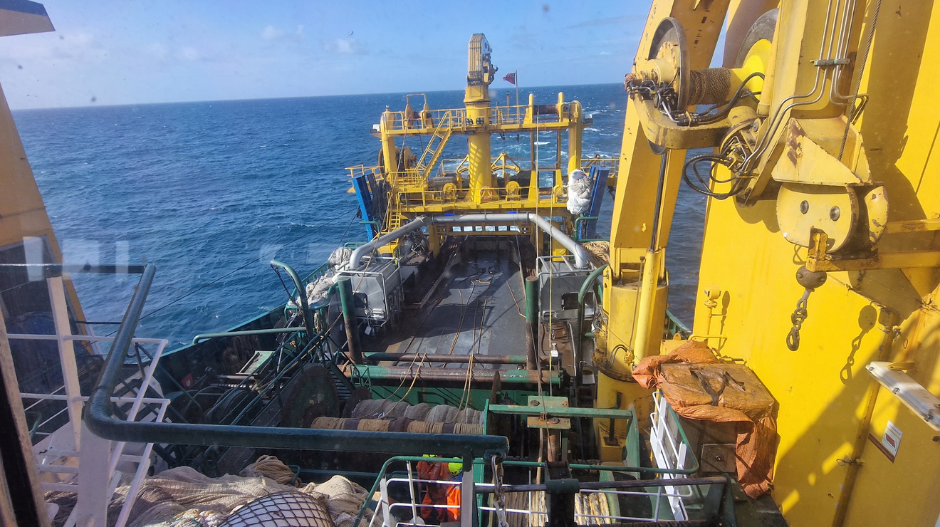
Remote Electronic Monitoring (REM) is a data collection tool that can be installed on vessels to collect information on fishing activities and catches.
In 2024, an early adopter trial started with the installation of REM equipment onboard the Frank Bonefaas, a 24m fishing vessel targeting pelagic species. The installation was led by expert delivery partners from Cefas and Marine Management Organisation, along with support from specialist engineers, TecMarine, and the North Atlantic Fisheries Company - owners of the vessel. The aim of this early adopter phase was to test and refine the REM monitoring objectives for this fishery, particularly concerning analysing the full catch and observing any interactions with sensitive species
Throughout this phase of the project, video footage from the vessel’s REM system was reviewed with the aim of meeting the monitoring objectives. After nearly 18 months of collecting data, the early adopter phase has now come to an end, although data analysis will continue for a while. Going forward, we will be looking at how to apply this learning and using it in the next phase of the programme.
|
|
Science Spotlight
How will climate change shape the future of our oceans and the communities that depend on them?
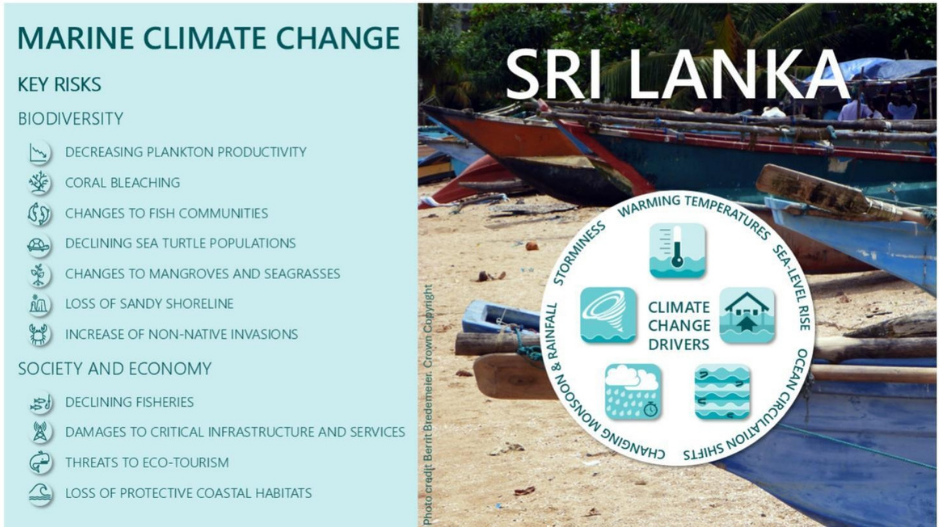 This new study explores the risks facing Sri Lanka, where coastal livelihoods are closely tied to the health of marine ecosystems.
Bringing together the latest evidence, this research highlights growing pressures on coral reefs, mangroves and seagrass habitats, alongside changes in fish populations and threats to iconic species such as sea turtles. These impacts could have far-reaching consequences for fisheries, tourism and coastal protection.
The study also identifies important gaps in knowledge and provides recommendations regarding marine monitoring and research, and options to strengthen climate policies and climate adaptation in Sri Lanka.
|
|
Seaweed production questionnaire
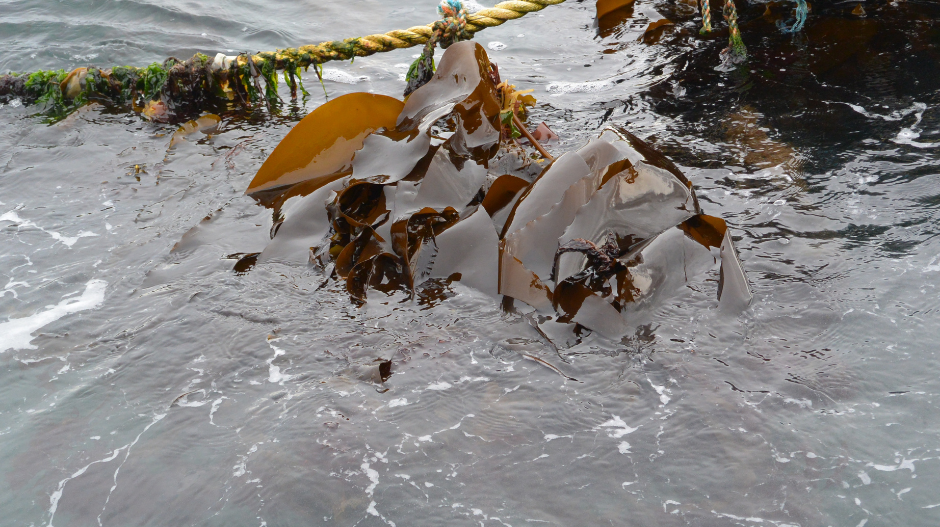 In the UK, seaweeds have traditionally been harvested from the wild for food, feed and fertilisers and, more recently, for the production of other resources. In the last decade, seaweeds have also started to be produced via aquaculture sources across the UK. However, there is currently a gap in UK data collection for seaweeds, which are not included in the existing aquaculture or fishery data collection schemes. There is no current collection of information on farms and harvesting sites (number, size), production (seaweed species, volume, value, use), employment or enterprises, for either farmed or wild-harvested seaweeds.
We are asking UK seaweed producers (wild harvest and/or aquaculture) to help collect this vital data by completing a short survey. The data will help measure seaweed’s value to coastal communities and seafood supply, provide vital statistics for industry and regulators, and put the UK on the global seaweed production map.
|
|
Unchatted Waters - Latest Podcast Episode
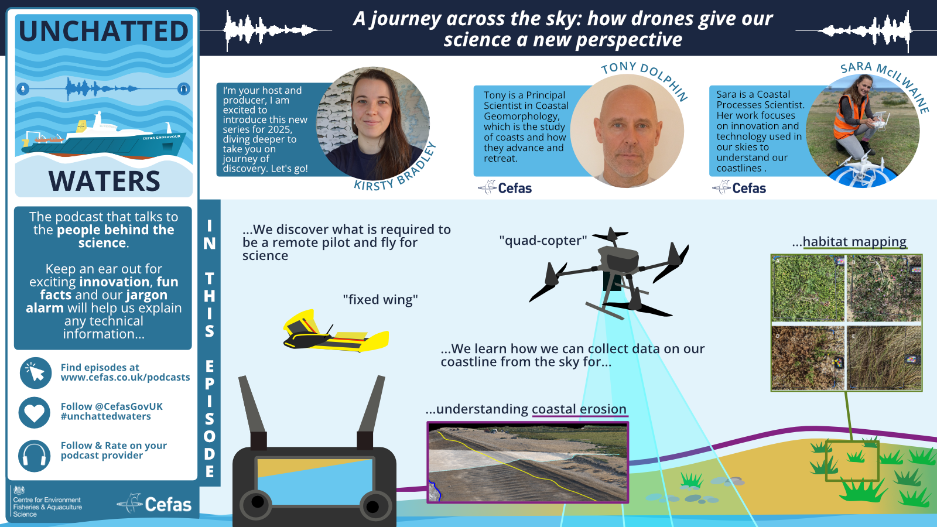 In our latest episode, we go on a journey across the skies and talk about how remotely piloted aircraft (RPAs), also known as drones, can gather data for science.
RPAs can help answer questions about how the coast and coastal habitats are changing, which gives us information needed to respond to these changes. From understanding changes in the shape of our coasts to monitoring habitats, we explore how this technology is evolving and how future potential uses could be sky high.
|
|
Event Spotlight
Cefas hosts Infinifish Workshop
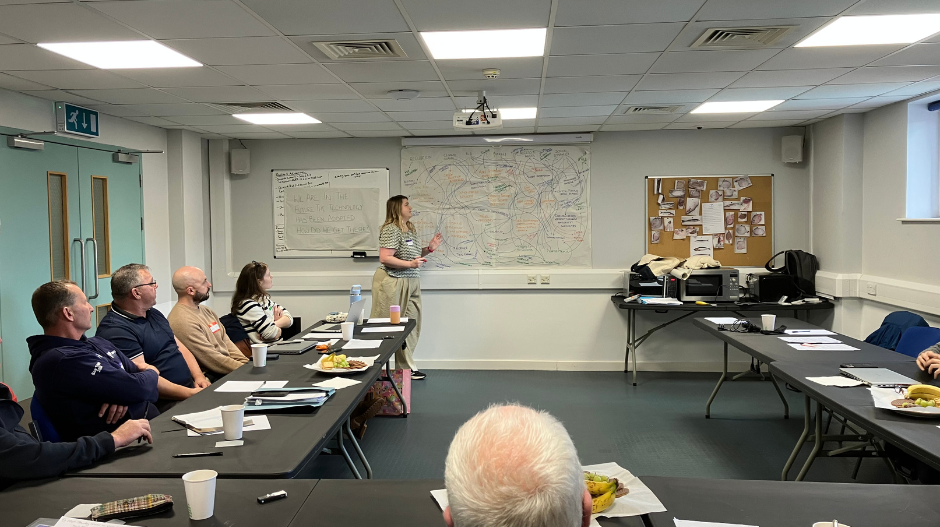 Cefas recently hosted a stakeholder workshop as part of the EU Horizon Europe Infinifish project, which aims to support climate‑friendly and resilient fisheries through innovation and co‑learning.
Bringing together fishers, industry representatives, policymakers, technology developers and researchers, the workshop explored opportunities and barriers to the uptake of new fishing technologies. Using mapping methods, participants shared practical experiences and insights to better understand how innovations can work in real‑world fishing contexts.
|
|
UK and Grenada partner on monitoring coastal erosion to protect communities
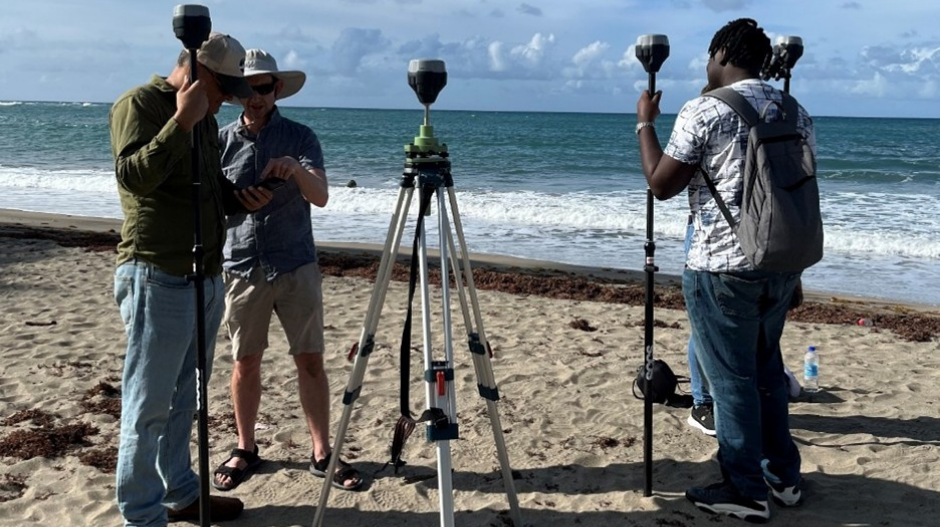 Cefas has been working with Grenada's Ministry for Climate Resilience to enable coastal communities to measure and understand how their coastlines are changing, including in response to climate change. The project, delivered through the UK's Sustainable Blue Economies Technical Assistance Platform, trained communities in St Patricks, Carriacou and Petite Martinique to use drone and satellite navigation technology to track changes and supply valuable information for planners and policymakers, filling a gap in available evidence. Data was collected from several vulnerable coastal communities across Grenada using erosion monitoring tools. GPS survey equipment was provided for local community, youth groups, NGOs and government officers to continue to track changes to their coastlines. The project supports Grenada's national planning for climate resilience and use of biodiversity for coastal erosion solutions that can directly protect livelihoods in fishing and tourism.
|
|
Sustainable Blue Economies in Jamacia
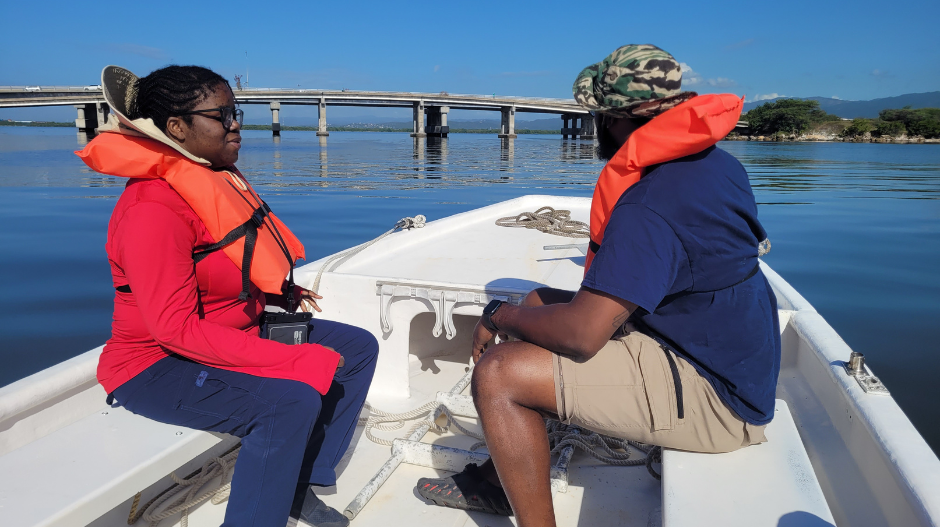 Cefas was recently in Jamaica continuing our collaboration with Jamiaca's National Environment and Planning Agency, the UNEP, Cartagena Convention Secretariat and Caribbean Environment Programme (CEP) and The University of the West Indies (UWI) to deliver the Sustainable Blue Economies (SBE) 'Support For Enhancement of National Water Quality in the Wider Caribbean Region' project.
The project aims to strengthen Jamaica’s national capacity for marine water quality assessment. Together with UWI students, we carried out field sampling and laboratory analysis, building practical skills in core water quality methods. Throughout the week, we also engaged with coastal communities and youth groups to understand how marine pollution affects livelihoods, health and local environments, ensuring these voices shape a more inclusive and grounded national assessment.
|
|
People Spotlight
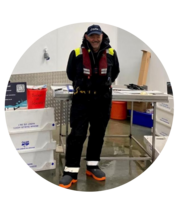
Each month we shine the spotlight on the work of a current member of Cefas staff. This month, we hear from Spike.
"I was born and raised in London and Essex, but I came down to Cornwall on a whim in the late 1970s and never left. I started out working on farms and building sites, before spending 15 years at sea as a fisherman.
When I finally came ashore, I set up a fish restaurant, completed a degree in Fisheries Science at Plymouth University and worked on a range of environmental and fisheries projects before joining Cefas.
These days, my work involves a lot of time on the quay, talking with fishers and supporting projects that test new technologies in real fishing conditions. A big part of the job is checking in with skippers and making sure everything’s running smoothly, without the science getting in the way of fishing.
As an ex‑fisherman, one of the best parts of my job is being able to walk into a group of fishers and just start chatting. That trust and connection is vital and what allows Cefas to collect good science and make sure it reflects what’s really happening at sea. If I’ve learned anything along the way, it’s that there’s no single route into this kind of work. Getting experience at sea, asking questions and being genuinely interested counts for a lot."
Spike Searle - Fisheries Liaison Officer
|
|
|
|
|
|