|

Welcome to August’s edition of #CefasMonthlyNews!
I'm delighted to be your guest editor for this month’s edition. As a Civil Service Fast Stream Summer Intern, I have been enjoying a 9-week deep dive into Cefas’ science communications and engagement initiatives.
In this edition, you will find a wide range of stories highlighting diversity amongst our colleagues and their work, including insights from our other Civil Service Summer Interns and recent local community engagement. You can also read updates from our team in Sri Lanka and Ghana under the Ocean Country Partnership Programme, as well as an article evaluating the solutions towards the protection of marine ecosystems and biodiversity from climate change.
I hope you enjoy our latest newsletter. Why not share this edition and tell us what you think on social media using #CefasMonthlyNews?
Leika Guerrero - Defra Summer Intern at Cefas
|
|
|
Science Spotlight
Assessing the effectiveness of marine nature-based solutions with climate risk assessments
 As part of the EU project FutureMARES, an international team of scientists co-led by Cefas have developed a “ready-to-use” tool to explore the effectiveness of Nature-based Solutions (NBS). NBS are climate-resilient management strategies that have been increasingly used to maintain coastal and marine biodiversity and the delivery of ecosystem services. The tool and its application, through two case-studies, was recently published in the journal Global Change Biology.
Whilst it is widely known that climate change is showing significant impacts on the ocean and the coast, it is important to remember that the effectiveness of marine management strategies (like NBS), which are designed to protect or mitigate the effect of climate change can be impacted themselves by the effects of climate change. This means that even if a NBS is efficient at protecting or restoring nature today, no one really knows whether it will remain so, in a future increasingly impacted by rises in global temperature. This uncertainty causes many challenges for decision-makers and society to know which strategy is best to implement now, that will also remain effective in the future.
To address this gap, researchers developed a tool based on the Climate Risk Assessment method as a proxy to analyse the current and future effectiveness of different NBS implemented across European seas, of which an example considers the application of NBS in the area of “nature-inclusive harvesting” on two shellfisheries. The method works as a rapid assessment that guarantees comparability across sites and species due to its low data or resource demand, so it can be widely incorporated into adaptation policies across the marine realm.
|
|
National Marine Week 2024 - Sea the Connection
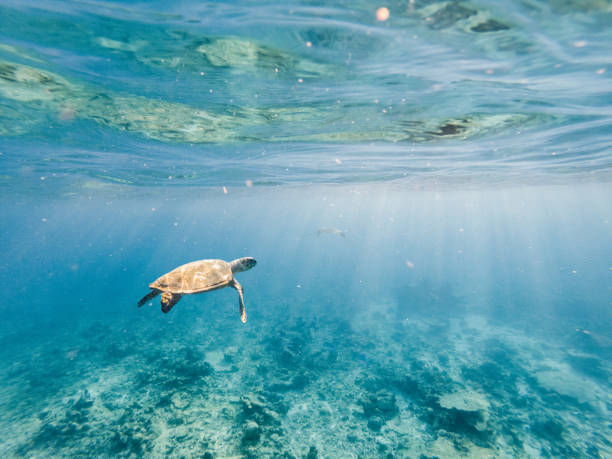 Cefas celebratated National Marine Week across our social media platforms by highlighting episodes of our podcast, recent science papers and the latest marine science blogs.
Led by the Wildlife Trusts, National Marine Week took place this year from Saturday 27th July to Sunday 11th August. Occurring annually, this week aims to motivate people to better understand and appreciate our oceans. This year’s theme ‘Sea the Connection’ focused on celebrating the diverse ways people feel connected with the sea.
Throughout the past month, celebrations and events have taken place across the country. The event accounts for the UK’s varying tidal conditions and spans a fortnight to ensure coastal communities nationwide can participate. From the ‘SeaFest’ celebration in Cumbria to ‘Marine Mammal BioBlitz’ in Cardigan Bay, West Wales, these marine-themed events have allowed communities to learn about the diversity of our oceans and the significance of protecting marine life.
The Wildlife Trusts are encouraging people to share their connections with the sea on an interactive map: through livelihoods, memories, hobbies and special experiences.
Marine Protected Areas Day 2024
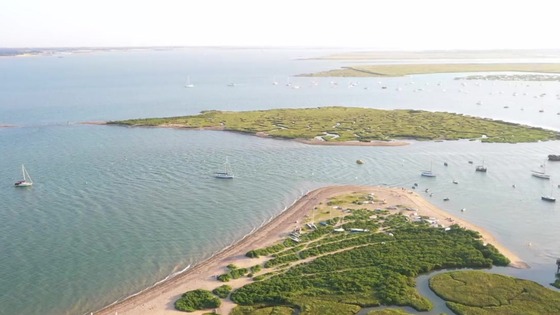 The 1st of August was Marine Protected Areas Day; an annual event aiming to raise awareness and support for Marine Protected Areas (MPA). An MPA is an area of the ocean where activities are regulated to protect marine life and habitats.
For the Blue Belt Programme and its work, MPAs are core. From the Southern and Atlantic Oceans to the Pacific and Indian Oceans, the UK Overseas Territories MPAs create a global network of environments benefiting people, biodiversity and the climate.
The programme celebrated MPA Day across social media by highlighting the amazing efforts of UKOTs and their partners in managing and monitoring these vast ocean ecosystems to:
- Protect over 4 million square kilometres of the marine environment
- Protect 1% of the world's ocean
- Support coastal communities through sustainable fisheries management and tourism opportunities.
|
|
Event Spotlight
Opening our doors to our local community in Lowestoft
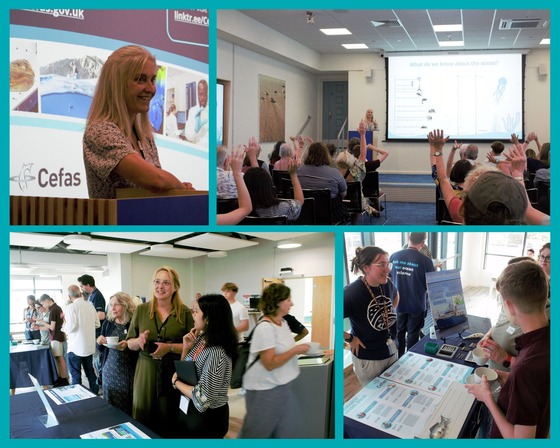 On Tuesday 13th of August, we were delighted to welcome over 40 people to our latest Public Talks event in Lowestoft. Our series of public talks are hosted every year, providing members of our local community with the opportunity to learn more about the work we do.
The talks consisted of a wide range of presentations providing insights from climate change and blue carbon, work and life on our research vessel ‘the Cefas Endeavour’, to our discovery of the sea slug, Pleurobranchea Brittanica, as well as challenging the audience on their knowledge of our seas, with an engaging ‘fish identification’ game. The talks were followed by a Q&A session involving all our talk hosts and then refreshments in our café area, with time to explore science stands on the topics of plankton, the Cefas Endeavour and our podcast, #UnchattedWaters.
Given the positive responses to these events, we have further public talks in Weymouth and Lowestoft planned for next year as they continue to provide an invaluable opportunity for us to welcome our neighbours onto our sites and to make our science more accessible to the public.
|
|
Advancing Marine Protection Efforts with the Ocean Country Partnership Programme (OCPP)
 We’re thrilled to share some recent highlights from two of our OCPP partner countries.
In Sri Lanka, a ‘Marine Pollution Prevention and Coastal Ecosystem Conservation Workshop’ was organised by Rockland Distilleries (Pvt) Ltd in partnership with OCPP, which brought together youth from various environmental organisations. The workshop explored critical issues such as pollution prevention, coral conservation, and the threats facing the country’s marine ecosystems. Participants engaged in practical activities, including waste mapping and biodiversity assessments along the coastline, providing them with hands-on experience in coastal conservation. The workshop, aligned with the UN Environment Programme's Tide Turners Plastic Challenge initiative, was a valuable step towards building capacity for marine conservation in Sri Lanka.
The OCPP team also recently collaborated with the Solomon Islands Government Ministries and the Marine Management Organisation to strengthen marine conservation efforts. Productive discussions were initiated, such as the Melanesia Sea Dialogue with the Ministry of Fisheries and Marine Resources which ultimately aims to strengthen and advance marine conservation efforts and initiatives to protect marine biodiversity, combat pollution, and promote sustainable seafood practices.
|
|
#UnchattedWaters - Reflecting on Marine Litter Pollution Impacts
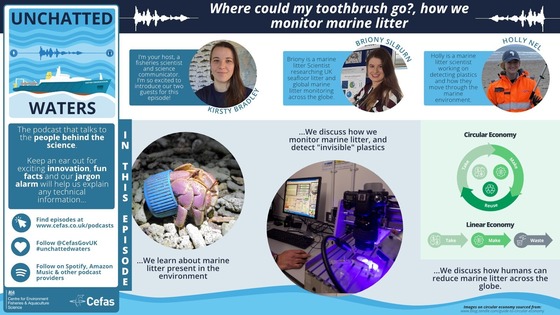 Within our latest Unchatted Waters podcast episode, we discuss litter in the marine environment. A common issue worldwide, the podcast highlights the diverse complexity of this issue, discussing how it can impact multiple aspects of society, the economy and most significantly, our environment.
The episode also explores how we monitor marine litter and how we detect “invisible” plastic, how we can reduce litter across the world and bring about positive change to ensure humans only leave footprints for future generations.
Listen to this and all the episodes by clicking the link below or through your usual podcast provider.
|
|
Group Spotlight: Civil Service Fast Stream Summer Interns
As we reach the end of this month, we say farewell to our Defra interns who have been placed here at Cefas over the course of this Summer. From publishing social media and marine science case studies, to assisting project managers and supporting various fisheries research initiatives, it is safe to say they've been busy; their efforts have played an integral part of our organisation’s work. Here’s what they had to say about their time at Cefas:
 |
|
“Hi, I’m Iris and I’m interning under Cefas’ Portfolio Management Office (PMO). I’ve been really enjoying getting to learn about how everything runs and helping out where I can. I’ve been helping with various project reports around marine fisheries and aquaculture space as well learning about other different projects here at Cefas, what they entail and how they all interlink. I also contributed towards a programme handbook which has been really interesting. I’ve loved my time here and enjoyed contributing to various worthwhile projects".
Iris Baker |
“Hello, I’m Varsha and during my 6-week summer internship, I created technical outputs for a Cefas coastal project while learning and developing transferable skills crucial for the workplace, such as decision-making, fast-paced delivery, and professional communication. My experience has also broadened my understanding of the diverse skillsets needed in the Civil Service, such as teamwork and strategic thinking. My favourite part was interacting with like-minded Cefas colleagues, other interns, and attending helpful workshops from Defra and the Cabinet Office. Speaking with fast streamers who were once in my position was invaluable. Overall, this internship has been fun and informative, inspiring me to take initiative in my career.”
Varsha Vinod |
|
 |
 |
|
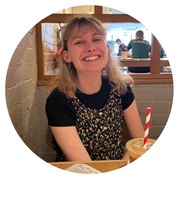
"I have found working at Cefas to be an enjoyable working environment. Everyone has been very welcoming to us interns and it has been really insightful to learn how the Civil Service operates and to learn more about Cefas and what they are doing to help the environment".
Amy Dunn |
|
|
|
|
|