|
Celebrated on June 8, #WorldOceanDay is a global event that promotes understanding and action for our ocean.
#CefasScience helps to tackle some of the most pressing problems facing rivers, seas and ocean. We support both UK and international governments to inform the difficult decisions needed to balance societal needs, whilst protecting and restoring nature.
In June's edition of #CefasMonthlyNews, we share how we celebrated World Ocean Day. From school visits in our Lowestoft laboratory to the launch of new episodes of our podcast, Unchatted Waters, we took the opportunity to highlight a range of our science specialisms to celebrate this important day.
I hope you enjoy our latest edition. Why not share this edition and tell us what you think on social media using #CefasMonthlyNews.
Neil Hornby - Cefas Chief Executive
|
|
|
Science Spotlight
The underwater soundscape of the North Sea
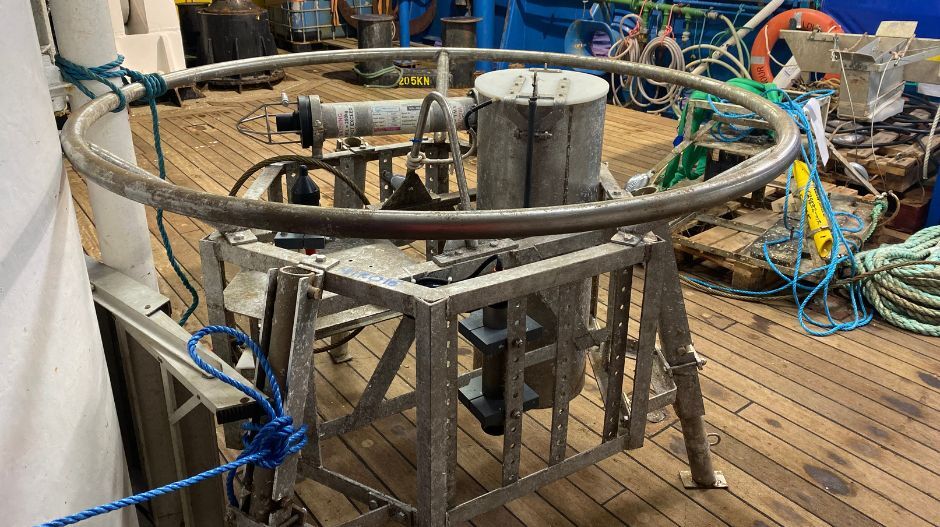 Noise lander used to measure underwater sound
Cefas scientists have contributed to an international study of underwater sound in the North Sea, recently published in Marine Pollution Bulletin.
Researchers from eight countries bordering the North Sea carried out a coordinated programme of underwater recordings at 19 sites during 2019 and 2020, as part of the EU co-funded project JOMOPANS – the Joint Monitoring Programme for Ambient Noise North Sea. This effort included two sites in English waters monitored by Cefas.
Underwater noise from human activities is thought to be increasing in the world’s oceans, in line with rising levels of shipping, offshore construction, and surveying. This noise is known to have detrimental effects on marine life, such as auditory damage, behavioural disturbance, and the masking of biologically important sounds. Scientists are also concerned that these effects could lead to population declines in some species.
The findings of the study have provided the most comprehensive characterisation of the North Sea soundscape to date, establishing a baseline against which future trends in ocean noise can be benchmarked.
Learn more about ocean sounds in episode 9 of #UnchattedWaters.
|
|
Inspiring the next generation of aquatic scientists
 To celebrate World Ocean Day, there was a rumble of excitement in Cefas’ Lowestoft lab on Friday 7th June, as sixty students (aged 9-10) from our partnership school, St Margaret’s Primary Academy, were invited into the building to become scientists for the day.
On the day, students received a welcome talk before dividing into groups to rotate around activities covering artificial intelligence, microplastics sand sampling, a beach clean and field sketching. The day concluded with a Q&A delivered by the scientists supporting the event. This provided the students with a final opportunity to ask any burning questions that may have been generated over the course of the day.
|
|
Event Spotlight
First Light Festival 2024
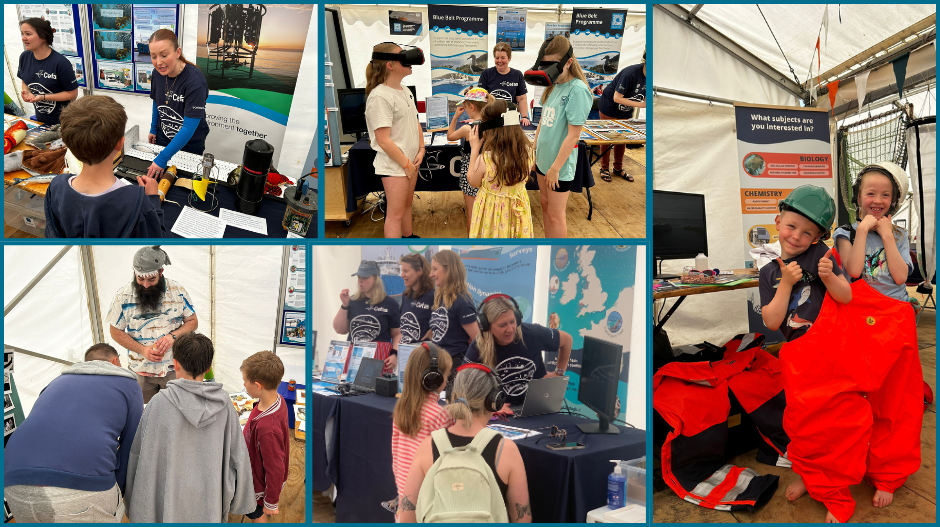 Last weekend, First Light Festival delighted crowds on Lowestoft's South Beach. Cefas colleagues were on hand in the Plant Positive Dome, providing a range of fun activities and answering those burning questions about aquatic science. The Cefas stand provided a dive into a range of our science specialisms including marine litter, marine protected areas and our impressive research vessel.
Thank you to everyone who came to see us. We had a fantastic time sharing our work with you and hope you enjoyed it as much as we did!
Our Environment Science Director, Dr Michaela Schratzberger also delivered a thought provoking talk to the crowds, discussing the current state of the ocean, what threats it is facing, and how can we safeguard the ocean for future generations.
We're already looking forward to next year!
|
|
Listen to the latest episodes of #UnchattedWaters
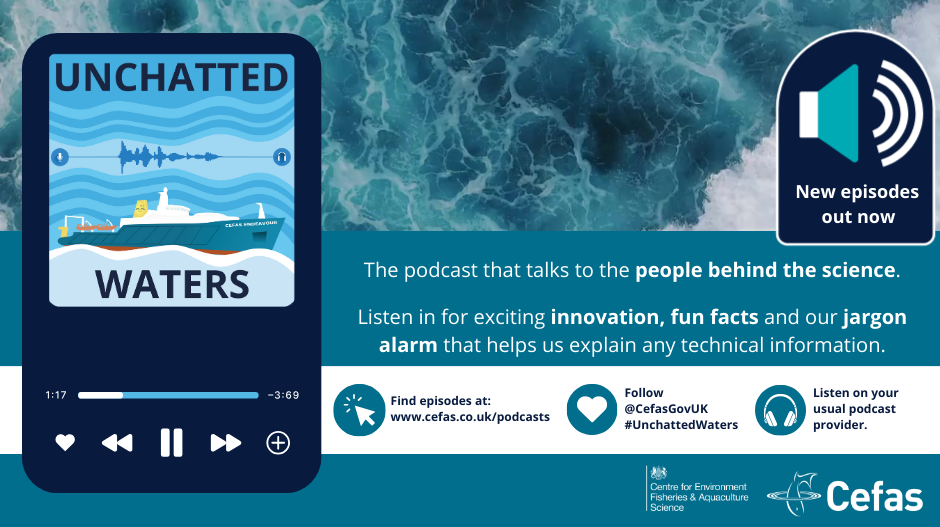 We continued our celebrations of World Ocean Day on social media, with the launch of new episodes of our podcast #UnchattedWaters; the podcast that talks to the people behind the science. Suitable for everyone, all you need is some curiosity about science.
In our latest episodes, we discuss a range of topics including oceanography, climate change, underwater noise and marine litter. Hear about how our ocean moves, how temperature changes impact the ocean, what we can hear underwater and how we monitor marine litter.
Listen to all the episodes by clicking the link below or on your usual podcast provider.
|
|
People Spotlight
Each month we shine the spotlight on the work of a member of Cefas staff. This month we hear from Emily Roebuck, a Marine Scientist at Cefas who specialises in sensitive species bycatch (the accidental capture or entanglement of animals in fishing gear).
"In the UK, bycatch is one of the most significant threats to the conservation and welfare of sensitive marine species. My work focuses on understanding and monitoring the complex issue of bycatch in UK fisheries. Cefas collaborates with a range of partners, as well as closely working with fishers to draw on their knowledge and develop practical mitigation solutions to reduce and, where possible, eliminate bycatch.
This month, I was fortunate to participate in the World Ocean Day celebrations. The children showed great enthusiasm throughout all activities, and it was really rewarding to hear their scientific minds develop as they identified different ways the environment was affected by marine litter. Events such as these highlight the importance of sharing the science conducted at Cefas, and how this influences everyday life, both locally and internationally."
Emily Roebuck - Marine Scientist
|
|
|
|
|
|