|

British Science Week is an annual celebration in March of science, technology, engineering and maths (STEM) and an opportunity for children, young people and communities to take part in events designed to inspire all ages and all communities: celebrating the diversity of careers and people in British science. A recent survey by the British Science Association found that just 34% of 14-to-18-year-olds in the UK think science is relevant to their life. Even more concerning is that only 8% think a scientist can look like them.
At Cefas, we are committed to engaging young people in our science. This month, and throughout the year, we are proud to support a range of events and activities, working with our partners to inspire the next generation of STEM experts and enthusiasts, towards a shared commitment to a sustainable future for our aquatic environment and the life it supports.
In this month’s update, we take the opportunity to shine a spotlight on some of our recent engagement and communications activities. If there are particular aspects of our work you would like to learn more about, please do get in touch.
Helen Egar - Head of Communications and Engagement
|
|
|
Science Spotlight
To what extent can decommissioning options for marine artificial structures move us toward environmental targets?
 Switching from fossil fuels to renewable energy is key in the move towards net zero. Along with this switch, the decommissioning of existing end-of-life offshore platforms is required. Current legislation directs the complete removal of these structures. However, the impacts of alternative options, such as repurposing or abandoning them have not yet been fully studied.
A recent study is the first to evaluate different decommissioning options against 37 global and regional environmental targets. The study found that abandoning or repurposing individual structures, or even abandoning multiple structures across a region, could bring ecological benefits. However, there was no conclusive evidence to support or deny the common thinking that these structures function as artificial reefs.
This study highlights the need for flexible decision-making and that some targets may need to be prioritised over others. It also highlights the need to consider social, economic, and ecological factors within a whole-ecosystem approach when managing decommissioning end-of-life offshore platforms.
|
|
Inspiring the Next Generation of Aquatic Scientists
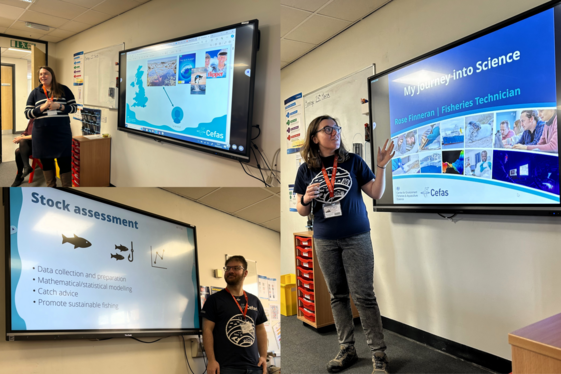 On 26th March, Cefas scientists visited Year 8 and 11 students at Cliff Park Ormiston Academy Trust, in Norfolk, to help inspire the next generation of aquatic scientists. They offered insights into careers in the field and demonstrated real life application of the topics they have been covering in the classroom.
Among the group was: Dr Aaron Brazier, a fisheries stock assessor, Dr Rosalyn Putland, an underwater noise scientist, Paula Milliken, an ecotoxicologist and Rose Finneran, a fisheries technician. They each shared stories of their passion to pursue rewarding careers in the field of aquatic science, the highlights of their roles and how they have overcome challenges throughout their career journey.
Students were particularly interested to hear about the varied entry routes each speaker took, from apprenticeship to post graduate level, demonstrating the breadth and range of opportunities available in science.
We are committed to bringing our science to wider audiences and through our work with a number of schools, we are currently working to develop digital education and careers content available for all. We’ll update you on our progress later this year.
|
|
Media Spotlight
New species of sea slug discovered in uk waters
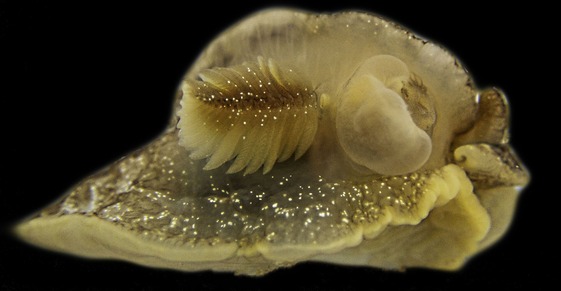 This month, we were very excited to announce the discovery of a new species of sea slug. Pleurobranchaea Britannica was discovered by Cefas scientists on a routine fisheries survey onboard our research vessel, the Cefas Endeavour. It is the first recorded instance of a sea slug from the Pleurobranchaea genus in UK waters. Sea slugs are valuable indicators of ecosystem health, helping scientists understand the impacts of climate change and human activities on marine habitats.
Our story was amplified across UK national and regional print and broadcast news (BBC Today Programme, BBC news online, Sky News, Evening standard), with a focus on the impact of climate change on our marine ecosystems. Our scientists, Ross Bullimore and Hayden Close, had a busy weekend on interviews, featuring on the BBC News at 10, BBC 5 Live, BBC Radio Cornwall, and BBC World Service. Learn more about their involvement in the People Spotlight below.
|
|
Tackling Global Aquaculture Challenges
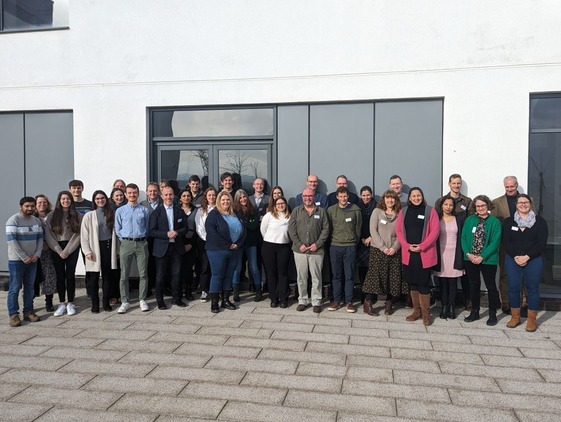 At the start of the month, partners from the Collaborative Centre for Sustainable Aquaculture Futures (SAF) came together to reinvigorate the partnership between Cefas and the University of Exeter.
The work of SAF aims to tackle critical global challenges related to the development of safe and sustainable aquaculture by bringing together experts from a wide variety of disciplines. SAF brings together top scientists from around the world to carry out research in this area.
The meeting provided a unique opportunity to analyse and celebrate the work of SAF, identify future collaboration and welcome the new co-directors and was attended by a range of experts from both institutions, plus many early career researchers that SAF supports.
|
|
Event Spotlight
Dorchester Family Science Day
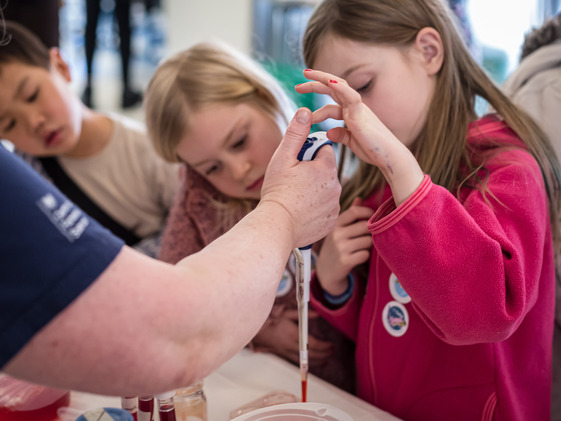 Credit: Dorset Bays
We were thrilled to attend the Dorchester Family Science Day at the Dorset Museum as part of British Science Week.
This annual event hosted by Dorchester Council offers an exciting range of activities delivered by local scientists and has been a sell out each year, helping to engage hundreds of people throughout one jam packed day with science.
At the Cefas stand, we took a deep dive into the fascinating world of aquatic science.
Budding biologists got to:
🐟 measure and tag a fish 🌊 make their pledge to the ocean 🍤 get messy when learning how we keep seafood safe
It was a great opportunity to share what we do, and meet many people from our local community. Thank you for hosting us!
|
|
The Blue Belt Journey: Celebrating the Past, Charting the Future
 In February, the Blue Belt Programme – which is co-delivered by Cefas – brought together representatives from 10 UK Overseas Territories in London.
Over three busy days, a range of presentations, workshops and exhibitions reflected on the Blue Belt Programme and work of the Territories to date, as well as charting future priorities to ensure they can continue protecting and sustainably managing their incredibly biodiverse and unique marine ecosystems.
The event was opened with a message from His Majesty King Charles III, and saw new announcements launching a citizen science collaboration with ZSL’s Instant Wild platform, as well as new additional protective measures for the South Georgia & South Sandwich Islands Marine Protected Area.
|
|
People Spotlight
Each month we shine the spotlight on the work of a member of Cefas staff. This month, we spotlight two scientists, Ross Bullimore and Hayden Close who were instrumental to the recent sea slug discovery. In the spotlight they share their role at Cefas and how they got involved in this work.
"My current role at Cefas is focused on mobilising and ensuring our legacy data holdings, and raw science data and outputs from current and future programmes of work are enabled to meet approved standards.
It was my background in benthic epifauna taxonomy and in-situ biodiversity surveys however that informed my part in the discovery of the recently described Pleurobranchaea species. It’s a common misconception that as UK waters are some of the most well studied marine areas across the world we know all there is to know about the species living there. My experience in species taxonomy and in-situ identification has taught me even more about what we don’t know, than what we do know about the marine environment, even in our own local patch. This new species discovery and description just shows that by keeping your eyes open and questioning your assumptions about what you see in front of you, you never know what you’ll discover next."
Ross Bullimore - Senior Data Manager
|
"I am a Seabed Analyst and Modeller specialising in habitat mapping and automated image analysis using machine learning.
Finding weird, rare and unusual creatures is not uncommon with a few occurrences each year. Some are subtly and other obviously different that takes a well trained eye to spot. My involvement with scuba-diving surveys along with regularly identifying and sorting benthos on the RV allowed me to become a UK expert in marine epifauna. When we found Pleurobranchaea britannica, no eureka moment happened, instead a deep dive into the scientific literature and collaboration with specific taxonomic experts over years occurred. My current work is in automating identifying and enumerating benthos from imagery, but discoveries like this shows that traditional taxonomy is a vital skill as there is so much to discover in extremely well-studies seas never mind unexplored areas."
Hayden Close – Seabed Analyst and Modeller
|
|
|
|
|
|