| |

Happy New Year to all our subscribers and welcome to our new look Cefas Monthly News!
Last year, we shared updates from across our organisation including events, latest science and blogs. Looking ahead to 2024, we have some exciting developments that we look forward to sharing with you. Our latest refresh celebrates Cefas with our new 'Media', 'Science' and 'People' spotlight sections.
In January's newsletter, we highlight a new blog, a recent interview with BBC Radio 4 on seaweed aquaculture and the end of an incredible three-year project tagging Atlantic Bluefin Tuna.
Make sure to share this edition and tell us what you think on social media.
Neil Hornby - Cefas Chief Executive
|
|
|
Science Spotlight
Impacts of tropical storms and hurricanes on coastal communities

Caribbean Islands are particularly vulnerable to the recent increase in frequency of severe hurricanes and tropical storms due to climate change; however, the impacts on coastal communities and fisheries are a relatively neglected area of disaster risk reduction.
In collaboration with the University of East Anglia and University of Bristol, Cefas scientists John Pinnegar and Georg H. Engelhard explore the vulnerability of fisheries in Dominica and Antigua and Barbuda to tropical storms and hurricanes and highlight the important role that fisheries can play in supporting local communities and increasing resilience.
|
|
Safeguarding the global coral trade
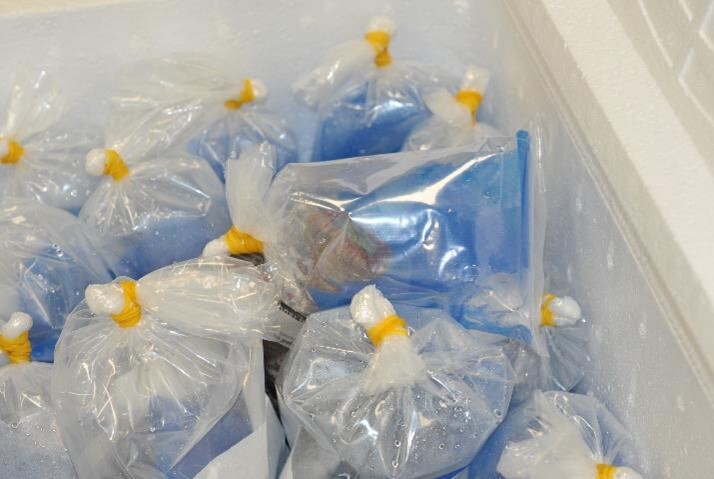
Corals have been used and traded for thousands of years for building materials, jewellery and, more recently, live for the international aquarium trade. While the amount of coral collected from the wild is relatively low, exploitation in some localised areas is increasing, leading to concerns around the sustainability of the trade. With over 440 different types of coral traded, it can be challenging for border inspection staff to identify illegally traded coral species.
In our latest blog, Senior Marine Scientist, Joanna Murray, highlights how a successful collaboration between Cefas and partners in Indonesia has developed practical tools and resources to help border inspection staff identify CITES-listed coral species.
These include:
📖 An easy-to-use guide containing images and descriptions of 55 stony coral genera.
💼 Training workshops in best practice and use of the guide.
|
|
Media Spotlight
Guiding the sustainable development of seaweed aquaculture
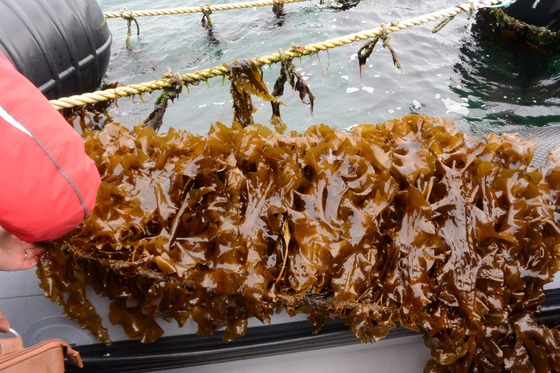
The seaweed industry in the UK has expanded in the last decade, with a variety of products now available on the market. Positive press coverage around the consumption of seaweed is also helping to change consumers' perception of seaweed as a healthy and nutritional food.
This month, Senior Ecosystem Scientist, Elisa Capuzzo was interviewed by Sam Grist from BBC Radio 4’s The Food Programme for their forthcoming broadcast on the topic of ‘A seaweed revolution in the UK?’. During the interview, Elisa highlighted the work that Cefas has been conducting over the past 10 years to advance our science and advisory capacity to guide the sustainable development of seaweed aquaculture.
|
|
Charting the achievements of the Bluefin Tuna tagging programme
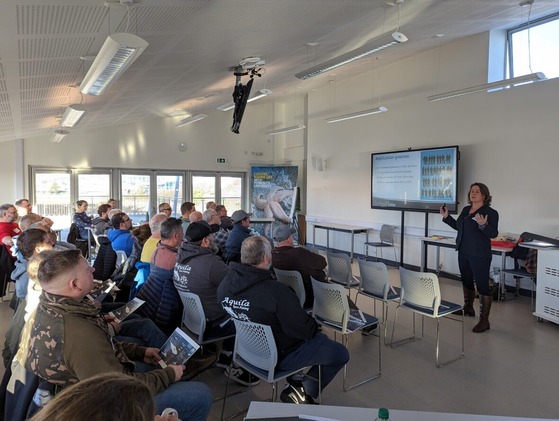
On Wednesday 10th January, Cefas hosted a workshop for skippers and crew who participated in the CatcH And Release Tagging (CHART) programme for Atlantic Bluefin Tuna (BFT). During the workshop, CHART Operations Manager, Joanna Ford, presented some of the findings from the past three years, highlighting the enormous achievement of all involved. A more detailed summary of CHART programme achievements will be published shortly.
With the end of the 2023 season came the end of CHART. This followed the recent announcement of a recreational catch and release fishery in UK waters expected to be in place by summer 2024. This fisheries initiative was driven by the overwhelming success of CHART and the value of the data provided.
|
|
People Spotlight

Each month we shine a spotlight on the work of a current member of Cefas staff. This month, we hear from David Righton, a Principal Scientist at Cefas. David specialises in the biology and ecology of highly migratory fish.
“Understanding the movements and ecology of fish is fundamentally important to advising on measures to conserve them. Some species that we work on, such as sharks or the European eel, might be of conservation concern, and limiting the impacts of fisheries or other marine industries on their populations might be the focus. For species that are abundant, the focus is more on defining catch limits and how these can be fairly distributed.
Over the last three years, we’ve been working closely with recreational fishers in the South West to document the return of Atlantic bluefin tuna to UK waters. That, as well as the diverse community of marine mammals we’ve recorded in CHART, helps to illustrate the thriving and complex ecosystems that we have off our coastline, and how you don’t have to travel far to get up close to spectacular marine wildlife. Scientific evidence is vital to understand the dynamics of our marine ecosystems, and working with stakeholders is a great way to do that.”
David Righton - Principal Scientist
|
|
|
Cefas takes the stage at Coastal Futures conference
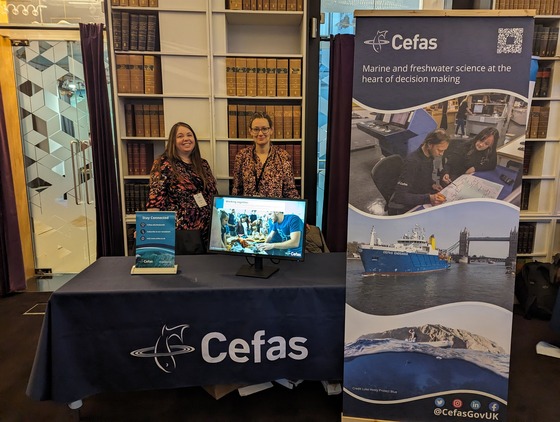
This month, several Cefas scientists presented at the the annual Coastal Futures conference. This year's theme was "An inclusive future for our seas", with conversations focused on the need for inclusivity in coastal and marine management.
It was great to meet with multi-disciplinary experts from across the coastal and marine sector to learn more about their work, highlight new Cefas science and explore the big challenges facing our aquatic ecosystems.
We're already looking forward to next year!
|
|
|
|
|