|
In December's issue we spotlight the recent United Nations Climate Change Conference (COP28) and our contributions to this global event. We also have stories on our recent activities including our Public Talks and Annual Student Conference, plus links to new blogs, podcast episodes and the latest #CefasScience. We hope you enjoy the latest issue and let us know what you think on social media.
United Nations Framework Convention on Climate Change (UNFCCC) 28th Conference

The United Nations Framework Convention on Climate Change (UNFCCC) 28th Conference of the Parties (COP28) is an annual event that brings together world leaders to discuss how to limit and prepare for future climate change. This year the summit was held in Dubai from 30th November until 12th December 2023.
As the UK Government's marine science experts, Cefas science is at the heart of some of the cutting-edge research working towards understanding and solving the complex global challenges of climate change, biodiversity loss and food security.
Throughout the week, scientists from across Cefas have contributed to the event through panel discussions, blogs and podcasts.
To kick off the week, Cefas Middle East Programme Director Will Le Quesne discussed the challenge of climate change facing the Gulf region and how recent evidence produced by the Regional Organization for Protection of the Marine Environment (ROMPE), in collaboration with Cefas, will help support adaption efforts, with a focus on three priority areas:
🛥 Fisheries
🌊 Corals
🏭 Desalination plants
The papers have now been translated into Arabic and Farsi.
|
Health, Relief and Recovery Day at COP28
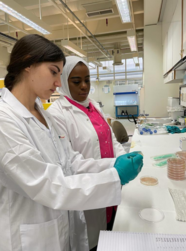
It’s been a busy year for our Climate, Health, and Environment Resilience Programme (CHERP).
Working across five of the Gulf Cooperation Council countries (Bahrain, Kuwait, Qatar, Saudi Arabia and the United Arab Emirates), and Iraq, Iran, and Oman through collaboration with the Regional Seas Convention, Cefas is supporting partner organisations to tackle some of the most pressing environmental challenges facing the Gulf region.
As part of the Health, Relief and Recovery Day at COP28 on 3rd December, Cefas Scientist Rachel Mulholland took a look back at the programme's progress and impact so far in supporting evidence driven solutions to tacking climate change, preventing biodiversity loss, enabling blue economies and protecting human health.
|
Nature, Land use and Oceans at COP28
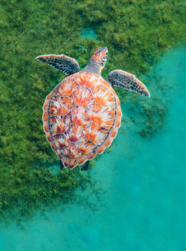
Protecting and restoring coastal blue carbon habitats, such as seagrasses, salt marshes, and mangroves, are recognised as an important ‘nature-based solution’ to mitigating and adapting to climate change. However, many blue carbon habitats have already been lost or seriously degraded.
While the science in identifying and measuring the carbon stored in terrestrial habitats, such as forests, has come a long way, much less is known about the carbon stored in coastal and marine ecosystems.
As part of COP28 Nature, Land Use, and Oceans Day on 9th December, Cefas Scientists Ruth Parker, Julie Bremner, and Michelle Devlin shared a blog discussing the potential role of conventional and emerging blue carbon ecosystems, including seagrasses and seabed sediment, in storing carbon dioxide that contributes to climate change, and how new Cefas research is filling important evidence gaps to help policymakers understand the opportunities and trade-offs for their future management.
|
Food, Agriculture and Water Day at COP28
The final theme day at COP28, Food, Agriculture and Water Day focused on addressing global water scarcity and food security.
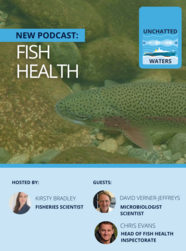
To highlight the importance of sustainable and healthy fish populations, our latest episode of our podcast, #UnchattedWaters, focused on the importance of healthy fish for people and the environment. Hear from our Fish Health Inspectors as they travel across England and Wales and use laboratory testing to uncover where diseases come from and how to stop their spread. Learn more about advances in fish health science to help prevent disease outbreaks and ensure we can continue to farm our seafood successfully.
|
Opening our doors to Neighbours in Weymouth and Lowestoft
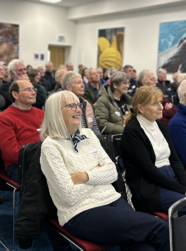
On the 13th December, we were delighted to welcome over 100 members of our local community into our laboratories in both Weymouth and Lowestoft for our Public Talks.
Our series of Public Talks provides an opportunity for the local community to visit our laboratories and learn more about what we do. The event included presentations delivered by Cefas scientists highlighting the impact of our scientific research and how we are working to support healthy and productive marine and freshwater ecosystems.
We had an overwhelming response to these events and plan to host more public talks in 2024 in both Lowestoft and Weymouth. These talks will continue to provide an invaluable opportunity for us to welcome our neighbours onto our sites and to make our science more accessible to the public.
|
Annual Cefas PhD Student Conference
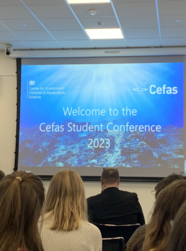
At the start of December, we hosted our annual Cefas PhD Student Conference - a chance for students supported by Cefas to connect with each other, their supervisors and other Cefas scientists.
At Cefas, we are lucky to have over 50 students studying a range of topics at institutions from across the UK. This two-day event featured posters and presentations from our PhD students under the themes of:
☀️ Climate Change and Adaptation
🌊 Sustainable Use of Marine Environments
🩺 Aquaculture and Disease
🐟 Marine Ecosystem Dynamics
This event is a yearly favourite for our students and colleagues and is a great opportunity to showcase their hard work and research over the past year.
|
Seasons Greetings from Cefas
As the year draws to a close, Cefas would like to wish all of our subscribers the best for the festive season and a Happy New Year. We look forward to sharing more stories from Cefas in 2024.
|