|
|
In April's issue, we look back on our recent activities which range from launching a new research hub, to a report on carbon emissions from UK fisheries. We hope you enjoy the latest issue and let us know what you think on social media.
New research hub launched to help find solutions to protect world’s ocean
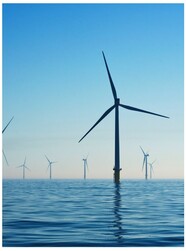
Cefas has launched a new research hub, the International Centre for Ocean Protection and Use (iOPUS). The Centre is aimed at finding solutions for the sustainable management and conservation of the world’s ocean. It will bring together Cefas experts and national and international stakeholders to generate evidence and new solutions for the use and protection of aquatic environments.
Work under iOPUS will cover Cefas’ international and domestic work in freshwaters and estuaries, and in coastal and oceanic ecosystems. iOPUS is the fifth International Centre of Excellence to be launched by Cefas - you can find out more on our website.
|
Cefas sets out new strategic focus: Cefas 2030
Cefas has a new strategy, Cefas 2030, outlining their vision and priorities until 2030 for a sustainable future for rivers, seas and the ocean.
Cefas 2030 includes several ambitious priorities designed to help achieve national and international environmental commitments by using innovative science, harnessing data and technology, building partnerships and an inclusive culture. Cefas plans to embed their evidence and advice on marine and freshwater science in decision-making, leading transformative change for healthy and productive aquatic systems. The organisation will also strengthen community engagement to collaborate and inspire marine scientists of the future.
Clare Leech, Cefas’ Head of Strategy and Transformation said "Cefas 2030 is an important milestone for our organisation. We are committed to playing a key role in shaping the future of marine science and ensuring the sustainable use of our ocean. By working collaboratively, we can achieve our ambitious goals and make a real difference to the health of our planet."
|
Towards net zero: carbon emissions from UK fisheries
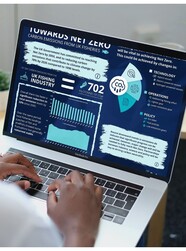
With the Fifth Symposium on the Effects of Climate Change on the World’s Oceans (ECCWO5) underway last week in Norway, Cefas Scientist, Georg Engelhard tells us about his new climate report in his latest blog.
The report looks at the impact of the UK fishing industry on climate change and how technological, operational and policy changes are key to driving progress towards the UK government’s Net Zero target.
You can find out more on carbon emissions from UK fisheries in this infographic.
|
Professor Graham Underwood appointed new chair of the UK Blue Carbon Evidence Partnership
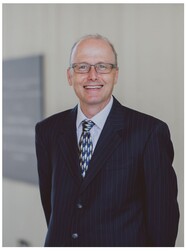
As secretariat for the UK Blue Carbon Evidence Partnership (UKBCEP), Cefas is pleased to announce that Professor Graham Underwood from the School of Life Sciences at the University of Essex has been appointed as the new Chair.
The UKBCEP's mission is to protect and restore blue carbon habitats as a nature-based solution to climate change. Blue carbon is the organic carbon stored in marine habitats, such as salt marshes and coastal mangroves, and in the shallow seabed.
Professor Underwood will lead the partnership's work to bring together activities across the UK to progress the evidence base on blue carbon habitats.
|
New marine science blog: the importance of data collection to protect Sri Lanka’s sharks and rays
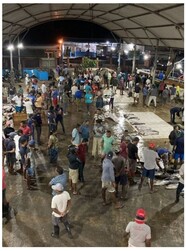
Cefas are working with the Blue Resources Trust (BRT) to improve data collection of sharks and rays in Sri Lanka.
Sharks and rays are crucial in Sri Lanka, providing income for fishers, protein for communities, and opportunities for tourism. However, recent trends show their decline in the ocean. This Ocean Country Partnership Programme (OCPP) project aims to provide robust scientific data on catches, fishing effort, and trade to support the improved management of these animals.
In February 2023, Cefas colleagues facilitated a two-day shark and ray identification workshop in Sri Lanka, which stressed the need for species-specific data to monitor trends and estimate the total removals from elasmobranch populations.
|
Cefas' papers of the year
|
|
The people behind Cefas
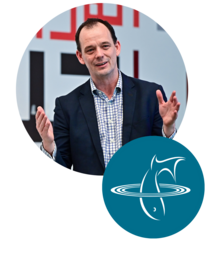
Each month we hear from a current member of Cefas staff to shine a light on the work we do. This month we hear from Will Le Quesne, director of our newest research hub, the International Centre for Ocean Protection and Use (iOPUS).
"The most surprising place I have worked for Cefas was spending seven years based in the Arabian Peninsula, with four years based in Kuwait and three years in Oman. Most people’s impression of the Arabian Gulf states is of large rolling deserts. So what is a marine organisation like Cefas doing in the Gulf?
The Gulf states are indeed dry desert countries, but they also have long coastlines home to a wide array of biodiversity. And it is because they are desert countries they have a long historical association with the sea, as both a trading route and source of food. Plus, the Arabian Gulf is the hottest sea in the world, so in many ways it is at the front line of marine climate change.
I lead Cefas’ engagement and science across the Middle East where we are working with the Gulf states to support them implement policies for sustainable development, balancing protection and use of the ocean. This covers a diverse portfolio of work including providing advice on establishment of protected areas, conducting research on the impacts of desalination plants on the marine environment and supporting climate change risk assessments."
Dr Will Le Quesne - Director International Centre for Ocean Protection and Use
|
|
|
|
|