|
|
In February's issue, we look back on our recent activities which range from a new UK Overseas Territory joining the Blue Belt Programme to attending Norwich Science Festival. We hope you enjoy the latest issue and let us know what you think on Twitter, Instagram, LinkedIn or Facebook.
Anguilla joins the Blue Belt and Pitcairn Islands presented with Platinum Blue Park award at IMPAC5
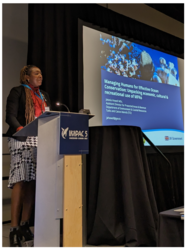
Earlier this month, a number of representatives from the UK Overseas Territories (UKOTs) that are part of the Blue Belt Programme attended the IMPAC 5 conference to highlight and share lessons from their Marine Protected Area (MPA) network of over four million square kilometres.
Cefas is a delivery partner for the Blue Belt, which supports the Territories in their work to sustainably manage and protect their marine environments.
During IMPAC 5, the Caribbean Territory of Anguilla was announced as the latest to join the Programme, becoming the ninth that is part of the initiative. Over the coming months, Anguilla will commence work with Blue Belt on priority areas such as developing legislative frameworks to enhance protection, and build research capacity to grow understanding of their marine environment.
During the week, the Pitcairn Islands were also presented with the prestigious Platinum Blue Park award, in recognition of its work in ensuring strong protection for marine biodiversity and ecosystems. Blue Belt provided evidence to support the case for the vast MPA of over 840,000 sq km, including the legislation, training, and biodiversity evidence.
|
Sharing Cefas science at Norwich Science Festival
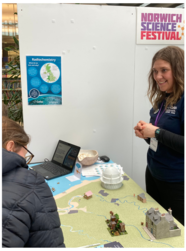
Last week, thousands of people flocked to Norwich Science Festival for inspiring talks, engaging exhibitions, cutting-edge research and lots of family fun. Cefas hosted a stall and a talk as part of the festival’s environment, climate change and sustainability day.
The Cefas stall encouraged the public to engage with Cefas science around the topics of fisheries, age determination, tagging, radiochemistry and marine litter. The team had hundreds of visitors of various ages throughout the day discovering more about Cefas science and impact. The stall proved very popular, with one attendee commenting they had never seen such child friendly science.
In addition to the stall, Cefas’ Dr Michelle Devlin hosted a talk on the importance of Coral and Seagrasses habitats to a packed auditorium. The keen audience learned about the diverse roles of these unique habitats and how we can protect them. Cefas met several budding marine biologists who shared their own experiences and asked lots of questions about coral, seagrass and pursuing science careers.
|
Cefas at Coastal futures
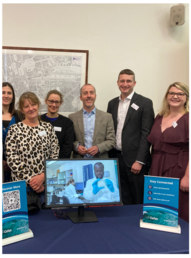
Last month, colleagues from across Cefas attended the annual Coastal Futures conference at the Royal Geographical Society in London. The conference provided the opportunity to connect with a wide range of experts from within the coastal and marine community to discuss “Our Ocean and Coastal Future for the Next Decade”.
Across the two days, the conference displayed an incredible range and expertise of speakers, with many thought-provoking debates. It inspiring to be reminded that we are part of a broader community committed to achieving positive change in our marine environment and that we can be optimistic about the future.
|
Latest #CefasScience
A roundup of some of our latest research:
Paper on the threats to UK freshwaters under climate change
Review exploring emerging capabilities and research priorities for Blue Carbon
Review paper looking at diseases of the giant river prawn
Research article on snail model species (Lymnaea stagnalis)
|
|
The people behind Cefas
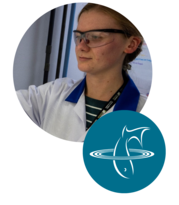
Each month we shine the spotlight on the work of a current member of Cefas staff. This month we hear from radiochemist Hannah Limbach. Hannah joined the Cefas stand at Norwich Science Festival:
"I’m a radiochemist and I spend most days in the lab. I carry out analysis of environmental samples as part of a radiological monitoring programme. We monitor the environment, diet and habits of people near nuclear sites to ensure that the man-made radiation they are exposed to is within legal limits. The samples are taken from near nuclear sites, and include seawater, sediment, marine wildlife, milk, meat, and crops – anything that serves as a pathway to people for radionuclides. I use different methods depending on which isotope I need to isolate, then determine the abundance of that isotope on radiation detectors. Methods can range from one day long to a couple of weeks; I really enjoy the variation."
Hannah Limbach - Radiochemist
|
|
|
|
|



