|
|
In November's issue, we look back on our recent activities which range from attending high profile climate conference COP27 to launching a new ID guide to support sustainable coral trade. We hope you enjoy the latest issue and let us know what you think on Twitter, Instagram or Facebook.
New visual guide launched to help to help support sustainable coral trade
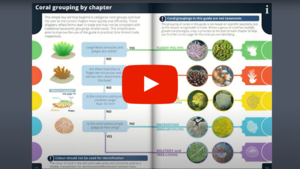
The process of identifying coral species traded on the international market will now become easier thanks to a new guide published by Defra and compiled by Cefas, The Indonesian Coral Reef Foundation (TERANGI) and The Indonesian Nature Foundation (Yayasan Alam Indonesia Lestari - LINI).
“The Identification of CITES-listed live stony corals in the aquarium trade” guide has been developed in partnership with industries and experts and contains detailed images and descriptions of 55 stony coral genera, with the aim to help custom inspectors to better identify stony corals entering the UK. In particular this ‘go to’ guide will allow inspectors to differentiate stony corals originating from a wild-collected or mariculture source. The guide was launched November 18 during a dedicated side event at CITES COP19 and can be downloaded from the Defra website, or contact Dr Joanna Murray @Joanna_M_Murray on Twitter. You can also find out more in our latest news story.
|
Cefas presence at COP27
Earlier this month, Cefas attended the 27th Conference of the Parties to the United Nations Framework Convention on Climate Change (COP27) in Sharm El Sheikh, Egypt. Climate scientist John Pinnegar presented at an event hosted by the Intergovernmental Panel on Climate Change to discuss how small islands will be impacted by future climate change. Cefas CEO Neil Hornby joined the International Partnership for Blue Carbon and Pew Trust to discuss the importance of partnerships for blue carbon ecosystems. He also presented at a UK Pavilion event on how ocean observation data can contribute to climate solutions.
|
Experts gather in South Africa to launch ambitious new approach to sustainable food systems
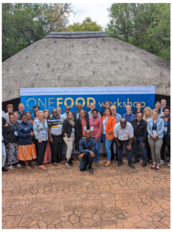
Earlier this month UK and South African experts met in the Republic of South Africa to launch the UK government funded One Food programme which aims to initiate a new movement — where One Health approaches are designed-in to the operation of sustainable food systems. The programme explains the importance of identifying and controlling hazards in food systems as a tangible means to create safer & more sustainable food systems and a healthier environment.
You can find out more on the One Health approach from Cefas’ Animal and Human Health lead Grant Stentiford in his latest blog.
|
Updates from Discovery DY159 voyage
The Blue Belt Programme RRS Discovery expedition (#DY159) has now completed its first scientific leg across the Ascension Island Marine Protected Area (MPA).
The 10 days of scientific research focused largely on the deep-sea environments in Ascension’s offshore areas. A range of scientific work was undertaken to monitor and assess the marine ecosystems present, from collecting fish specimens to deploying deep-water cameras to the seabed.
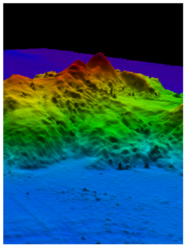
Much of the deep ocean around Ascension has never been explored before, and it was only one day one of research within the MPA that a surprising new discovery was made. A new seamount – around 2600m at its highest point, 1200m above the surrounding seafloor and 84km2 in size – emerged after mapping the seafloor using bathymetry.
Discoveries such as this highlight how little is known about the deep-sea, and how expeditions such as DY159 can expand our knowledge of marine ecosystems, improving our understanding and better informing protective measures. DY159 is now journeying to St Helena for a further 10 days of research!
|
Blue Fin Tuna Programme tags 1000th fish
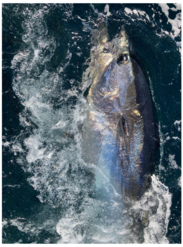
This month we tagged our 1000th fish as part of our CHART Scientific Data Collection Programme for Bluefin Tuna. This is an incredible milestone and would not have been possible without the dedication of the skippers, crew, anglers, observers, scientists, and partners!
As this is the second year of the programme, we are making big strides and building successfully on the dataset that was collected in CHART 2021. The continued success of this programme helps to fill gaps in our knowledge of their distribution, movements, behaviour, numbers, and demographics. This programme continues to bring together a breadth of fishing, science and conservation interests in a collaborative, innovative approach to tuna scientific research.
|
|
|
The people behind 120 years of science
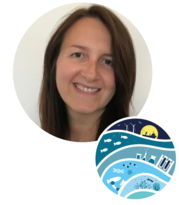
Each month we shine the spotlight on the work of a current member of Cefas staff as part of our celebrations of #120yearsofScience. This month we hear from Joanna Murray - Marine Scientist and lead of the recently launched coral ID guide.
“Since I was a child, I have always been drawn to the ocean - I love being near it, swimming in it or studying what lives there. I am especially interested in understanding the balance between protecting and using the marine environment and jumped at the opportunity to do PhD research on the marine aquarium trade. After a post-doctoral position in the collection of live bait worms for angling, I joined Cefas as an ecologist. Overtime I have developed research on trade in aquatic wildlife and now we have a range of UK and international projects on trade in marine ornamental fish, live stony corals and shark and ray products. I love my job and I genuinely can’t imagine what else I would if I wasn’t a marine scientist!”
Joanna Murray – Cefas Marine Scientist
|
|
|
|
|



