|
In October's issue, we look back on our recent activities which range from the launch of a 9,000 mile expedition aboard the RRS Discovery to the return of our annual conference. We hope you enjoy the latest issue and let us know what you think on Twitter, Instagram or our new Facebook page.
9,000 mile expedition to Ascension Island and St Helena sets sail
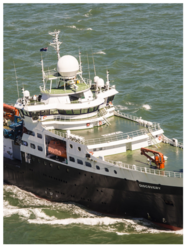
Last week a 9,000-mile expedition to the remote British Overseas Territories of Ascension Island and St Helena set sail from Southampton. During the 6-week voyage Cefas scientists will work as part of a multidisciplinary team on the #DY159 expedition, supported by the UK Government’s Blue Belt Programme.
St Helena and Ascension are home to two of the world’s largest Marine Protected Areas and host a plethora of species, such as whale sharks, yellowfin tuna, humpback whales and green turtles. Yet despite their ecological importance, very little is known about their waters.
Using underwater cameras, scientists on board will study the region’s incredible biodiversity and explore hydrothermal vents on the seabed 4km beneath the surface. There is a real chance the expedition will also discover species of the deep ocean unknown to humankind, which will be exhibited in the Natural History Museum upon the scientists’ return. Image credit: National Oceanography Centre.
|
Cefas annual science and student conference returns
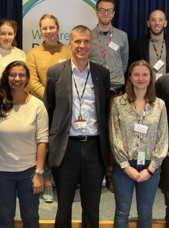
Earlier this month, Cefas hosted our annual science and student conference in Weymouth as a hybrid format for the first time. It provided us with the opportunity to welcome students, colleagues and external guests to help celebrate 120 years of marine science and 25 years of Cefas.
Across the two days, we heard from a range of speakers including established scientists, who have developed their key topic areas over time, to early career scientists and students who will continue to take important science themes forward.
|
Meetings held with British Virgin Islands fishers to build capacity
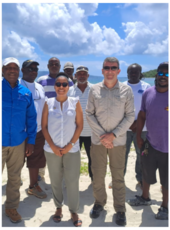
Earlier this month, Cefas’ Dr Peter Randall visited the British Virgin Islands as part of a Darwin Plus Funded Project to build capacity in Fisheries Evidence, Networks and Management in the Territory.
Peter joined representatives from the Caribbean Natural Resources Institute (CANARI) and the Caribbean Network of Fisherfolk Organisations (CNFO) for a series of successful meetings with fisherfolk across the four main islands, facilitated by Virgin Islands Department of Agriculture and Fisheries. He added “the fishers provided valuable insight to our remote findings helping us to understand the local context. Their responses will be fed into the fisheries evidence report which identifies key issues and gaps for fisheries management.”
During the trip, Peter also visited landing sites to gain insight into the types of fishing vessels and fishing gears used in the British Virgin Islands. Peter also visited some shore sites where marine litter tends to accumulate including Abandoned, Lost and otherwise Discarded Fishing Gear. Find out more in this blog.
|
Cefas attends Weymouth Family Science Festival
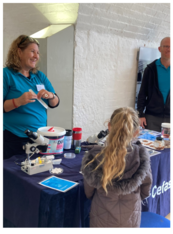
Cefas was delighted to have been invited to take part in the Weymouth Family Science Festival hosted at the Nothe Fort this month.
It was a wonderful day filled with many organisations sharing their passion for science with the local community. There was a range of activities including microscopes, a fishing game and some very interesting samples in jars. It was great to see so many budding aquatic scientists getting involved.
|
|