Cefas scientists play a leading role at ICES Annual Science Conference
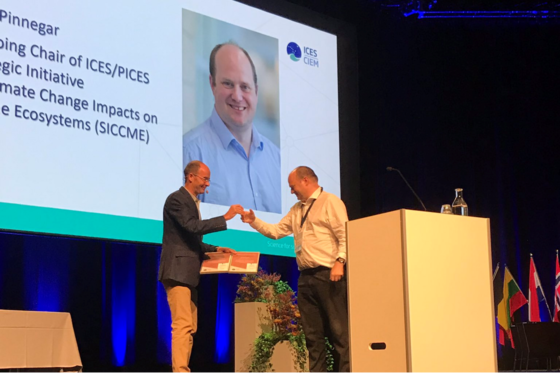 Dr Simon Jennings, chair of ICES Scientific Committee, presenting Cefas' John Pinnegar with his award.
With over 750 participants from 38 countries the ICES Annual Science Conference is one of the biggest events in the marine science calendar.
The four-day event, organised by the International Council for the Exploration of the Sea (ICES), took place in Gothenburg Sweden last September. Cefas scientists played key roles in the conference - judging presentations, chairing sessions and more. Cefas’ Dr John Pinnegar also received an ICES Service Award for his role as co-chair of the Strategic Initiative on Climate Change Impacts on Marine Ecosystems.
“Annually, hundreds of scientists come together to share ideas and ‘state of the art’ science during the ICES Annual Science Conference, it is a fantastic forum for networking and for new ideas to foster collaborations. This year has been even more important and a true honour for Cefas to see Dr John Pinnegar recognised for his scientific contribution across the community. His science has been pivotal in understanding climate change effects on marine ecosystems ”said Cefas’ Dr Silvana Birchenough chair of ICES Ecosystems, Process and Dynamics Steering Group.
Working with European partners to tackle marine litter
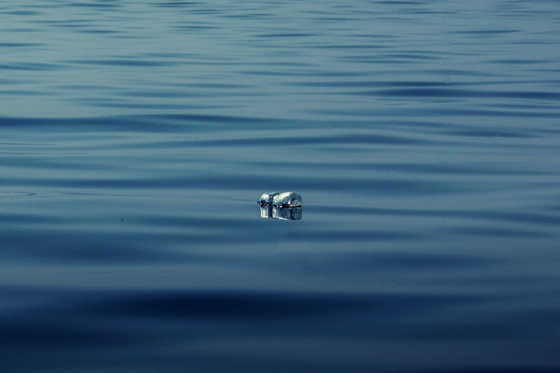 Over the last few years barely a week has gone by without another shocking plastic statistic hitting the headlines. But action is being taken to monitor, prevent and remove the plastics littering our ocean and Cefas is working with over 20 European partners on two marine litter projects - Clean Atlantic and OceanWise.
Clean Atlantic aims to protect biodiversity and ecosystem service in the Atlantic Area. As part of the project a team of Cefas scientists are currently gathering and assessing data regarding marine litter in the Atlantic area. This will help scientists understand the economic impact of marine litter on coastal communities.
OceanWise focuses on two types of foamed polystyrene products, expanded polystyrene (EPS) and extruded polystyrene (XPS), commonly used in hot drink cups, single-use food boxes and packaging. Cefas is creating a knowledge hub and assessing the ecotoxicity of EPS and XPS, supporting the projects overall aim to reduce the impact of foamed polystyrene products on the Atlantic Ocean.
“As part of the project we recently organised a meeting in London bringing together a variety of people who design, produce, use and recycle foamed polystyrene products. It’s really important to address the full life cycle of foamed polystyrene products so we can develop best practice, reducing leakage to the ocean” explains Josie Russell, Cefas’ Principle Investigator for OceanWise and Clean Atlantic.
Preparing to launch a joint research and innovation programme across the Baltic and the North Sea
 Stretching from the UK to Southern Finland the Baltic and North Seas support diverse marine ecosystems and major fisheries.
Cefas is working with several European partners from BANOS CSA to create a joint, transnational research and innovation programme supporting sustainable blue growth within the Baltic and North Seas. The Baltic and North Sea Support and Coordination Action, or BANOS CSA, represents leading research and innovation funders from surrounding states.
The programme under development by the BANOS CSA is intended to follow-on from the BONUS programme which was focused only on the Baltic Sea. The BONUS programme is widely seen to have been effective in supporting high quality research in the Baltic region. The inclusion of the North Sea this time around has made Cefas a natural partner given our long history of research and innovation in the North Sea.
Securing a future for Atlantic bluefin tuna
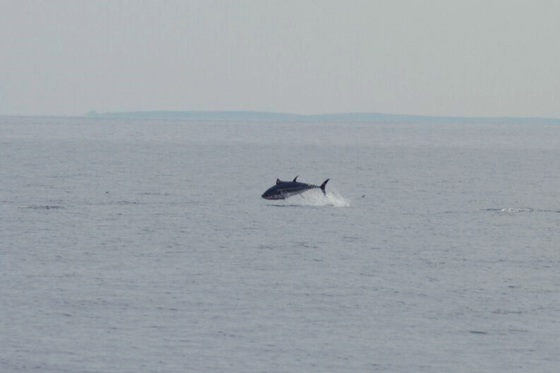 Image credit: Tom Horton
Atlantic bluefin tuna is known for being one of the biggest, fastest and most valuable fish in the sea. They were once a common sight in UK waters, ranging throughout the Celtic and North Seas. However, as population size fell from the 1960s onwards, they largely disappeared around the UK. Stocks did not recover, and bluefin tuna were recognised by IUCN as an endangered species in 2011. Attempts to rebuild the stock have been ongoing ever since.
Since 2014, sightings of bluefin tuna around the UK have been rising annually. Last year Cefas and the University of Exeter launched a project exploring the behaviour and migration of bluefin in UK waters. “Our job is to find out as much as we can about why bluefin are in our waters. In October we tagged the 35th fish of the project off the south-west coast of England, and we are now focussing effort on tuna in Welsh and Scottish waters to get to our target of 50 by the end of 2019’ explains Cefas’ project lead Dr David Righton.
Tracking data from the tags show that tuna travel widely, and visit the coastal jurisdictions of other European countries. Aside from its UK focus, Cefas and Exeter are working with others in Denmark and Ireland to study patterns of tuna behaviour during the three year project - find out more at www.thunnusuk.org.
Thank you for reading, to subscribe to future editions click here.
|