FAO Reference Centre for Antimicrobial Resistance: collaboration to tackle AMR in Ghana
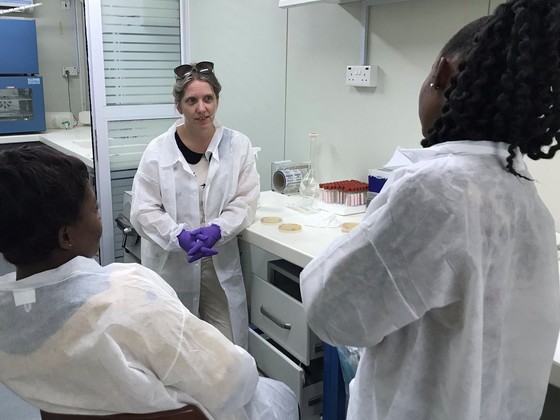 Cefas microbiologist, Dr Michelle Stone, training staff at the Fisheries Commission, Ghana, in antimicrobial resistance testing.
Recently, Cefas, VMD and APHA have been working in Ghana, providing advice and training to government bodies relating to the threats posed by AMR in aquaculture and the wider aquatic environment. Training was delivered in antimicrobial susceptibility testing for the Ghana Fisheries Commission and the Ghana Veterinary Services Directorate. VMD also provided specific training in antimicrobial usage and antibiotics residues analysis.
Dr David Verner-Jeffreys, Cefas lead for the Centre said,
“It’s been fantastic to be working with colleagues from VMD, APHA and authorities in Ghana to really make a difference on the vital subject of controlling antimicrobial resistance. We’re looking forward to continuing this collaboration and develop skills and networks to reduce the risks from AMR in Ghana and internationally.”
The UK is a global leader in efforts to address the profound challenges that antimicrobial resistance presents and as such the UK government’s Department for Environment, Food and Rural Affairs (Defra) launched the International Antimicrobial Resistance (AMR) Reference centre last year, to be run by the Defra’s agencies: Cefas, the Veterinary Medicines Directorate (VMD) and the Animal and Plant Health Agency (APHA).
Subsequently, the Food and Agriculture Organization of the United Nations (FAO) has designated the UK’s International Reference Centre for Antimicrobial Resistance as an FAO Reference Centre for AMR.
Together, Cefas, VMD and APHA create a powerful and unique synergy of complementary expertise in antimicrobial resistance in bacteria isolated from terrestrial animals, environment and food (APHA); aquatic animals and environment (Cefas); and in monitoring antimicrobial usage (AMU) and development of policy surrounding AMR and AMU (VMD).
Work continues in Ghana, so watch out for more on this on our Twitter feed and blog.
OIE Collaborating Centre for Emerging Aquatic Animal Diseases: first detection of Infectious Spleen and Kidney Necrosis Virus (ISKNV) in Africa
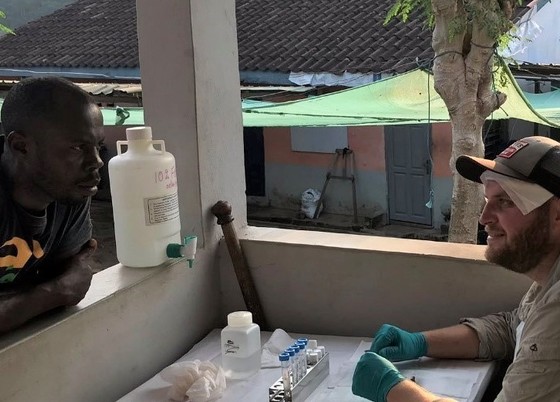 Cefas Fish Health Inspector, Josh Gray, training staff from the Ghana Fisheries Commission in fish disease diagnostics.
Under the OIE Collaborating Centre role, the recent work in Ghana also saw Cefas staff working with the team from the Ghana Fisheries Commission, providing training in sampling diseased tilapia to increase capacity in diagnosing Infectious Spleen Kidney Necrosis Virus (ISKNV). ISKNV is the likely cause of massive fish mortalities in Lake Volta, affecting the sustainability of the tilapia cage culture industry there. See our preprint describing the first detection of Infectious Spleen and Kidney Necrosis Virus (ISKNV) associated with massive mortalities in farmed tilapia in Africa.
Our designation as the Collaborating Centre for Emerging Aquatic Animal Disease (CCEAAD) recognises that the emergence of disease in farmed and wild aquatic animals poses one of the most significant threats to sustainable food production and to the stability of natural systems. Rapid detection, characterisation and reporting of the causative agents of disease provide a crucial first step in their control. For this reason, efficient and accurate reporting of emergent disease threats forms the central precept of this OIE Collaborating Centre, working with Associate Laboratories in key aquaculture producing regions around the world.
Professor Stephen Feist, Head of the Collaborating Centre said:
“The international consortia of labs will provide a unique mechanism to tackle emerging disease threats in aquaculture and fisheries globally, ensuring rapid detection, sharing of knowledge and expertise in mitigating their effects. Cefas’ leading capability in pathogen identification, diagnostics, pathology and disease management will ensure that new threats are rapidly identified and notified to appropriate authorities to assist control.”
FAO designated Reference Centre for Bivalve Mollusc Sanitation: review of food safety guidelines
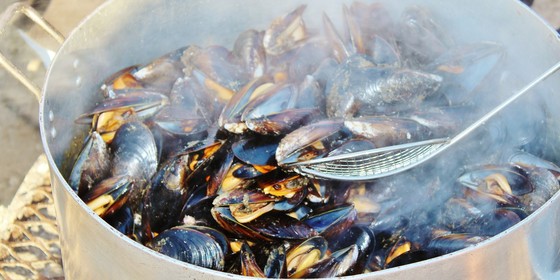 Cefas hosted an international meeting focused on safeguarding human health from harmful bacteria found in seafood.
As part of the work of the FAO Reference Centre for Bivalve Mollusc Sanitation, Cefas’ laboratory in Weymouth, Dorset, UK hosted an international meeting focussed on safeguarding human health from harmful bacteria found in seafood. The event brought together 14 international experts from 10 countries to review guidance on seafood food safety approaches.
The FAO and the World Health Organization (WHO) convened the international Joint FAO/WHO Expert Meeting on Microbiological Risk Assessment to update FAO/WHO global guidance, in light of state-of-the-art methods such as whole genome sequencing and remote sensing, to reduce public health risks from a group of bacteria called Vibrios, that can be found in some seafood, particularly in bivalve molluscs (oysters, mussels, etc). Some species of this group, which includes the organism that causes cholera, are found naturally in warm seawater and can cause outbreaks of sickness, diarrhoea and occasionally fatal septicaemia.
Dr Rachel Hartnell, Cefas lead for the Reference Centre, said:
"Safeguarding human health and enabling food security are major pillars of Cefas’ mission and the outputs of this meeting will make a real positive difference to public health outcomes globally.”
The next milestone in the work of the centre will be a Cefas led conference to bring together African food safety authorities to share best practice, to be held in Kenya, this November. More details on this will be shared in future newsletters, on the Cefas website and social media channels.
Thank you for reading, to subscribe to future editions click here.
|