Irish Sea and Bristol Channel beam trawl survey measures nearly 50,000 fish
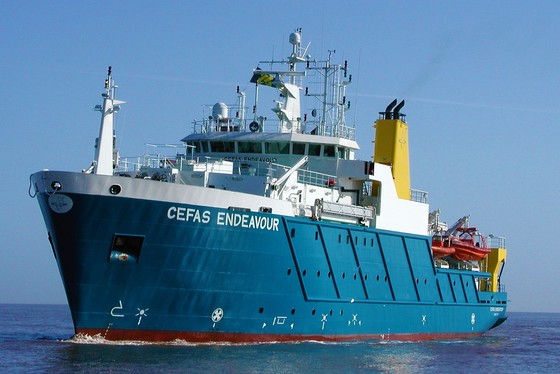
The Cefas Endeavour was used for the Irish Sea and Bristol Channel beam trawl survey
On the 13th of September the Cefas Endeavour sailed from Lowestoft to commence the 2018 Irish Sea and Bristol Channel beam trawl survey. The aim of the survey was to sample several stations in the Irish Sea and Bristol Channel to obtain data on Dover sole and European plaice.
For the first time, a team of scientists from the Clean Seas Environmental Monitoring Programme (CSEMP) joined the survey to conduct a feasibility study to determine the practicality of incorporating a new sampling technique for disease analysis.
Nearly 200 deployments were conducted over 3 weeks ranging from beam trawling, sediment grabs and water samples. Over 49,000 fish were measured during the survey, of which around 4,000 biological samples were also collected.
RV Cefas Endeavour at CHOGM: an inspiring event
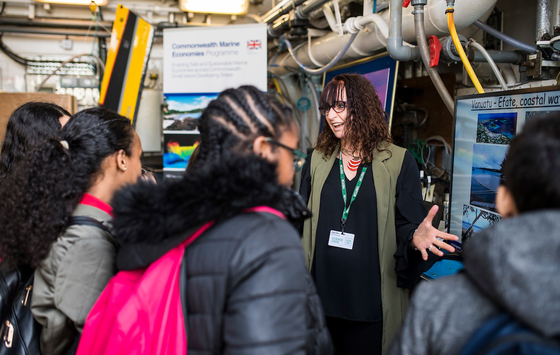
Cefas' Michelle Devlin talking to a group during the event
In April 2018, during a break between surveys, RV Cefas Endeavour took part in the UK’s hosting of the Commonwealth Heads of Government Meeting (CHOGM). The ship docked next to HMS Belfast in central London and played host to policy makers and scientists from across the Commonwealth, as well as some special guests from a local school. The voyage was featured on BBC News, and you can watch the feature here.
North Sea ground fish survey explores the potential of autonomous vehicles
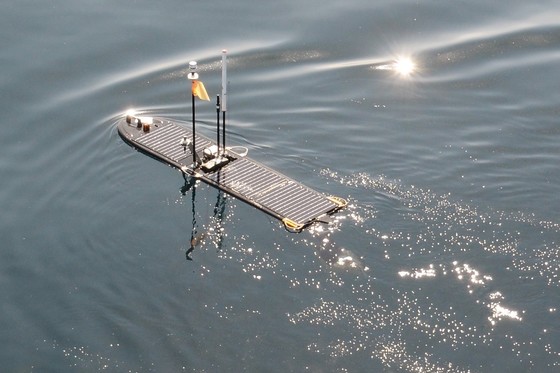
Cefas’ automonious wave-glider, Lyra, was used during the North Sea ground fish survey
The 2018 August North Sea ground fish survey, part of the International Bottom Trawl Surveys series, was tasked with providing data on juvenile herring and gadoids such as cod, haddock and Norway pout.
Nearly 9,000 biological samples were collected and over 23,000 fish measured during the 31-day survey. The team sampled 79 different fish species including wolfish, shellfish, cephalopods and macro-benthos.
In addition, the survey deployed Cefas' SV3 wave-glider "Lyra". The deployment efforts were part of the Alter-Eco project to explore the potential for autonomous vehicles to form part of the UK monitoring program of shelf-sea ecosystem processes.
Preparations underway for Discovery Expeditions 99 & 100
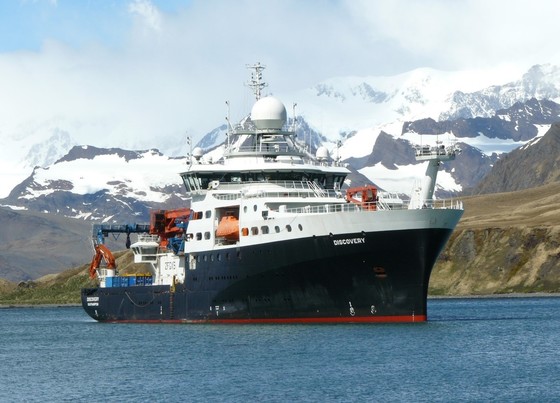
RRS Discovery, which will be used for Discovery Expeditions 99 & 100, in South Georgia, photo credit: Andy Rees
Cefas has been busy preparing for Discovery Expeditions 99 & 100 which will take place early next year as part of the Blue Belt Programme. Just a few weeks ago a lorry was packed up with supplies, safety gear, and scientific equipment for the expeditions - watch a short video from the day here.
Discovery Expedition 99 will investigate the biodiversity of the continental shelf around South Georgia and the South Sandwich Islands (SGSSI) next February. Utilising deep sea cameras and benthic sampling equipment the survey will help to quantify the state of the benthic environment and investigate the potential impact of the licensed longline fishery on the benthic biodiversity.
The second marine survey, Discovery Expedition 100, will visit Tristan Da Cunha and St Helena in March/April. The expedition will focus on understanding the biodiversity and habitats associated with the seamounts in Tristan da Cunha about which very little information is known. In St Helena, the expedition will concentrate upon the ecosystems that live in the water column, with a view to improving the understanding of the food webs that underpin tuna fisheries around the area.
For more information on the survey contact the Blue Belt team or follow Cefas on twitter.
Annual Eastern Channel beam trawl survey in its 29th year
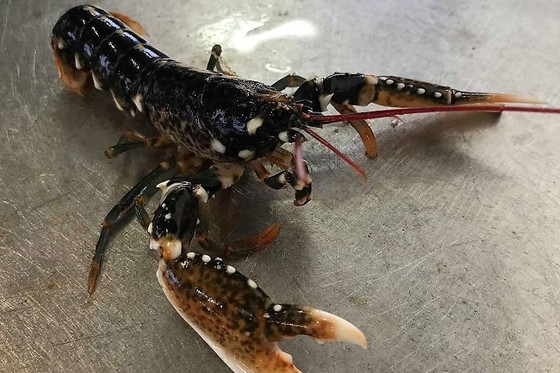
A small European lobster caught during the Eastern Channel beam trawl survey in the English Channel
The Eastern Channel beam trawl survey has been carried out annually by the Ministry of Agriculture, Fisheries and Food and Defra since 1989, with the last survey taking place in July.
The main aim of the survey was to beam trawl the Southern North Sea and Eastern Channel as part of an ICES co-ordinated research programme; obtain independent fisheries data on commercial flatfish species; collect biological data of commercial species to satisfy EU regulations; and to identify the flora and fauna living on the surface of the bottom the sea.
In addition, the survey collected marine litter data and tagged and released several species of fish including Dover sole, undulate rays and starry smooth hounds.
Season's greetings
This will be the last Cefas Newsletter of 2018, but we have many exciting updates planned for 2019. Thank you for subscribing and we wish you the best over the holiday season and new year!
Thank you for reading, to subscribe to future editions click here.
|