Face Coverings
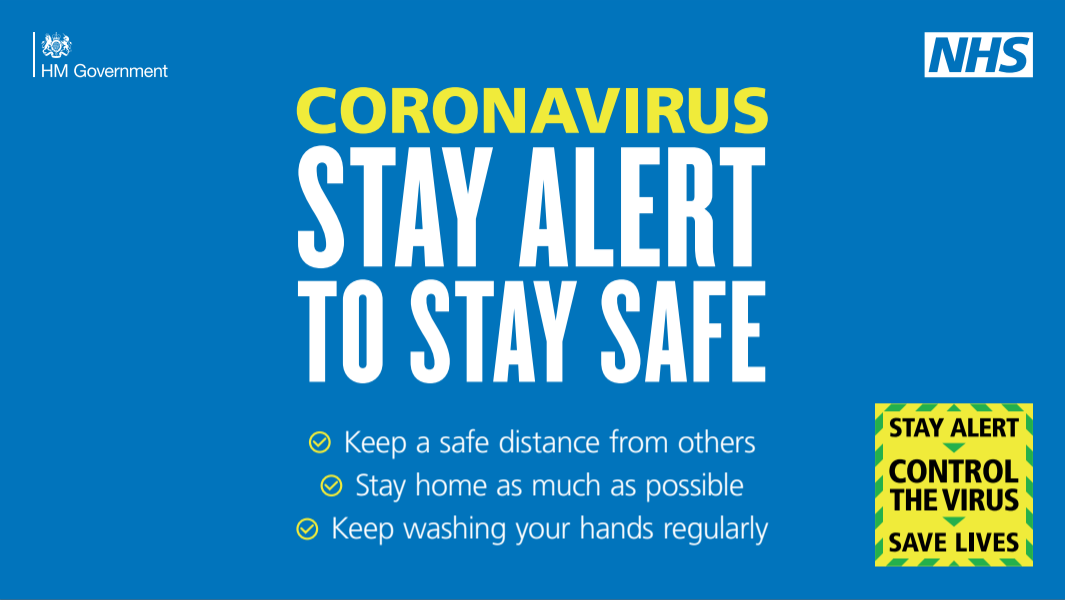
Coronavirus (COVID-19) can spread predominantly by droplets from coughs, sneezes and speaking. These droplets can also be picked up from surfaces, if you touch a surface and then your face without washing your hands first. This is why social distancing, regular hand hygiene, and covering coughs and sneezes is so important in controlling the spread of the virus.
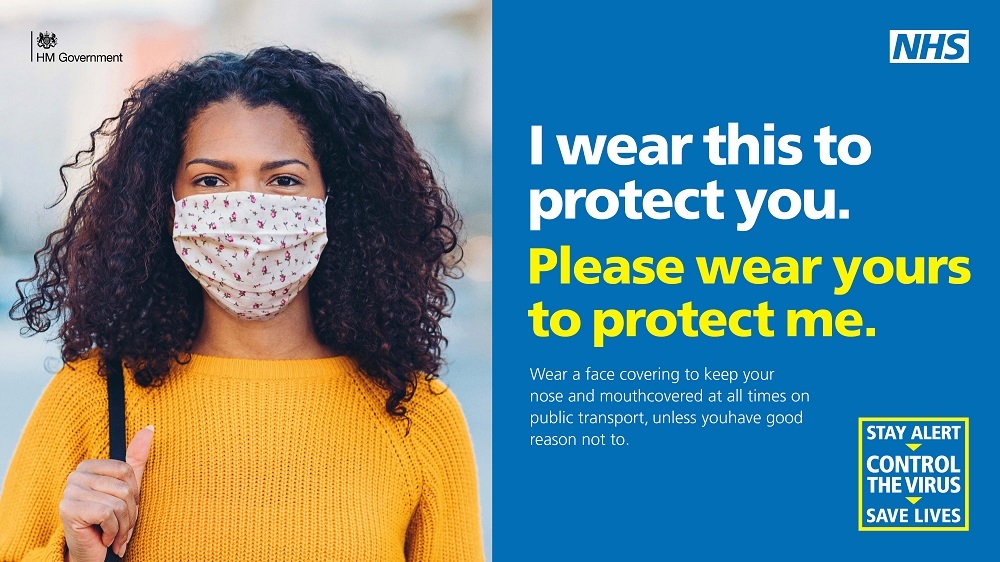
The best available scientific evidence is that, when used correctly, wearing a face covering may reduce the spread of coronavirus droplets in certain circumstances, helping to protect others.
Because face coverings are mainly intended to protect others, not the wearer, from coronavirus (COVID-19) they are not a replacement for social distancing and regular hand washing. It is important to follow all the other government advice on coronavirus (COVID-19) including staying safe outside your home.
In England, you must by law wear a face covering in the following settings:
-
Public transport
-
Shops and supermarkets as of 24 July 2020
Measures can be taken if people do not comply with this law. Transport operators can deny service or direct someone to wear a face covering. If necessary, the police and Transport for London authorised officers can issue fines of £100 (halving to £50 if paid within 14 days). Shops and supermarkets will be expected to encourage compliance with the law (as they would do more generally) and can refuse entry. In both cases, if necessary, the police have the powers to enforce these measures, including through issuing a fine of £100 (halving to £50 if paid within 14 days).
Further information, including how and when to wear face coverings and exemptions to wearing a face covering is provided on the GOV.UK website.
Making Your Own Face Covering
If you want to make your own face covering, instructions are widely available online. The Government does not endorse any particular method, but advises to avoid using materials and fabrics that may irritate different skin types.