Living Well Schools Newsletter
Eating Well Themed
Article 1: May Days Are Dandelion Days
Article 2: Born in Bradford Study Lifts the Lid on Teen Eating Habits
Article 3: Transformation Towards Healthy and Sustainable School Meals
Article 4: ProVeg UK - Join Our Food Revolution
Article 5: Bradford’s Packed Lunch Toolkit
Article 6: Eco Councils Through an Eating Well Lens
Article 7: Encouraging Children to Eat More Veg by Making It Fun
Article 8: Salt Awareness Week 2026, 11-17 May
Article 9: Nourishing Communities Voucher Scheme
Article 10: The Living Well Podcast
Article 11: Transform Your Canteen with Bite Back in Schools
Article 12: Quick links to Other Eating Well Offers
 |
|
May Days Are Dandelion Days |
Enjoy making the most of this sunshine flower!
At Grow to School, we love this time of year. Everything is waking up and we are surrounded by dandelions, the Marmite of the flower world. They pop up everywhere: cracks in pavements, golf courses, playgrounds; I even had one sprout in my car, but that is another story!
While many people view them as a problem weed, the dandelion is actually a herb with a fascinating history.
Named in Britain from the French Dent de Lion (Lion’s teeth, due to the shape of its leaves), every part is edible. It is known for its diuretic properties, meaning it encourages the body to rid itself of excess water. In France, the dandelion is known as Pissenlit, which literally translates to "wet the bed." Because of this, many people still incorrectly believe it will make you wet yourself!
To make use of these wonderful flowers, why not make dandelion crowns or chains? Using the same method as a daisy chain, you can create crowns, necklaces, or bracelets. As an added bonus, for every flower picked, you stop up to 200 seeds from drifting off and creating even more dandelions where you ‘might not’ want them!
For more information about Grow to School:
FREE Grow to School resources available to download:
 |
|
Born in Bradford Study Lifts the Lid on Teen Eating Habits |
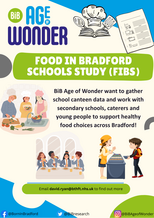
The Born in Bradford Age of Wonder study surveyed over 13,000 young people aged 12-15 to paint a wider picture of teenage nutrition.
Breakfast: a growing gap between girls and boys
We found that 29% of girls eat breakfast less than once a week or never, compared to 16% of boys. Overall, only 39% of teenagers eat breakfast every day - and this falls further as young people get older, from 44% among 12- to 13-year-olds to 36% among 14- to 15-year-olds.
Fruit and vegetables: most teenagers fall well short of “5 A Day”
We found that around 1 in 5 Bradford teenagers (19%) eat two or more portions of fruit daily, and a similar proportion (20%) eat two or more portions of vegetables daily. This means most young people in Bradford are likely falling well short of their daily 5 A Day target.
What this means for schools?
Schools play a vital role in shaping students’ health, and food is a key part of that. In our recent research, students frequently highlighted school meals as influencing their daily diets. And with major changes to school food policy ahead, now is an important time to understand what students are choosing to eat.
That’s why as part of the Age of Wonder programme, the Food in Bradford Schools study is working with secondary schools to analyse their existing canteen sales data and support schools with data-driven insights into their students’ food choices and related health behaviours.
To learn more or take part, contact David Ryan at:
For more information on latest evidence:
For our latest diet and nutrition school briefing:
 |
|
Transformation Towards Healthy and Sustainable School Meals (Menu Swap Project) |
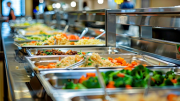
A Bradford-based experimental school project developing new school food menus that benefit children's and planetary health.
This initiative was led by the FixOurFood team at the University of York, in partnership with ProVeg UK, FM Catering Service’s and Bradford Primary Schools. The aim was to develop new school food menus that not only support children’s health but also help to look after the planet.
The menus were designed in collaboration with school food experts, children, 5 schools (Ben Rhydding Primary School, Co-op Academy Penny Oaks, Poplars Farm Primary School, Sandy Lane Primary School and Stocks Lane Primary School) and caterers to create acceptable change in the school food system. During the development stage, children from 4 of the 5 schools took part in a tasting event to help make any improvements to the meals.
The goal was to work with schools to develop low-environmental-impact meals that met school food standards, were cost-neutral, and remained acceptable to children, caterers, and staff.
A new set of menus were designed that we think met these needs. After the menus had been approved, these were tested in schools over a 10-week period to see how acceptable they were, finding out what children and schools thought of them and measuring the potential impact on food choice and food waste.
For more information:
 |
|
ProVeg UK - Join Our Food Revolution |
We are working for a world where everyone chooses delicious and healthy food that is good for all humans, animals, and our planet.
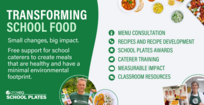
ProVeg UK’s flagship programme - School Plates - helps schools to ensure that children are served meals that are healthy and have a minimal environmental footprint. We do this by increasing the quality, quantity, and uptake of plant-based food. The health benefits of plant-based foods are widely recognised, while plant-based meals generally have a less negative impact on the planet than their conventional counterparts.
Working with local authorities, multi-academy trusts, individual schools, and contract caterers, we offer a range of free services, including: menu consultation, recipes, chef training, School Plates Awards, data impact and analysis, and peer support.
Thousands of schools are embracing healthy and sustainable meals – now it’s time for children to learn more about them! Educating children on the impact of their food choices is essential in nurturing future generations that are both health and environmentally conscious. With this in mind, we have developed an educational programme – Canteen to Classroom – in order to teach children about the food they eat: where it comes from, how it is made, and its impact on our health and the planet.
All their recipe resources and programme materials are available here:
FREE Canteen to Classroom education resources can be downloaded here:
Anyone wanting to contact ProVeg please email:
 |
|
Bradford’s Packed Lunch Toolkit |
Helping support nutritious, tasty and well-balanced lunchboxes.
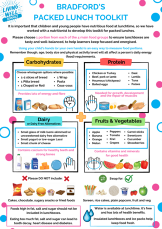
It is important that children and young people have nutritious food at lunchtime, so we have worked with a nutritionist to develop this packed lunch toolkit for Bradford. To ensure children and young people have nutritious, tasty and well-balanced packed lunches to help leaners stay focused and keep energised.
The toolkit is based on The Eatwell Guide and shows how much of what we eat at lunchtime should come from each food group to achieve a nutritious lunchbox and handy tips on an easy way to measure food portions – remembering though, age, body size and physical activity level will all affect a children and young person’s daily energy (food) requirements.
To download our toolkit and for more lunchbox resources:
For more information on The Eatwell Guide:
 |
|
Eco Councils Through an Eating Well Lens |
Spark curiosity and inspire action through thought-provoking discussions around climate change, sustainability and more.
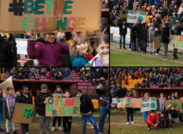
This document has been created to support schools with their Eco Councils (or similar) through the lens of the Living Well Schools key priorities ‘Pupil Voice’ and ‘Eating Well’.
These free and engaging activities can help spark curiosity and inspire action through thought-provoking discussions around climate change, sustainability and more.
Does your school have an established School Nutrition Action Group (SNAG) or similar, to represent and communicate the diverse views and experiences of all pupils regarding nutrition related topics, including school meal improvement, dining room experience and sustainability?
Does your school offer food leadership opportunities to all pupils to encourage engagement and self-development within good food and nutrition?
To download this resource:
To express interest in Bradfords Pupil Voice Sustainability Summit:
 |
|
Encouraging Children to Eat More Veg by Making It Fun |
Following the end of the Veg Power 'Eat Them to Defeat Them' 2026 campaign, let’s keep the momentum going!
Belly Bugs
Belly Bugs curriculum is for EYFS, KS1 and KS2. These lessons teach children about their gut microbiome and how looking after their Belly Bugs significantly improves their health. All lessons fit the National Curriculum with the ELG's. Lessons are cross curricular with maths, english, science, art & DT, PA and PSHE. Every lesson is backed by the latest research. It goes without saying that both teachers and pupils love Belly Bugs lessons.
For more information:
To enter the free teachers area please email:
Taste Education
TastEd is a charity dedicated to transforming food education in schools and nurseries across the UK. Their mission is to help children develop a lifelong, healthy relationship with food through sensory food education: a fun, pressure-free way to explore fruits and vegetables using all five senses. They offer primary schools a fully funded scheme of work designed to give children the chance to experience new vegetables and fruits in a positive way.
For more information:
Or to contact the team please email:
 |
|
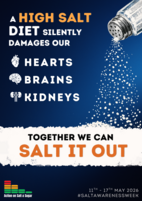
Salt Awareness Week 2026
11-17 May
|
Bringing salt back into the focus to spotlight the many ways it impacts our body, our health and our environment – and calling on both the government and food industry to ‘salt it out’ for good.
We know a high‑salt diet raises the risk of high blood pressure, but the harm of excess salt goes far beyond this.
Consistently eating too much salt places strain on the heart, brain, kidneys and blood vessels, increasing the risk of serious conditions including heart attack, heart failure, stroke, kidney disease, vascular dementia, osteoporosis and stomach cancer.
Despite these risks, many people in the UK and worldwide consume far more salt than recommended, often without realising it. Most salt is not added at home but is already present in everyday foods we buy and eat.
Recent evidence shows over half of the UK population lack confidence in estimating their daily salt intake. Average consumption is 8.4g a day, well above the recommended maximum of 6g. As salt intake remains high, rates of high blood pressure and related disease will also remain high.
Reducing salt is one of the simplest ways to improve health, combining individual choices with action from industry and government to lower salt in foods across the UK.
To get involved:
To see their free educational resources:
To download the Salt Awareness Week 2026 poster:
 |
|
Nourishing Communities Voucher Scheme |
Food insecurity affects over 20% of people living across Bradford District.
Launched in September 2025 and built on a 2-year pilot with market traders the Nourishing Communities Voucher Scheme by FoodSavers, a programme of local Bradford charity Inn Churches and is part funded by Bradford Council and the NHS’ Living Well programme.
The initiative provides families and individuals experiencing food insecurity with vouchers to purchase fresh fruit and vegetables at Darley Street Market and other participating markets across the district. The vouchers are designed as a cash-first, dignity-based response to food insecurity, ensuring people have the choice to buy healthy and good-quality food locally.
More than a voucher - Nourishing Communities is not just about immediate food access. The scheme is embedded in FoodSavers’ wider programme, which helps families build long-term financial resilience so that emergency food aid is no longer needed. Families will also be supported through targeted advice and wellbeing services to make lasting changes. Learn more by listening to episode 3 of The Living Well podcast (article below).
For more information:
Finding Low-Cost Food in Bradford district:
 |
|
The Living Well Podcast |
Episode 3: Eat Well – Why is it so hard to eat well?
In Bradford, one in four people experience food insecurity, and high rates of deprivation mean environmental challenges like “food swamps” (too many unhealthy options) are common.
In this episode of The Living Well Podcast, hosts Tim Howells and Zakra Yasin are joined by Juli Thompson (Inn Churches) and Professor Maria Bryant (Fix Our Food, York University) to discuss why access to quality food is the single most important public health topic.
Learn about the work being done to move people from crisis to resilience, including innovative school meal programs and the cash-first Nourishing Communities voucher scheme that helps preserve dignity and choice.
To listen to episode 3:
To view all Living Well podcasts:
 |
|
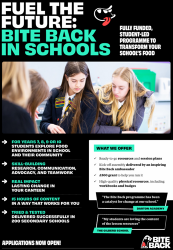
Transform Your Canteen with Bite Back in Schools |
1 in 3 children are at risk from food-related ill health.
Bite Back in Schools is a free, fully funded programme that empowers Years 7–10 students to improve their school food environment and understand the systems shaping it.
Schools receive a £500 student-led grant, ready-made teaching resources, a launch assembly from a Bite Back Ambassador, and ongoing support.
The flexible 15-hour programme fits around timetables while helping students build skills in public speaking, leadership, and problem-solving, alongside understanding government policy and inequality.
Aligned with PSHE, Citizenship and Food Technology, it delivers real student leadership and whole-school impact.
To apply for 2026 places or for more information:
Anyone wanting to contact Bite Back please email:
Quick Links to Other Eating Well Offers:
 |
|
Government consultation – School Food Standards
|
 |
|
Children and Families Living Well Service (school group sessions)
|
 |
|
Living Well Schools Eating Well
Assemblies and Workshops
|
 |
|
Breakfast Provision - support
|
 |
|
Food Growing - resources
|
 |
|
Bradford Pupil Voice Sustainability Summit
|
 |
|
School Food Matters – free webinars
|
 |
|
Allergy School -
The Natasha Allergy Research Foundation
|
 |
|
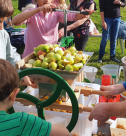
Fruit Works Co-operative
|
 |
|
Food a fact of life, free teaching resources (3-16 years)
|
|