Welcome to HDRC’s e-newsletter. This newsletter is intended for all stakeholders with Bradford Council and externally. The newsletter aims to share the HDRC’s journey throughout the lifetime of the programme showcasing the impact of the collaboration.
Health Determinants Research Collaboration (HDRC) Bradford is funded by the National Institute of Health and Care Research (NIHR) (part of the Department of Health and Social Care). We are hosted by Bradford City Council, in collaboration with our partners: Bradford Institute of Health Research, Bradford University, Leeds University and University of York.
HDRC’s aim is to help local authorities to become more research-active and to embed a culture of evidence-based decision making. Bradford HDRC is funded until Sept 2027 in the first instance.
 Message from the HDRC Director
Since the launch of our areas of research interest (ARIs) at our annual conference in September, the HDRC team has been utilising these in various ways, with the overall goal of bridging evidence and policymaking. These ARIs represent an exciting opportunity for council officers to be involved in research projects that will help build our evidence base and ultimately address the wider determinants of health and health inequalities in our district.
Working in collaboration with our partners at the University of York Policy Hub, we have begun to identify existing evidence sources to put in the hands of council officers. This exercise has been an interesting exploration of how so often the evidence is out there, but not easily discoverable or accessible. Not every gap in our knowledge requires novel research. To this end, we will soon be expanding access to academic journals for council officers, in partnership with NHS Bradford District Care Trust – read below to find out more.
We have also been working to raise awareness of our ARIs, with increasing interest from HDRCs across the UK. Bradford are leading the way in spreading this approach across the network. In addition to this, we will be presenting our work to identify and amalgamate our council and community ARIs (see below!) at the upcoming Prevention Research Conference 2026 in Birmingham in March, where we will be representing Bradford Council amongst academics in the Population Health Improvement UK network.
Community Areas Research Interest (C-ARI)
In parallel to our work with council colleagues HDRC have worked closely with communities across Bradford district to understand what matters to them when it comes to challenges around the wider determinants of health. These conversations have shaped our Community Areas of Research Interest (C-ARIs)—a set of priorities rooted in lived experience.
The C-ARIs have now been published on our website. Please take a look at them and do get in touch if you are interested in working with us to answer any of the research questions that have been posed.
Ten Prioritisation workshops
To develop the C-ARIs we synthesised existing local evidence to draw out themes on the wider determinants of health and created a list of topics. We took these to community settings and carried out a DIAMOND ranking exercise to rank in order of importance, and also to draw out key challenges under each topic. We held ten prioritisation workshops across the district, two in each constituency. We worked closely with our council neighbourhood teams and local Public Contributors (resident representatives) and academic colleagues, to identify and carry out ‘intentional selection’ of micro organisations, underrepresented groups and residents who we rarely hear from, to support this work.
C-ARI Academic-Led Question Generating Session
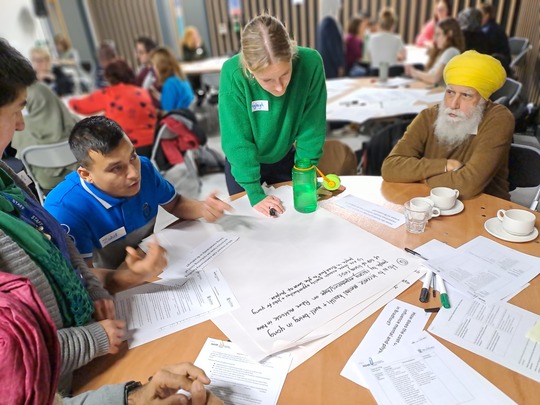
In November 2025, Bradford HDRC hosted a Question Generating Session designed to shape the future of our research priorities. This collaborative event brought together over 40 participants including 10 community groups and residents who had previously participated in our community priority workshops. The aim of the session was to co-produce C-ARI questions that reflect the real needs and interests of Bradford’s communities. During the session, we shared insights gathered from earlier workshops and worked together to generate key questions under eight thematic areas.
The session was led by our academic researcher Dr Adam Formby from the University of York, alongside Shabana Din, our HDRC Co-Production Lead, and Fiona Phillips, HDRC Public Health Consultant. Each table had a dedicated facilitator to guide discussions and help transform ideas into actionable research questions.
Thanks to this collaborative effort, the questions have now been published—marking an important step in ensuring that Bradford HDRC’s research agenda is community-driven and impactful. We have already received regional and national interest our C-ARI work and look forward to joined up working with our partners and stakeholders in the near future.
Research Approval Process (RAP)
Finally, a reminder to all staff in the Department of Adult Social Care, Health, and Housing that the HDRC have launched a Research Approval Process (RAP) that can be used by council officers to guide whether a research project requires any mitigations to protect service users and council officers. The RAP requires those leading research projects, whether these be council officers or external academics, to complete assessment forms that ask questions spanning data sharing, access to vulnerable service users, and the possibility of costing council staff time in research bids. For more information on this process, and to access the forms required for this, please scroll down to the bottom of the Research page on our HDRC website here https://www.bradford.gov.uk/health/bradford-health-determinants-research-collaboration/hdrc-research/.
Dr Ellen Flint, HDRC Director
Data
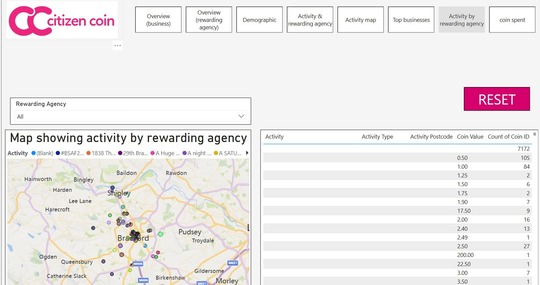
Halimah Sadia, a University of Bradford MSc Data Science student has recently completed a co‑produced dashboard project that brings new insight into how Citizen Coin is being used across the district.
Halimah joined the Council through a three‑month placement scheme delivered in partnership between Bradford Council and the University of Bradford, facilitated by the Skills and Employment team. The scheme runs 2–3 times a year and places students across a range of Council services including HDRC, Skills and Employment, Office of the Chief Executive, and others.
Working collaboratively with Citizen Coin, the HDRC data team, IT Services and App Support, and the Bradford West Area Coordinator, Arshad Mahmood, the Halimah designed and delivered an interactive dashboard that links demographic information with social value activity.
Bradford West experiences some of the highest health inequalities in the country, and this new tool provides accurate, unique intelligence to help the Council target areas where participation and support for vulnerable residents is most needed. By identifying local businesses, from gyms and garden centres to community organisations and food outlets, that could benefit from and contribute to the Citizen Coin ecosystem, the project aims to encourage more residents to take part in volunteering and community activity. The dashboard brings together rich data on Volunteering, Environmental activity, Training, Wellbeing, Civic Participation, Community Engagement, Education, Active Travel, Social Prescribing, and Career Development, supporting efforts to strengthen local engagement and improve health outcomes such as loneliness, mental health, and diabetes. The dashboard can now be updated with all new updates for the teams to react to the insights it delivers.
Policy Hub
Our Latest Research: How Supported Housing Can Improve Health and Wellbeing
We’re excited to share findings from our recent rapid review, published in Public Health in Practice, exploring the role of supported housing in England and its impact on health and wellbeing.
What we set out to do Supported housing is a lifeline for people with complex needs, yet its health benefits have often been unclear. Our goal was to examine the evidence and identify what works—and what needs to change—to make supported housing a true public health asset.
What we found After reviewing 45 studies, we uncovered six key insights:
-
Health outcomes vary significantly across different housing models and populations.
-
What counts as a successful outcome depends on who is being supported and the housing model.
-
Quality of life is shaped by governance and support delivery, not just the housing itself.
-
The environment matters—physical, social, and community factors are critical for rehabilitation and wellbeing.
-
Autonomy is essential for positive experiences, life progression, and health outcomes.
-
Relationships and trust are as important as bricks and mortar.
Our recommendations for local government With new legislation requiring local authorities to license and oversee supported housing, our findings are timely. We propose three actions:
-
Recognise supported housing as a public health intervention—and build partnerships across health, housing, and social care.
-
Use complexity-informed evaluation—because success looks different for different people.
-
Improve care quality and quantity—through staff training, clearer roles, and co-produced guidelines for “good support.”
Why this matters Supported housing isn’t just about providing shelter—it’s about dignity, autonomy, and better health. By acting now, local authorities can transform supported housing into a cornerstone of community wellbeing.
Introducing our embedded researcher, Dr Hollie Henderson
Since joining the HDRC as an embedded researcher in October, Dr Hollie Henderson has been exploring opportunities with the council to link early childhood education and care data for the Born in Bradford cohorts. These initial conversations aim to facilitate future research into the factors influencing early child development, as well as equitable access to early childhood education and care across the district. Hollie is also collaborating with researchers at the University of York on a mixed-methods study to investigate how the Ages and Stages Questionnaire (ASQ) is implemented in Bradford.
The ASQ is a screening tool used routinely across England at age 2 to monitor a child's progress in areas such as communication and social-emotional skills. Coproduced with the Bradford Health Visiting Service, this study investigates whether the ASQ is an acceptable and equitable tool for understanding early child development in Bradford. The goal is to develop locally relevant, evidence-based recommendations that ensure child development is captured accurately and fairly for every child in the city.
An award winning project by Dr Kelli Kennedy
The awards are presented under the Shared Green Societies Forum, and recognise outstanding research by early career and PhD researchers from the Social Sciences and Humanities that supports Europe’s green transition by strengthening participation, knowledge exchange, and inclusive policymaking.
“Kelli Kennedy presented work using a wide range of citizen engagement methods, including training local residents, listening events, and ensuring that policy outputs reached decision-makers. From her application, it is clear that she reflects critically on her own role and responsibility in connecting academic research with real-world needs,” Sarah Seus explains.
Kelli attended the Shared Green Societies Forum in Brussels last month to collect her award.
Co-Production
Latest from Bradford Council’s Youth Ambassadors
With the support of West Yorkshire’s Mayor and the Deputy Mayor for Policing and Crime, Bradford Council is inviting teachers, school leaders, youth workers, and professionals working with young people to a special event showcasing a new series of co‑produced short films created by young people, for young people.
Hosted at Norcroft Auditorium, University of Bradford, Bradford Council’s Youth Ambassadors, in partnership with the Domestic Abuse and Sexual Violence (DASV) and Safety of Women and Girls (SOWG) teams, have created five powerful short films addressing key issues faced by girls and young women across the District. The films encourage open, honest, youth‑led conversations that directly support safeguarding, wellbeing, and healthy‑relationships education.
Register for the ‘Just not ok’ launch which is being held at the Norcroft Centre on Wednesday 11 March, to preview all five films, receive the full suite of resources, connect with peers and local services, and gain practical tools to support young people to understand, navigate, and challenge harmful behaviours.
Working with public contributors
The Public Health Team at Bradford Council has recently partnered with HDRC Bradford in order to explore ways to co-produce a new strategy, and embed community involvement into the development process by working with public contributors. Read the case study here: Case Study - Working with public contributors to develop Council strategies | Bradford Council
Learning and Development
HDRC virtual Q&A Session- What do you want to know about Research and Academia
Thursday 26 February 12pm - 1pm
HDRC Bradford Lunchtime Webinar-Macroeconomic inequality, brain structure and function, and mental health during adolescence
Monday 27 April 12pm - 1pm
We are delighted to invite you to a seminar with Dr Divyangana Rakesh, whose recent Nature Mental Health paper offers groundbreaking insights into how income inequality shapes children’s brain development and mental health. She will share key findings, discuss their wider implications, and reflect on the international, interdisciplinary collaboration behind the work.
Spotlight on our latest Community of Research Event
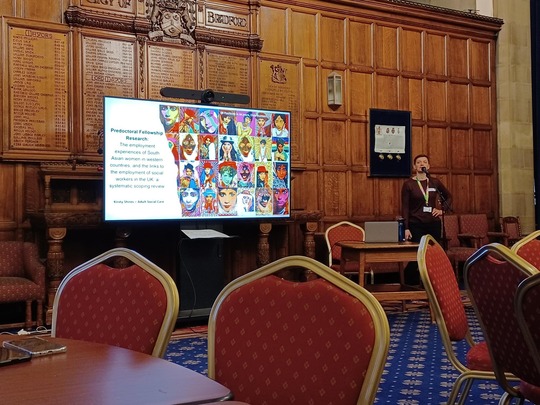
Bradford Council’s Community of Research is a growing community of practice led by HDRC Bradford that brings together council staff who are interested in using research and evidence in their everyday work, helping them connect with peers, build skills and share insights. Our event in December brought colleagues together for an energising morning of shared learning, fresh perspectives and inspiring research journeys.
Speakers included Caroline Brundle, Senior Research Fellow at the Bradford Institute for Health Research, Kirsty Shires, Team Leader in the Dept of Adult Social Care & Health and our very own Data Manager Rob Shore.
Read the full write up of the event on our website.
Other news
HDRC Bradford is on LinkedIn
Last month, HDRC Bradford launched its new LinkedIn page. Until now we have been sharing our updates on social media via Bradford Council's main accounts but we decided it was time we had our own. We will be using the page to share news, updates about projects, insights into research and data and the successes of our staff and stakeholders.
Give the page a follow using the button below and please like and repost our content as you see fit.
Journal Access
Bradford HDRC are pleased to announce that we have entered into a partnership with Bradford District Care NHS Trust to bring research journal access and training on how to use this access to Bradford Council officers. Previously, only Public Health officers could access journals. We hope this novel approach will increase access to evidence across all our directorates. The training, delivered in a series of online sessions, will cover the fundamentals of searching for literature, critically appraising it, and embedding the evidence within it to support policymaking in our district.
Alongside this we are launching two journal clubs. The first will form a community that that encourages understanding and critiquing the literature and provides space for further progression of the skills required to do this. The second will be specifically for registered social workers to appraise a journal article as well as reflect on how the evidence presented could be incorporated into their social work practice Those who are interested in learning more about this work can email us at HDRC@bradford.gov.uk for further information.
More about HDRCs
Health Determinants Research Collaborations (HDRCs) boost research capacity and capability within local government. They aim to embed a culture of always using evidence when making decisions. HDRCs use research findings to understand how decisions impact on health and health inequalities. They also carry out research where evidence isn’t already available.
Bradford Council is one of 13 local authorities in 22/23 across the country that have been awarded funding from the NIHR (National Institute of Health Research) to boost research capacity and capability within local government. In October 2023 NIHR awarded a further 11 authorities with HDRC status and 6 with development funding.
Follow this link if you would like to know more https://www.nihr.ac.uk/explore-nihr/support/health-determinants-research-collaborations.htm
|