Message from the HDRC Director
Welcome to HDRC’s e-newsletter. This newsletter is intended for all stakeholders within Bradford Council and externally. In it we will share the HDRC’s journey throughout the lifetime of the programme showcasing the impact of the collaboration.
Health Determinant Research Collaboration (HDRC) Bradford is part of the National Institute of Health and Care Research (NIHR) and hosted by Bradford City Council, in collaboration with our partners, Bradford Institute of Health Research, Bradford University, Leeds University and University of York.
HDRCs aim is to help local authorities to become more research-active and to embed a culture of evidence-based decision making.
Bradford HDRC is funded until Sept 2027.
If you would like to speak to the HDRC at Bradford Council, please email HDRC@Bradford.gov.uk
Over the summer our new HDRC team has been developing their work programmes and as you’ll see from this newsletter they’ve been busy starting to deliver on a range of projects.
Our primary focus is to support the Council to be more evidence, research and data led in its work, and therefore our new internal SharePoint is aimed directly at Council staff. We’ve been developing our processes for how staff can request to work with us and this can be found here (Council staff only). Now this is up and running we will be doing further work to engage with our external partners, so watch out for developments on our Council website. Similarly, you will see below details of the training that we are offering council staff, but as we progress we will look to develop a training offer for the wider community within Bradford.
We’re always interested to hear how you think HDRC can support you, so please let us know via hdrc@bradford.gov.uk.
Meet the team
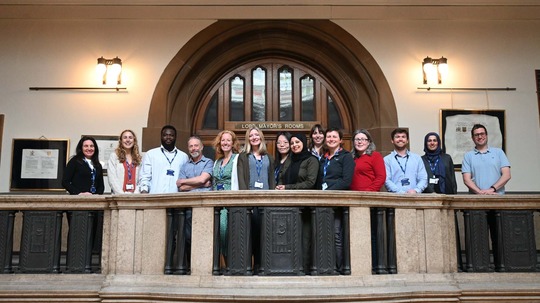
From L to R: Josie Hoy, Programme Manager; Emma Little, Public Health Registrar; Olasehinde Shobande, Data Scientist; Kevin Brain, Evidence into Policy Lead; Fiona Phillips (FFPH), Interim Director; Dr Kate Questa, Public Health Consultant; Dr Yanhua Xu, Data Scientist; Rahima Ali, Training & Capacity Lead; Dr Ellen Flint Director (currently on Mat leave); Dr Caroline Tait, Public Health Consultant; Dr Chantel Davies, Data Scientist; Dr Christopher Trevelyan, Research Governance Lead; Shabana Din, Co-production and Partnerships Lead; Rob Shore, Data Manager
HDRC awarded research grant!
HDRC Bradford awarded research grant!
The HDRC has been awarded a £300,000 Public Health Research grant from the NIHR to explore public acceptance of the use of routine data, including public consent on sharing data. HDRC Data Manager, Rob Shore is the lead investigator for this project and will oversee the development of a co-produced national framework with members of the public across Bradford and the establishment of a public advisory panel for data use. The 24-month study begins this month via a series of co-produced case studies, focus groups and workshops.
https://fundingawards.nihr.ac.uk/award/NIHR160994
Data and evidence for decision makers
Data
The HDRC Data Science team is working with the Education and Skills team to develop a machine learning-based tool that can highlight the likelihood of Bradford's children becoming NEET (Not in Employment, Education, or Training) from Year 11 onwards. The model will identify children from Year 7 who are most vulnerable to falling out of education, training, or employment, and highlight successful types of intervention. HDRC Data Scientist, Yanhua Xu is leading the development of the predictive tool.
The HDRC Data Science team has worked with the Air Quality team in the Department of Place to create a dashboard that reports on Bradford's Clean Air Zone, focusing on types of vehicles that are captured on the city's CAZ cameras, identifying those that meet CAZ requirements and those that do not, based on specified standards. The dashboard was presented to the Joint Air Quality Unit (JAQU) in DEFRA earlier this year. Olasehinde Shobande, HDRC Data Scientist has led the dashboard development.
As a result, DEFRA and Department For Transport (DFT) has invited representatives from Bradford Council's Air Quality and HDRC teams to contribute to the development of a national dashboard for local authorities that will contain multiple visualisations and interactive elements of the main data types and open data to report on national air quality.
Evidence review – The policy hub
We have completed a rapid evidence review of public health approaches to reducing alcohol and drug harms. The review identified a possible definition of prevention in this context, along with key areas to guide strategic planning and service delivery in the prevention of drug and alcohol harm. It was developed to support the work of the Combatting Drugs and Alcohol Partnership.
Our rapid review of evidence on supporting minoritised informal carers is informing the Council's new carers strategy and has been successfully submitted as a research article. It is freely available in Public Health in Practice: Rapid review: Ten ways to improve support for minoritised informal adult carers at local government policy level to redress inequality. Our City of Cultures rapid review has also been published as a short communication and is freely available in Public Health in Practice:: Five ways UK European Capitals and Cities of Culture have connected cultural activities with nature and their impacts on health and wellbeing, wider determinants of health and inequality .
We are also in the process of completing a rapid review for our Supported Housing Improvement Programme (SHIP) team and will shortly be developing a series of policy briefs on a range of topics, so watch this space.
Cultural Competency workshop
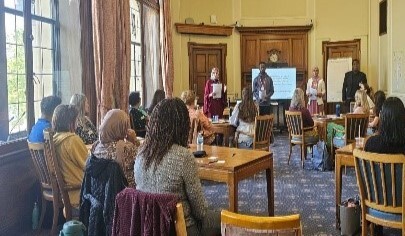
In July 2024, we offered a co-produced Cultural Competency workshop, in collaboration with the Clinical Research Network (CRN) Yorkshire and Humber Ethnic Minority Research Inclusion Group (EMRI). This workshop was specifically tailored for Local Authority staff and researchers to enhance their cultural competency—a critical skill necessary for designing, delivering, and commissioning services that are inclusive, accessible, and relevant to the diverse communities they serve.
Cultural competency is essential for Local Authority staff at all levels, as it enables them to create services that are not only effective but also respectful of the cultural diversity within their communities. Moreover, in research, cultural competency ensures that studies are representative and considerate of all population segments, thereby enhancing the validity and applicability of research outcomes.
The workshop was delivered as an interactive, face-to-face session, led by public contributors and the HDRC co-production lead, and provided participants with deep insights into cultural diversity from lived experience. The session was designed to be a safe space, encouraging open dialogue and critical reflection among participants. A total of 20 participants attended, comprising of academics and council staff from various departments and services. This workshop was originally created for Academic Researchers but was carefully adapted by the HDCR team for relevance and alignment to council work. This mix of attendees was particularly significant, as it marked the first time the workshop was delivered to a joint audience bringing academics and local authority staff into one space for collective learning and reflection, making it a pioneering event in bridging the gap between academic research and practical service delivery.
Feedback from participants:
"Great balance of presentations and interactive group work"
"Open safe space to discuss, great tips and really good activities"
"Good atmosphere was created by the facilitators, which was well designed and managed"
Career development opportunities
The annual call for NIHR Pre-doctoral Local Authority Fellowship (PLAF) applications will open in January 2025. This scheme supports individuals based within local authorities and supporting services to undertake preparation for a PhD such as a Master’s degree. These fully funded pre-doctoral fellowships allow awardees to retain their existing employment contracts and salaries, whilst protecting their time to develop their research ideas and skills, academic training, professional development, and some appropriate continued practice. We are running a webinar for council staff on all NIHR Local Authority Fellowships including the PLAF on Tuesday 29 October 2024 13.00pm-14.00pm. You can join on Teams using Meeting ID: 385 399 402 645, Passcode: 9UhXCK. As part of this event, Kirsty Shires, Team Leader in Adult Social Work Development, who has been awarded a PLAF, will talk about her experience.
Further information on the PLAF and how to apply can be found here:
https://www.nihr.ac.uk/career-development/research-career-funding-programmes/predoctoral/predoctoral-fellowships#predoctoral-la-fellowship
The wider Local Authority Academic Fellowship Programme and associated opportunities
If you are interested in applying for a PLAF or any other NIHR Local Authority Academic Fellowships then please contact the HDRC team via hdrc@bradford.gov.uk to discuss and see how we can support your application.
Take the next step in developing your career with NIHR
The National Institute for Health and Care Research (NIHR) is providing opportunities for individuals working in local authority settings to undertake short placements to enhance their careers and develop skills and capabilities to co-create research that is more meaningful and better connected with practice. The placements include funding of up to £15,000 per individual (including backfill/salary) and offer the chance to experience research within an NIHR setting such as an NIHR Applied Research Collaboration (ARC) or NIHR Health Determinants Research Collaborations (HDRC).
Find out more about the NIHR Local Authority Short Placement Award for Research here: https://www.nihr.ac.uk/explore-nihr/funding-programmes/nihr-local-authority-academic-fellowship-programme-and-associated-opportunities.htm
The deadline for applications this year is 21 November 2024.
Please contact the HDRC team for support with any applications at hdrc@bradford.gov.uk
Working with our communities
The HDRC Youth Ambassador programme
The HDRC and Policy and Safer Bradford Teams are co funding a Youth Ambassadors programme to explore different approaches of gathering young people’s perspectives on their experiences of health and things that influence their wellbeing. This will enable their needs to be better understood so that local services can adapt to improve the outcomes and livelihoods of children and young people in Bradford.
A young person on the Youth Ambassador programme commented:
“Some staff from the Bradford council HDRC team came to deliver a session to the Youth Ambassadors about the building blocks of health and the standard of living and quality of life around different areas of Bradford. One thing that shocked me was that the life expectancy changed from one area to another by about 10 years. That was just because some people lived in a more affluent area where they have better access to services, better homes, better standard of living, better food, and others living in more deprived areas having lots of takeaways, pollution and less services. This was something I did not know.
We then did a Lego building exercise and were asked to build a sustainable city or town. As we built the towns, we spoke about what we wanted in our ideal place and made sure we had a police station, fire station, hospital, supermarket, road safety, parks and affordable homes of a good standard.
This awareness has 100 percent changed my outlook. I don’t live in an affluent area. We have takeaways all around us. We don’t have access to lots of other services. If I’m hungry and with my friends, we just go and get a cheap takeaway. Even though our environment makes it easier for us to get a takeaway I am trying to be more mindful of the choices I make regarding my own health and environment in the long term. I’m not saying I’m not going to have takeaways now lol, but this knowledge motivates me to be more informed about public health policies and to support initiatives that aim to reduce these effects. I’m more likely to advocate for better access to healthcare, education, and healthy living conditions in my community now.
Overall, this awareness has deepened my commitment to promoting equity and well-being both in my personal life and through the work I do.”
Other research
Child of the North
A major new report series has been launched, produced jointly by Child of the North and the Centre for Young Lives, setting out practical, evidence-informed ways in which government can reset its vision for children and young people. Bradford Council and the HDRC have contributed to some of these, and the next one on school absence is due to be launched on 25th October. You can view the reports here:
Mobilising Early Years research for a brighter future: Insights from the Better Start Bradford Innovation Hub.
These free webinars from Better Start Bradford are of interest to decision makers, practitioners and researchers with an interest and focus on early years.
The Better Start Bradford Innovation Hub have been working with Better Start Bradford to evaluate the projects and early life interventions delivered as part of their programme. They are hosting three webinars where they will share their findings, alongside research from Born in Bradford’s Better Start (BiBBS) – the world’s first intervention birth cohort.
Health, nutrition and green space
Tuesday 5th November, 10:00-12:00
(Register here)
Language and communication
Tuesday 12th November, 10:00-12:00
(Register here)
Social and emotional development
Tuesday 19th November, 10:00-12:00
(Register here)
More about HDRCs
Health Determinants Research Collaborations (HDRCs) boost research capacity and capability within local government. They aim to embed a culture of always using evidence when making decisions. HDRCs use research findings to understand how decisions impact on health and health inequalities. They also carry out research where evidence isn’t already available.
Bradford Council is one of 13 local authorities in 22/23 across the country that have been awarded funding from the NIHR (National Institute of Health Research) to boost research capacity and capability within local government. In October 2023 NIHR awarded a further 11 authorities with HDRC status and 6 with development funding.
Follow this link if you would like to know more https://www.nihr.ac.uk/explore-nihr/support/health-determinants-research-collaborations.htm
Health Determinant Research Collaboration (HDRC) Bradford is part of the National Institute of Health and Care Research (NIHR) and hosted by Bradford City Council, in collaboration with our partners, Bradford Institute of Health Research, Bradford University, Leeds University and University of York.
The views expressed are those of the author(s) and not necessarily those of the NIHR or the Department of Health and Social Care.
|