Welcome to NIHR Health Determinants Research Collaboration (HDRC) Bradford's e newsletter. This newsletter is intended for all stakeholders within Bradford Council and externally. The newsletter aims to share the HDRC’s journey throughout the lifetime of the programme showcasing the impact of the collaboration.
Health Determinant Research Collaboration (HDRC) Bradford is part of the National Institute of Health and Care Research (NIHR) and hosted by Bradford City Council, in collaboration with our partners, Bradford Institute of Health Research, Bradford University, Leeds University and University of York.
HDRCs’ aim to help local authorities to become more research-active and to embed a culture of evidence-based decision making.
Bradford HDRC is funded until Sept 2027.
If you would like to speak to the HDRC at Bradford Council, please email HDRC@Bradford.gov.uk
Message from the HDRC Director
Welcome to our first HDRC newsletter! We will use these newsletters as a way to regularly connect with our vast array of partners, all who share a common passion for addressing the wider determinants of health (the things that lead to poor health and wellbeing) and want to take an evidence led approach to addressing them and ultimately reducing health inequalities.
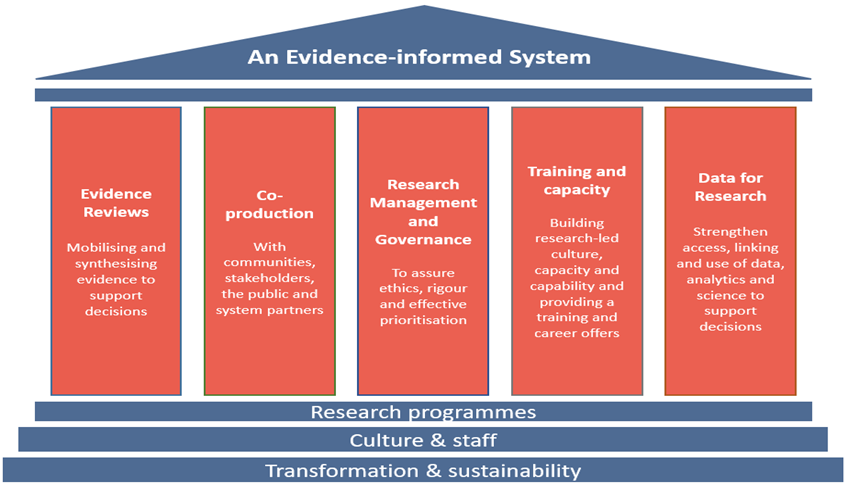
A lot has happened in this first period of our programme. We have recruited a full team to lead and manage the programme and take forward the five strands of the work. You can read an update on each of these strands below.
We would very much welcome any feedback you have on this newsletter so that we can improve future versions.
Please get in touch with us if there are areas of work that you would like to work together on, or research ideas or data projects that you would like support with. Also feel free to disseminate this newsletter to your colleagues and networks who may not be aware of us.
Fiona Phillips
Bradford HDRC Vision and Objectives
The aim of the Bradford HDRC programme is to sustainably transform the council, so it becomes evidence-led, and data driven, at all levels of decision-making to improve the wider determinants of health and reduce health inequalities.
Research news
Evidence into practice
We have completed two literature reviews:
Adult Social Care and the University of York. A rapid systematic ‘review of reviews’ was completed to identify key issues to consider when assessing the adequacy (e.g. sufficiency, appropriateness) of support for unpaid carers from minoritised groups. The review has provided insight into key factors that affect access to support for minoritized informal adult carers, which can be addressed at local policy level. It also identifies examples of opportunities for local action. The findings can be used to inform the next Carers Strategy and help to shape commissioning of local carers services. The review also identified areas where further information was required. Adult Social Care regularly carry out surveys with carers, but the work completed on this review and the relationship built up between adult social care staff and the University of York enabled academic support to be given to the shaping of questions to the next piece of survey work.
City of Culture
University of York have completed a review for BD2025 City of Culture on how previous UK European Capitals and Cities of Culture have connected culture to green-blue space, and the impacts of initiatives on determinants of health and inequality. The review will be helpful in giving direction to the programming of the BD2025 programme and how this is developed. For example, the review demonstrated that there is evidence that the City of Culture programme has improved community health and personal health and wellbeing. However, this is more likely to be the case if people actively participate in developing events as well as taking part in them. When culture-nature initiatives are co-created with marginalised groups, organised at hyper-local levels with Community Champions, actively involve people, and build in livelihood opportunities, they offer the most promise for promoting equitable community health and personal health and wellbeing outcomes and for mitigating the risks of widening socio-economic inequality.
Evidence into policy
Working with Council Officers, we have recruited seven students from the University of Bradford to work with Officers on their Masters in Public Health dissertations next year. They will be studying a variety of topics such as alcohol, drugs, education, living well, tobacco control and long-term conditions and providing insights into questions that our staff want answering.
The Data Strand of the Bradford HDRC has provided data analysis support through survey analysis and the generation of maps using geo-spatial data to provide unique and revealing insights into the barriers preventing Bradford taxi drivers from going electric. The analysis, performed by Robert Shore, Data Manager, and Dr Caroline Tait, Public Health Consultant, contributed to Bradford Council utilising £4.1 million of Government grant funding for the Bradford licenced taxi trade to assist with the running costs of a fully electric vehicle.
In parallel, there are enhanced discussions with British Telecoms Group (BT) on a project which could see the installation of electric vehicle charging points on streets within the Bradford district. The analysis outputs provided hard evidence to show the locations of Bradford taxi drivers and where their preferred electric charging locations would be.
As part of this project, the HDRC Data Strand was provided with survey responses on electric vehicles from over 1,200 taxi drivers across the district. 67.6% of respondents reported they were considering driving a fully electric taxi. Further analysis found that most taxi drivers would consider transitioning to electric if they had access to either off road (drive or garage) or on street dedicated parking charging points. Geo-spatial data was used to generate maps to track responses based on Bradford postcodes and identify locations that support taxi drivers charge their electric vehicles.
Co-production
The HDRC is working closely with partners to better understand existing community involvement and co-production in research within the District. This will help to ensure that our co-production plans align and complement existing networks. We will shortly be looking for public contributors to help shape and support our work, please get in touch if you are interested in this.
We are exploring different approaches to involve members of the public in shaping research priorities, and we are co-funding a youth ambassador programme to gather young people’s perspectives. Youth Health Ambassadors will work alongside the localities Youth Work teams engagement activities. Through local opportunities such as activities, events and workshops young people will be able to share, learn and support one another in their experiences of health and the factors that determine individual well-being. These opportunities will be used to understand the needs of the community and how local services can respond differently. The ambassadors will visit youth projects, schools, colleges, and community events.
The Ambassadors will be supported by the Youth Service to share local knowledge, experience and learning with the NIHR Health Determinants Research Collaboration and key stakeholders such as: Police, Health, Education and Local Government and the Wellbeing Board.
We are also looking forward to working more closely with partners at BIHR to support the CoPPeR research project, which is using a peer researcher approach to understand diverse community perspectives on the built and natural environment.
More about HDRCs
NIHR Health Determinants Research Collaborations (HDRCs) boost research capacity and capability within local government. They aim to embed a culture of always using evidence when making decisions. HDRCs use research findings to understand how decisions impact on health and health inequalities. They also carry out research where evidence isn’t already available.
Bradford Council is one of 13 local authorities in 22/23 across the country that have been awarded funding from the NIHR (National Institute of Health Research) to boost research capacity and capability within local government. In October 2023 NIHR awarded a further 11 authorities with HDRC status and 6 with development funding.
Follow the link below if you would like to know more:
|