|
Welcome to the Early Education and Childcare Quality Officer (EECQO) team's newsfeed. At the end of every month, the team share key information, and important updates collated during the month from other agencies, which they hope you find useful in your setting. If you haven't met the team View the team here and visit the team's Early Years and Childcare | Skills 4 Bradford page
The first section of the newsfeed provides updates from the EECQO's and other Bradford Council teams

Spotlight on safeguarding
This month the spotlight on safeguarding focuses on;
Identifying signs of possible abuse and neglect
The designated safeguarding lead (DSL) must provide support, advice and guidance to any staff on an ongoing basis, and on any specific safeguarding issue as required. Consider how this is done in your setting. Staff must be trained to understand the setting's safeguarding policy and procedures, and have up to date knowledge of safeguarding issues. Staff must be able to identify the four main types of abuse and neglect (physical, emotional, neglect and sexual) at the earliest opportunity, and to respond in a timely and appropriate way. These may include:
- significant changes in children's behaviour
- a decline in children’s general well-being
- unexplained bruising, marks or signs of possible abuse or neglect
- concerning comments from children
- inappropriate behaviour from practitioners, or any other person working with the children. This could include inappropriate sexual comments; excessive one to-one attention beyond what is required through their role; or inappropriate sharing of images.
- any reasons to suspect neglect or abuse outside the setting, for example in the child’s home or that a girl may have been subjected to (or is at risk of) female genital mutilation Government collections on female genital mutilation and/or
- inappropriate behaviour displayed by other members of staff, or any other person working with the children, for example: inappropriate sexual comments; excessive one-to-one attention beyond the requirements of their usual role and responsibilities; or inappropriate sharing of images
Providers may find it helpful to read ‘What to do if you’re worried a child is being abused: Advice for practitioners’.
|

Safeguarding Children in Bradford: free e-learning is back
The EECQO's Safeguarding Children in Bradford e-learning courses are available again after being updated. Both of these courses have been written for anyone who has contact with children in a setting, this could include those staff that are qualified, unqualified, students and volunteers working across the Bradford District. They receive up to date, free training including the Bradford District Safeguarding Children Partnership messages, contact details and documentation.
Both courses have been updated to reflect the recent changes which include;
For settings registered on Ofsted’s Early Years register, choose Safeguarding children in Bradford: Settings on Ofsted's early years register
For settings registered just on Ofsted's Childcare Register, Compulsory and/or Voluntary parts (not Ofsted’s Early Years register) choose Safeguarding children in Bradford: Settings on Ofsted's childcare register
Please choose the correct course linked to your setting’s Ofsted registration
|

Free online provider networks in February and June 2024, book your place
February provider network - EYFS
The focus is all about the Early Years Foundation Stage (EYFS) that came into effect on the 4 January 2024. This network will guide you through the EYFS and provide an overview of changes and updates along the way. Book a place on our free online provider network, choose the correct session for your type of setting;
-
Childminders book here for 20 February: 6:30 – 8pm
-
Group providers (including childcare on domestic premises) book here for 22 February: 6:30 – 8pm
June provider network - Cyber awareness
The theme has been set for the June network ‘Cyber awareness.’ We are very excited to announce both sessions will be delivered by West Yorkshire Police.
There are two dates to choose from, choose one date:
How do I access?
The provider networks are all delivered online and are free. If you are unsure how to use Microsoft Teams watch this 10-minute video as it provides a step by step guide of how to participate, and the presentation starts with ‘the group agreement.’ Please note we will not cover how to use Teams or the group agreement during our live sessions, so please make sure you are familiar before attending.
|
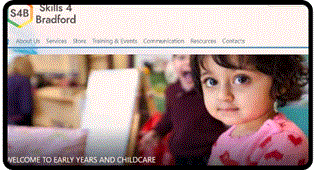
‘Focus on’ documents
Did you know the EECQO’s S4B website has a library of 'Focus on' documents? which are free and downloadable.
These are written to support your early years and childcare setting. Whether you are looking for a SEND overview; exploring ‘in the moment planning;’ or introducing treasure baskets and heuristic play in your setting; take a look and download any that are of interest.
Each term new ‘focus on’ documents are uploaded. If you can think of a focus document you would like to see here too, please let us know.
|

Bradford Libraries rhyme challenge 2023-24
Get singing, get rhyming, get talking, get reading
The Rhyme Challenge is a fun way to introduce children and families to rhymes. Rhymes may be new to families or forgotten, and they help children build up confidence to have a go themselves. Young children learn best through seeing someone they know, doing things, and through repetition.
If you are a group provider: nursery or pre-school, or childminders (that can group together) to request a pack for 30 children, email: susan.brewster-craig@bradford.gov.uk or alternatively access the sessions taking place in the libraries to undertake the challenge.
|
This next section provides an overview of Ofsted key updates
Two updated Ofsted documents
Early Years inspection handbook for Ofsted registered provision
Please note that this guidance document has been updated and came into force on 19 January 2024. There is a Summary of changes document which outlines all the changes and where they can be found in the inspection handbook.
Ofsted's code of conduct
This guidance applies to all inspection and wider regulatory activity in all Ofsted’s remits: early years, education and skills, and social care. It also applies to all providers. The code of conduct includes expectations of inspectors, and expectations of providers.
When inspectors are carrying out inspections or visits, the lead inspector will explain the expectations set out in this guidance and will ask providers to read it. Inspectors will make providers aware that they should raise any concerns during the inspection, and at the end of the inspection or visit. This includes being open, transparent and honest and providing all relevant evidence to allow for a fair and accurate outcome.
|
This next section shares updates from the Department for Education

Early years qualification requirements and standards
The Early years qualification requirements and standards Statutory guidance document defines the qualifications that practitioners must hold to be included in the specified staff:child ratios at levels 2, 3 and 6 of the EYFS.
The requirements in this document came into force on 4 January 2024 and are in response to the EYFS: regulatory changes consultation.
|
Coming soon: National recruitment campaign
The Early Years and Childcare national recruitment campaign is coming soon. Upload setting vacancies with any current or upcoming roles in your setting, please watch these video tutorials to help create an employer account and post jobs. Create an employer account here. You should use the term ‘early years’ in the title of your job adverts and select ‘Education jobs’ for the job category.
The aim of the campaign is to promote early years and childcare careers by highlighting the huge difference early years professionals make to young children and how rewarding working in the sector can be.
The campaign, with its own dedicated website, will direct potential applicants to use DWP’s Find a Job vacancy platform to search for early years, childcare and wraparound roles in their area

Free courses and qualifications for adults
DfE are investing in free courses and qualifications for adults to boost their skills including maths skills, and technical qualifications.
Search Skills for Life to find out more about the training and advice you or your team can access for free
Some of the free courses and qualifications available;
-
Multiply is a selection of free courses to help you improve your maths skills.
-
Essential Skills are courses that can help you get English, numeracy or digital skills that are needed for work and everyday life.
-
Skills Bootcamps are free, flexible courses of up to 16 weeks to help people 19 or older to gain the necessary skills to secure or progress in a job.
-
Free Courses For Jobs: The government might pay for you to take a course that helps you learn new skills or apply for work.
-
Higher Technical Qualifications HTQs are technical qualifications so people can get the right training and skills needed to succeed at work, a HTQ can be studied full time or part time.
|
The Education Hub
The Education Hub is a site for parents, pupils, education professionals and the media that captures all you need to know about the education system. You’ll find accessible, straightforward information on popular topics, Q&As, interviews, case studies, and more.
5 easy ways to boost your child's development
Read the Education Hub’s 5 easy ways to boost your child's development The DfE have partnered with Child Psychologist Professor Sam Wass to share his five top tips on giving children the best start for life, from when they are babies through to young children.
Measles cases are on the rise
Cases of measles are rising across England, including among children. It’s an infection that spreads very easily and for some people can cause serious problems. There’s no specific medical treatment for measles, so it’s important to get vaccinated as it’s the best protection against becoming seriously unwell. The measles, mumps and rubella (MMR) vaccine is one of the routine childhood vaccinations, so most children are already vaccinated against measles. If your child has received both doses of the vaccine, they are unlikely to have the virus. Here, you can read everything you need to know about the rise in measles cases.
Key things to consider;
If a child has measles, they should stay off nursery or school for at least 4 days from when the rash first appears, and avoid close contact with babies and anyone who is pregnant or has a weakened immune system.
The incubation period is the length of time it can take to develop the illness after being in contact with someone with measles. For measles, the incubation period can be up to 21 days. Anyone who has been vaccinated is unlikely to be considered susceptible.
If you know that a child in your setting missed their first or second dose of MMR vaccine, they should contact their GP practice to book an appointment.
Considering the rise of cases, do you know which children in your setting are vaccinated? Do you ask about vaccinations when children are enrolling? Remember it is parental choice whether they have their child(ren) vaccinated. Share the list of symptoms with families. The NHS lists the symptoms to look for Measles - NHS
|
Public Health on farm visits
A farm visit is an enjoyable and educational experience. However, visiting a farm carries a small risk of catching infection from animals or the environment. Farm animals can be the source of several bugs that can be passed from animals to humans and cause illness. Some can be particularly serious for children or pregnant women. These simple hygiene steps can be followed to help farm visitors reduce their risk.
|

Data protections tips from ICO
It’s vital to create a safe learning environment for early years children. Part of this is making sure the information you hold about them is used properly, shared appropriately and kept safe. These top tips will help day nurseries, pre-schools, nursery schools and childminders get started with data protection compliance. Further information can be found here: Data protection tips for early years settings | ICO
|
Early Years Stronger Practice Hub event
The National Children’s Bureau is hosting a 'National learning and dissemination event' to share and celebrate the work of the Early Years Stronger Practice Hubs programme on Thursday 29th February ONLINE 10:00 - 13:00. Book your place here
|

Better Start baby week event
1001 days of nutrition
170 health and early years professionals from across the Bradford district gathered to explore why good nutrition is vital during pregnancy and the earliest years of life at this special conference, 1001 days of nutrition, hosted by Dr Amir Khan on the 14th November 2023. If you didn’t get to attend, the presentations and recordings are available to view here
Good nutrition in the early years
Key messages for good nutrition in the early years were presented around 'Healthy nutrition for families with young children in Bradford' was delivered by Zak Ansari - Public Health Nutrition Dietitian at Bradford Teaching Hospitals NHS Foundation Trust.
The EYFS states ‘where children are provided with meals, snacks, and drinks, these must be healthy, balanced and nutritious.’
Infant feeding & sleeping
Another presentation around 'Infant feeding and sleeping' was delivered by Prof. Helen Ball of the Infancy and Sleep Centre. She shared information and research findings around babies feeding and sleep patterns, contributory factors which effect sleep and can increase the risks of Sudden Infant Death Syndrome (SIDS).
The EYFS states ‘babies are placed down to sleep safely in line with the latest government safety guidance Sudden infant death syndrome (SIDS)’
|
Keep yourself well informed
There are lots of sources for information guidance and support available online. This is not an exhaustive list and please note we are not endorsing any specific organisations:

NSPCC's safeguarding and child protection newsletter
|
|