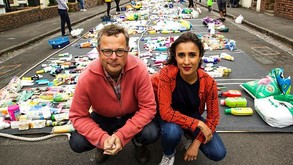
A new programme, War on Plastic with Hugh and Anita, began yesterday on BBC1 which might be of interest to you.
Thanks to other BBC series like Blue Planet and Drowning in Plastic, we've all seen the devastating effect this is having on our world's wildlife.
In this new three-part series, Hugh Fearnley-Whittingstall and Anita Rani explore where this gigantic problem is coming from, and what we can all do to try and solve it.
|
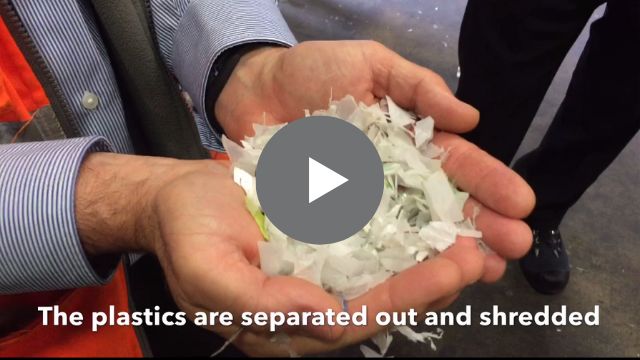
Watch our short video showing what happens to your plastic recycling after we empty your bin.
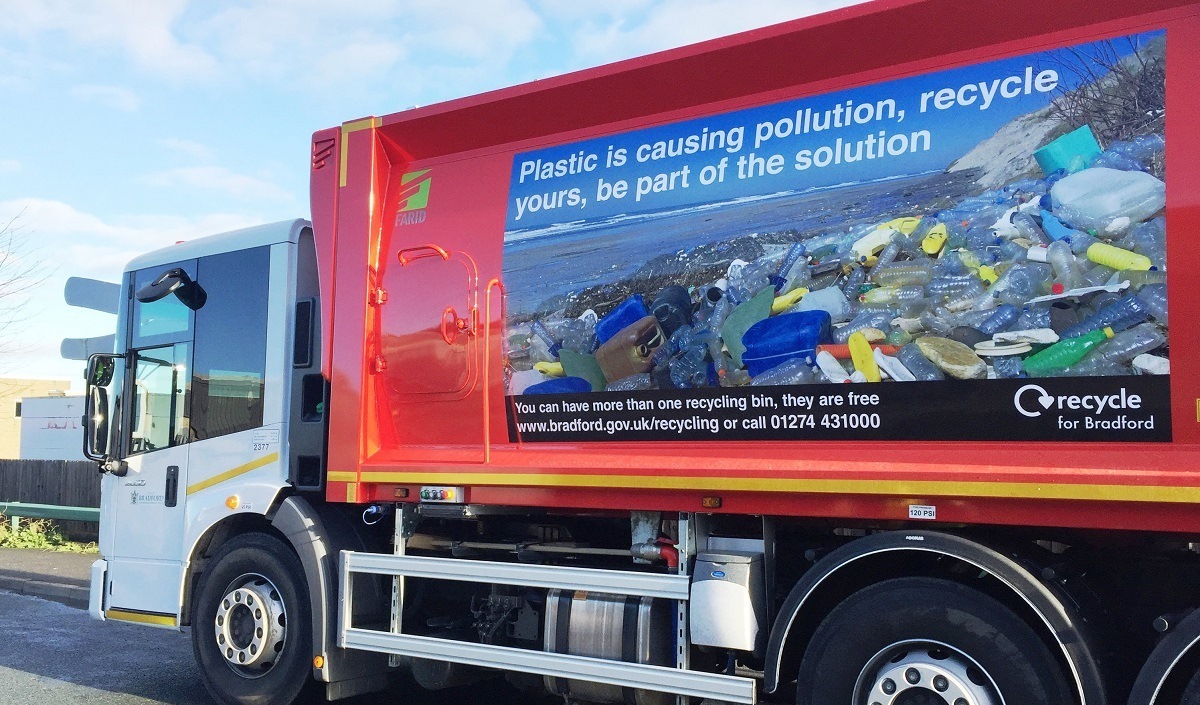
Increasing awareness of the damage done to the natural world by waste plastic led Bradford Council to increase the types of plastic it collected over two years ago.
Bradford Council collects plastic from households across the district along with other recyclable materials.
To keep messages as simple as possible householders are asked to recycle the following plastics in their grey recycling bin:
- plastic bottles
- plastic food trays
- margarine/butter tubs
- yoghurt pots
The following plastics are not collected for recycling:
- plastic plant pots or seed trays
- plastic toys or kitchenware such as kettles and washing up bowls
- plastic bags, bin bags, cellophane, cling film, crisp packets or bubble wrap – these are a low grade plastic which get tangled in the sorting machine
The recycling collected from the kerbside is taken to a Materials Reclamation Facility (MRF) where different materials are separated and contaminates removed. This is where black food trays are removed from the waste stream as they cannot currently be recycled. The recyclates are then baled and sent to various reprocessors with whom we have contracts to recycle materials.
Bradford Council sends its plastics to a third party contractor. Within this are mixed polymers which are segregated into grades of plastic such as HDPE, PET, pots, tubs, and trays. The plastics are segregated, washed and then shredded into flakes. The outputs from their plant then go to facilities that specialise in the manufacture of products such as food grade containers, hard board for the Utility Companies, furniture and clothing. Many of the outlets are UK based businesses.
The Council currently recycles approximately 38% of the waste collected.
In terms of plastics:
- total HDPE plastic bottles for year 613.48 tonnes (3.53%)
- total PET plastic bottles for year 1,174.37 tonnes (6.70%)
- total other plastic for year 718.64 tonnes (4.10%)
In War on Plastic with Hugh and Anita a call to action is to try reduce the amount of single use plastic we all use.
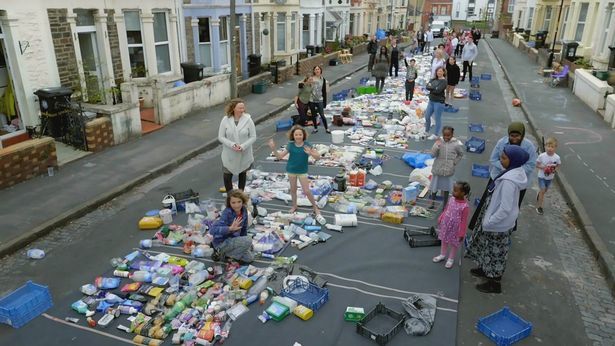
Saying no to pointless packaging, ditching their bottles and wrapping, 22 households in Bristol agreed to transform their lifestyles in a bid to do their bit for our planet.
Each household was asked to remove every piece of single-use plastic and place it outside their front door. In a shocking count up, there were 15,774 pieces of single-use plastic in the street. How many do you think there would be in a typical Bradford Street? Can you reduce the amount you use?
|
|