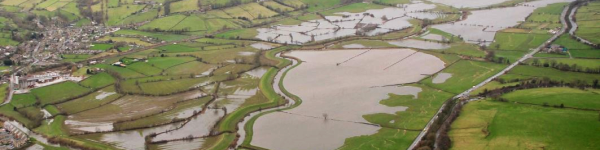
The Bradford Flood Programme
In partnership, Bradford Council, the Environment Agency and suppliers are continuing to work hard to reduce flood risk in Bradford.
Bradford Aire Catchment Flood Alleviation Scheme
For the River Aire in Bradford, we have now started to develop a business case which will help us to identify a short list of the most viable options to reduce flood risk for communities including Keighley, Bingley, Baildon and Shipley. These options will look at direct interventions and more catchment wide solutions.
Keighley & Stockbridge - River Worth model update
We are on schedule for the River Worth model update, which will improve our understanding of flood risk for this catchment and explore options for ‘advanced works’ to reduce the risk of flooding from surface water in Keighley. Having a better understanding of flood risk in the area will enable us to develop a business case to identify viable and affordable options for reducing flood risk for communities in the wider Worth catchment.
Silsden Flood Alleviation Scheme
The work on the Silsden Beck model continues, which will improve our understanding of flood risk. This will also help us to:
- assess surface water risk in the town,
- explore the possibility of using the Yorkshire Water Reservoir upstream to manage flood risk,
- test scenarios on culverts and what impact blockages would have.
For all three projects, the initial assessment of options indicate that there will be funding gaps, so we will be working with others to explore what wider benefits can be provided by the options and what other funding sources may be available.
We have reviewed the flood risk management programme of works for Bradford. In this initial submission we have identified a number of areas where we would like funding to manage surface water risk, including Goose Eye, Morton Beck and Baildon.
Harden Moor Natural Flood Management (NFM) Pilot Project
Natural Flood Management (NFM) measures can help slow, store and filter floodwater, and can be a cost effective and sustainable way to manage flood risk alongside traditional engineering, while creating habitat for wildlife and helping regenerate rural and urban areas through tourism.
Leeds City Council and the Environment Agency, in partnership with Bradford Council are undertaking a NFM project on Harden Moor as part of the Leeds Flood Alleviation Scheme phase 2. Harden Moor was identified as one of five pilot NFM projects funded by Leeds City Council and being implemented throughout the River Aire catchment.
The design for Harden Moor was developed by Bradford Council through the White Rose Forest and includes interventions aimed at 'slowing the flow' of water into Harden Beck, which is a major tributary to the River Aire. The proposals use natural methods, to provide improvements to the site which are sensitive to the surrounding landscape. These include:
- blocking drainage features and leaky dams to reduce water run-off and re-wet land;
- woodland creation and sphagnum planting to increase water absorption;
- land management to maximise woodland cover through natural regeneration and re-wetting of heathland where feasible, so that the runoff is reduced and the landscape can hold more water in times of flood.
Existing habitats will be kept and minor amendments will be made to reduce surface water runoff and erosion and improve water absorption in the area. The proposed works for the pilot scheme at Harden Moor will take place within the Local Authority owned boundary, but adjacent landowners have also been consulted.
The Environment Agency and Bradford Council have worked with the local community and interested groups and provided opportunities for them to input into the overall scheme design.
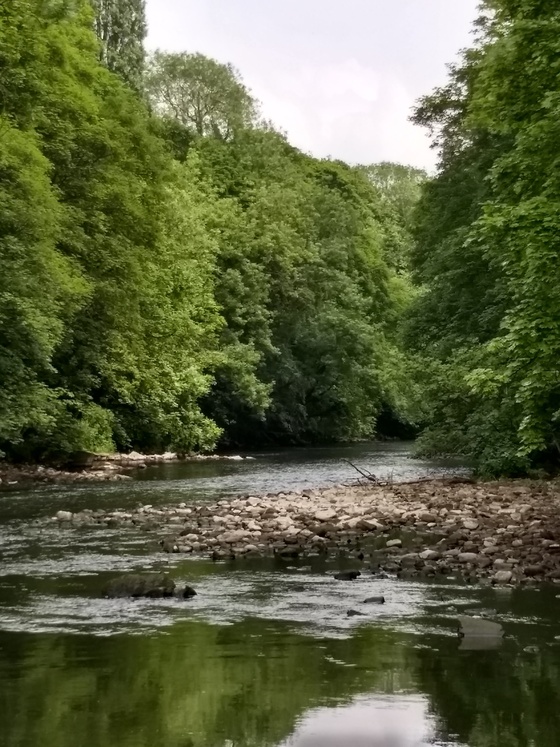
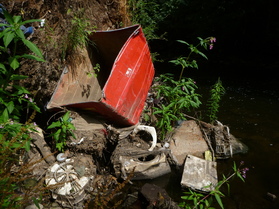
The Aire Rivers Trust (ART) helps to improve the quality and condition of the river for people and wildlife. ART leads on 'Aire River Stewardship for Bradford' which has the overall aim of creating a sustainable and active network of citizens looking after Bradford’s rivers and supporting flood risk and resilience activities on behalf of the community. The flood of 2015 had a devastating effect on the river with the waste and debris deposited along its length. Initial work cleared the worst eyesores and flood risk.
|
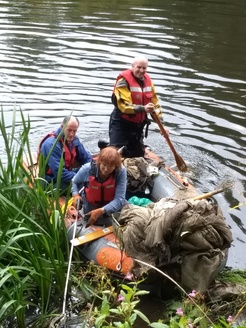
There is still a great deal to do to restore the river to its prime condition and we are determined to achieve it. Together with volunteers we have now organised over 30 clean up days and been joined by 250 people. We have removed large items including washing machines, car parts and garden furniture. The smaller items like rags, plastic bottles and wet wipes that cling to the trees have also been tackled. On two occasions we used a boat to access the litter. We still need more volunteers and people to help us restore the River Aire.
|
|