Issue 11: June 2018
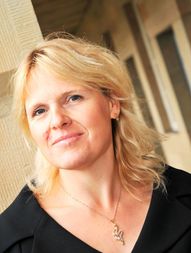 Achieving results for Bradford District depends on everyone, across different sectors and communities, pulling together. So it was satisfying that the Care Quality Commission’s review of health and care services to older people found that committed leadership across the whole system and a skilled, dedicated workforce are translating strategic goals into real difference on the ground. Health and care budgets are squeezed though and demand is increasing. Extra Government money for health won’t solve the problems facing the NHS without similar support for social care. There’s a clear relationship between the health of people and the health of the economy and our best chance of reducing pressure on services lies in economic growth that offers everyone chances to prosper. June sees Bradford Literature Festival return, a great reminder of the part culture plays in stimulating growth. The Bradford BID team understand this and we look forward to seeing their plans for a vibrant city centre with more cultural events and activities.
Kersten England
Chief Executive, City of Bradford MDC
|
 Bradford’s health and care system
has a clear shared purpose, vision and strategy that is articulated throughout
all levels, and a high degree of trust and commitment between system leaders
and councillors. The strategic plan and partnership approach are delivering
better outcomes for older people needing care. These were among the findings of
a review undertaken by regulator, the Care Quality Commission (CQC) to see if the system is effective,
caring, responsive and well led.
The
Commission looked at how
hospitals, community health services, GP practices, care homes and homecare
agencies work together to provide seamless care for older people. It found that agencies were working to keep older people safe at
home rather than hospital, where possible, and help them move between services
when that was necessary.
Innovative practice and effective collaboration included:
Inspectors found that sharing information was an occasional
barrier, although some processes were well developed and that access to GPs and
district nurses was variable, especially out of hours which meant that
sometimes people had to rely on emergency services. Overall though, partnership
working was strong, mature and delivering improvements.
Find out more about Bradford’s vision, “Happy Healthy at Home” (PDF).
|
 With health and
social care services under significant pressure, working together across the
whole system is critically important to sustaining good services. Likewise, investment is also needed across
the whole system. The Government’s announcement of a £20.5bn funding boost for the NHS has led public sector finance experts to call for similar injection of cash into social care without which pressure on the NHS will continue to grow.
Increasing
numbers of people needing care, along with spiraling costs and higher numbers
of complex cases, mean that social care services are facing unprecedented and
unrelenting financial stress.
Action being
taken to manage demand and address the challenges in adult social care includes:
- Focus on
ensuring people are cared for at home first by making sure they get the right
service in the right place at the right time.
- Close and more
integrated working with health services.
- Using
technology to improve efficiency
However, the
Council’s latest financial forecasts show a continuing reduction in financial
resources with a funding gap of £32.5m by 2024. This is on top of almost £300m
in savings already identified since 2011.
Without a long-term funding solution
for adults social care it will consume an increasing share of a reducing pot of
money - half of all
Council spending goes on adults and children’s services - and the less
there will be to invest in the other activities and services that help to keep
people well and healthy and with good quality of life. A Government Green Paper
on the future of Social Care has been put back until Autumn 2018.
You can find
out more about the issues affecting Adult Social Care here.
|
Children’s services also face issues of rising demand and increasing complexity. Bradford has a large and growing number of young people. We perform well on rates of children in care with 66 per 10,000 compared to 81 in similar authorities. However, increasing demand is outstripping available resources.
- UK’s youngest city with 26.5% of our population under the age of 18. Every hour a child is born here and every year our young population grows by 3000.
- Population growth alone potentially adds 64 Looked After Children (LAC) every 3 years.
- The numbers of LAC increased by 17.6% between April 2016 and April 2018.
- In 2016-17, the numbers of children placed on a child protection plan rose by 23%; our external placement costs are up 21% since 2013.
- Bradford has relatively high levels of deprivation and child poverty affects 28% of our children - every day over 17,000 receive a free school meal. National research found one in 60 children is in care in England's most deprived areas, compared with one in 660 in the least deprived.
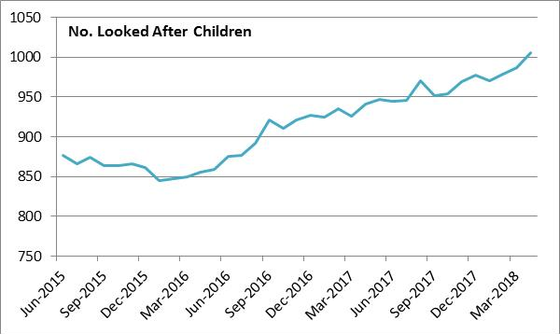 The number of children in care in Bradford is growing
Bradford’s pioneering track record of innovation and collaboration includes:
- Participant in national Innovation programme, targeting teenagers on the edge of care.
- Social Impact Bond promoting support for positive behaviour is focussed on interventions with children with learning disabilities and challenging behaviour.
- Partners include Born in Bradford, building a unique and globally important evidence base about children, young people and families.
- Strong partnership working was reflected in our 2017 inspection of domestic abuse.
We are making the case for Bradford’s needs to be properly funded, and have also invited Government to work with us, building on our experience, to deliver new approaches to reducing demand while improving outcomes that can be applied not only in Bradford, but nationally.
 The fifth Bradford Literature Festival looks set to be the best yet with more than 500 events
over 10 days from the 29 June to 8 July. Star turns include former world heavyweight boxing champion Frank
Bruno, 70s rock icon Suzi Quatro and Mobo award-winning hip-hop artist Akala
alongside a host of literary names like Jeanette Winterson, Ben Okri, and
Jackie Kay.
With a growing
reputation as one of the UK’s most inspirational festivals, the event, backed
by Provident Financial Group, is one of the unique cultural assets which are central
to the district’s distinctive offer and play a key role in our economic
strategy, “Pioneering, Confident and Connected”. Our unique architecture, heritage and cultural assets
can support the development of the district’s offer to investors and contribute
to an environment for growth as well as attracting visitors and keeping
Bradford on the cultural map.
Last year’s
festival attracted over 50,000 people – an increase of 18,000 over the previous
year and around 40,000 more than 2014’s inaugural event. Nearly two thirds of
those involved last year were 18 and under.
That rapid expansion in visitor numbers is reflected across the wider visitor
economy which is now estimated to be worth £656m, supporting over 13,500 jobs.
Recent analysis shows total spending by visitors increased by 10% between 2015
and 2016 and the number of related jobs by 4%. The district attracted an
estimated 2.25m visitor nights in 2016 and around 11.6m day trips.
|
 A vibrant city centre, building on events like the literature festival and
a programme of new activities is a central
part of the plan for a Business Improvement District (BID) to be unveiled on June 27. Business
leaders backing the BID aim to increase visitor numbers, instil civic pride and
invest over £2.5m in the city centre, £425,000 of which would support events
and animation of the city centre. If the
BID goes ahead it would secure funds from an annual levy on 6,000 city centre
businesses. Businesses will vote in September on whether the proposals should
go ahead. The BID business plan is launched on Wednesday 27 June, 6pm at
Pictureville Cinema, all welcome.
|
Backing C4 Bid
Sticking with the
creative theme, Bradford Council Leader, Cllr Susan Hinchcliffe was among 24 civic
leaders from across Yorkshire to sign a joint
statement backing the bid to
bring Channel 4’s new headquarters to Leeds City Region. The statement says: “It is clear that
success in this process for Leeds City Region would bring benefits to the
region as a whole, not just directly in terms of providing jobs and
strengthening the creative sector, but also the national and international
profile associated with hosting a major broadcaster.”
In brief
Books, Bikes and Begonias
head Bradford field in White Rose Awards
Bradford
Literature Festival is one of three finalists from the district in Welcome to
Yorkshire’s White Rose Awards which recognise Yorkshire’s best attractions and
businesses. The Literature Festival is a finalist in the “Tourism Event of the
Year” category alongside Ilkley based cycle race the White Rose
Classic. Elsewhere, Tong Garden
Centre is among the
finalists for “Outstanding Customer Service”. The winners will be announced in
November this year.
Queen’s Birthday Honours
Congratulations to everyone from the district
who received an award in the Queen’s Birthday Honours. The roll of honour
extended to people from all parts of the District:
Pauline Bradley-Sharp, BEM, For
services to the community in Hirst Wood, Shipley,
Roger Charnley, BEM,
For services to Business and the community in Burley-in-Wharfedale.
Yemi Fagborun, MBE,
Chief Executive, Peacemakers International. For services to Community Cohesion
and Women and Girls' Rights.
Professor Vincent Gaffney, MBE, Professor, Landscape Archaeology, University
of Bradford. For services to Scientific Research.
Kathryn Gower, BEM for services to the community in Cross
Roads with Lees and Haworth.
John Kirkby, CBE, Founder, Christians Against Poverty. For
services to Poverty Relief
New Population Forecasts Published
The Office for National Statistics has published new
population forecasts for the district:
- By
mid-2041 Bradford’s population is projected to grow to 552,300 – an increase of
3.7%
- The
older age groups are projected to have the largest percentage increases: by
2041 the 65+ age group is projected to increase by 51.4% and the 85+ age group
is projected to increase by 92.8%
- The
under-18 population is projected to decrease by 2.3% by 2041
- The
working age population is expected to increase by 4.5% by 2026 and by 1.9% by
2041
Find out more
about our population and related subjects at Understanding
Bradford District.
District Dashboard
District
Dashboard gives you all the key statistics about the district.
|