Secrets of an ancient supervolcano uncovered in England

Having trouble viewing this email? View it as a Web page.

BGS Latest News
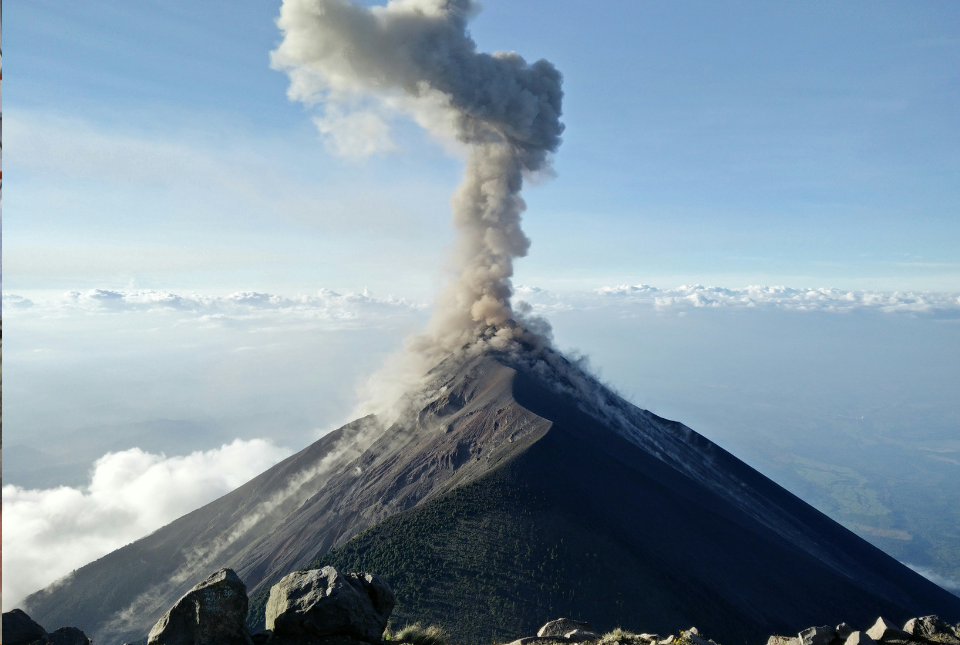
Volcanic eruption. © Gary Saldana, Unsplash.

Secrets of an ancient supervolcano change our understanding of England’s geological past

Scientists have found evidence of a long-hidden link between an ancient buried ash layer in Scandinavia and a concealed supervolcano in eastern England.

The origin of the Kinnekulle tephra, a huge volcanic ash layer spread across Norway, Sweden, the Baltic region, Belarus and Poland, has long been a mystery but new evidence may have uncovered the source of the ash for the first time.

Scientists at BGS and the University of Oslo have studied tiny crystals, smaller than the diameter of a human hair, extracted from boreholes 65 km apart in Lincolnshire and Norfolk. The analysis uncovered evidence of a 454 million year old supervolcano, now concealed beneath The Wash on the east coast of England. Thanks to cutting edge-analysis, we have been able to provide evidence that reshapes our understanding of England’s deep geological past.

Data centre under construction at Waltham Cross, England. © Hugo Kurk / iStockPhoto.com

Demand for data centres presents challenges and opportunities for UK critical mineral supply chains

Research finds that vulnerabilities in raw material supply chains must be addressed to secure the critical minerals needed to expand the UK’s digital infrastructure and boost economic growth.

An aerial image of Bologna during the day. Shafts of light can be seen over the buildings rolling hills are in the background

What lies beneath Europe’s sinking ground?

Land subsidence is becoming increasingly visible across Europe. New research examines how better monitoring, shared data and a deeper understanding of the subsurface can help assess and manage its impacts.

In other news

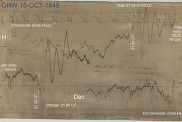
Labelled image of the magnetic trace recorded on photographic paper at Greenwich Observatory (London) on 18 October 1848.

Mystery of one of the earliest recorded space weather impacts solved

BGS scientists were part of an international team that has solved a 178-year-old mystery surrounding one of the earliest recorded examples of space weather affecting technology.

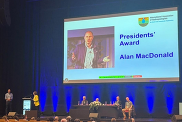
Professor Alan MacDonald receiving his Presidents' Award at 2026 World Groundwater Congress.

Professor Alan MacDonald presented with Presidents’ Award at 2026 World Groundwater Congress

BGS head of groundwater, Professor Alan MacDonald, has been recognised with the prestigious President's Award by the International Association of Hydrogeologists for his extensive contributions to groundwater science.

Alan has more than 30 years of experience as a hydrogeologist, researcher and scientific leader in groundwater science. He has published several books, 150 peer-reviewed papers and over 100 BGS technical reports.

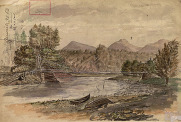
The watercolour painting of the Dryburgh Suspension Bridge. BGS © UKRI.

Historic watercolour unearthed on back of Dryburgh geological field map

A 150-year-old painting of Dryburgh Suspension Bridge and the River Tweed offers an insight into the Scottish Borders landmark shortly after it was built in the 1870s.


On the blog

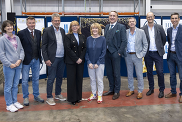
BGS and Heriot-Watt colleagues stand together celebrating the 10th anniversary of The Lyell Centre.

The Lyell Centre celebrates 10 years of world-leading earth and marine science research

The Lyell Centre for Earth and Marine Sciences, a strategic partnership between Heriot-Watt University and BGS, is celebrating its 10th anniversary, marking a decade of world-leading research, innovation and collaboration in earth and marine sciences.

Through close collaboration between academia, government and industry, the Lyell Centre has also played a vital role in strengthening Scotland’s research and innovation landscape while contributing to global efforts to address climate and environmental challenges.

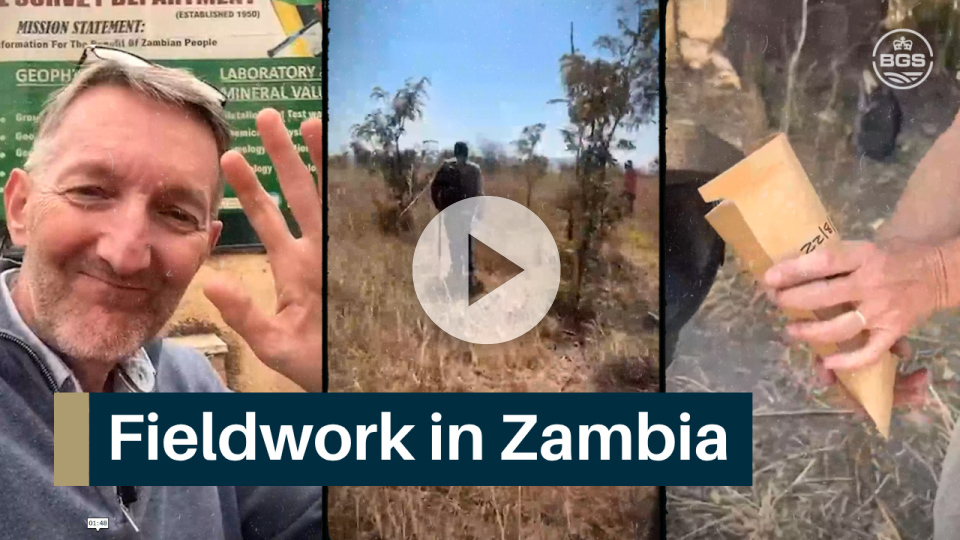
Latest video: Fieldwork in Zambia

Fieldwork in Zambia video thumbnail

Join BGS critical minerals geologist Clive Mitchell behind the scenes on a Zambian field trip, where BGS colleagues are working alongside geologists from the Geological Survey Department of Zambia and Copperbelt University.

For nearly two weeks, trainees took on different roles across the sampling teams, from locating sites and establishing grids to recording field data and preparing samples for laboratory analysis.