Research conducted by BGS scientists has highlighted groundwater’s remarkable resilience to extreme weather events against the backdrop of this summer's record-breaking droughts.
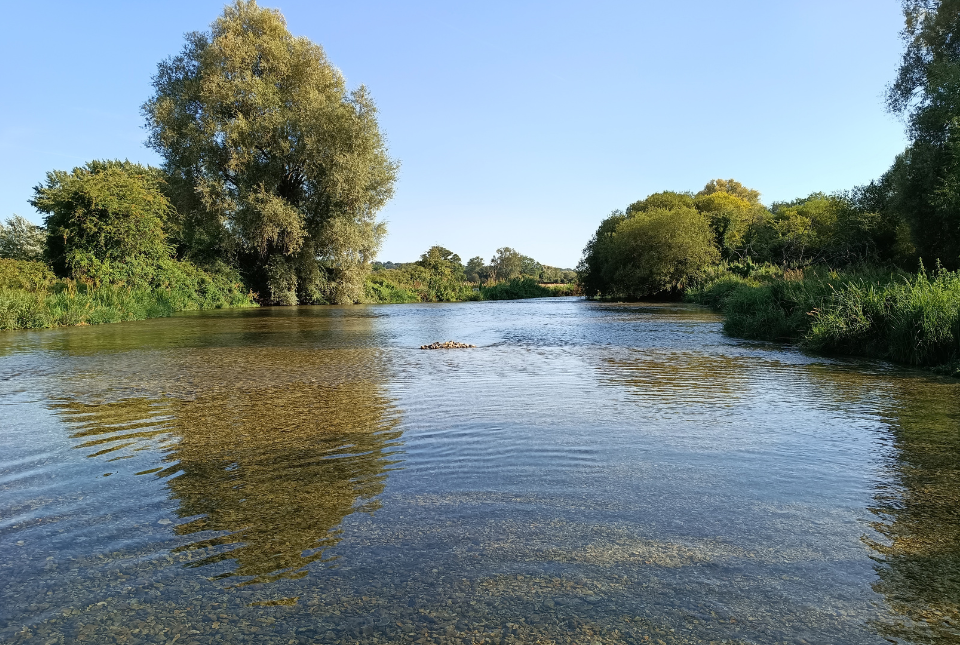
The latest groundwater analysis reveals the status of primary aquifer levels around the UK at the end of July 2026. Remarkably, despite two-thirds of England and Wales being declared in drought at the time, the general health of groundwater resources around the country is robust and, in some cases, higher than the normal historical levels.
The data highlights that, subject to careful management, groundwater has the potential to play a larger role in enhancing national resilience to periods of extreme weather.
|
|
The origin of the Kinnekulle tephra, a huge volcanic ash layer spread across Norway, Sweden, the Baltic region, Belarus and Poland, has long been a mystery. New evidence suggests a long-hidden link between this ash layer in Scandinavia and an ancient concealed supervolcano in eastern England.
|
|
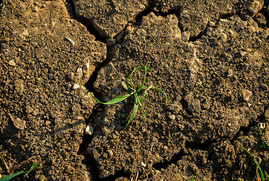
BGS scientists, in collaboration with the UK Centre for Ecology & Hydrology, published a review that incorporated studies in the UK and other temperate countries to understand how soils may respond to agricultural and ecosystem drought. This paper has been announced as the winner of the Land 'Best Paper' Award.
|
|
|
In other news
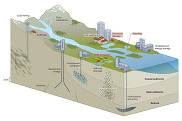
What lies beneath Europe's sinking ground?
An international group of researchers, led by the Geological Survey of the Netherlands and including experts from BGS, has authored a new paper, Lessons learned from European land subsidence, exploring the insights Europe has gathered from decades of studying land subsidence. The paper highlights the fact that such subsidence is not only a scientific concern but also a societal one, which needs a multi-system approach to ensure it is properly managed.
|
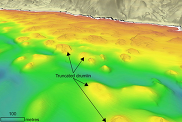
Coastal retreat in the past: the legacy of truncated drumlins
The UK's coasts have been responding to changing sea levels for thousands of years, but some of the best evidence of those changes now lies hidden beneath the waves. Recent advances in high-resolution seabed mapping have revealed extensive fields of submerged drumlins across the Irish Sea and along Scotland’s west coast which hold vital clues.
|
On the blog
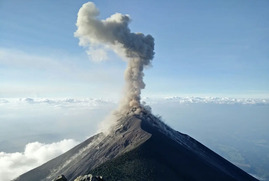
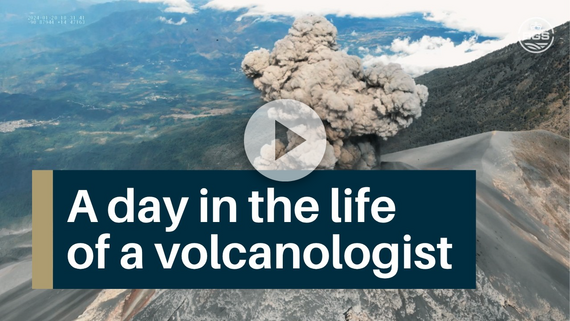 Go behind the scenes on a field work expedition with BGS volcanologist Symeon Makris. Volcán de Fuego in Guatemala is one of the most active volcanoes in the world. Its frequent eruptions gradually build steep deposits of ash and lava fragments on its flanks, which can become unstable and collapse. Collaborating with Guatemalan scientists, local institutions and international partners, Symeon set out to investigate the timing and monitoring of these collapses.
|
|
|
|