New seabed sediment maps reveal what lies beneath the waves

Having trouble viewing this email? View it as a Web page.

BGS Latest News
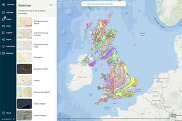
BGS Predictive seabed sediment maps

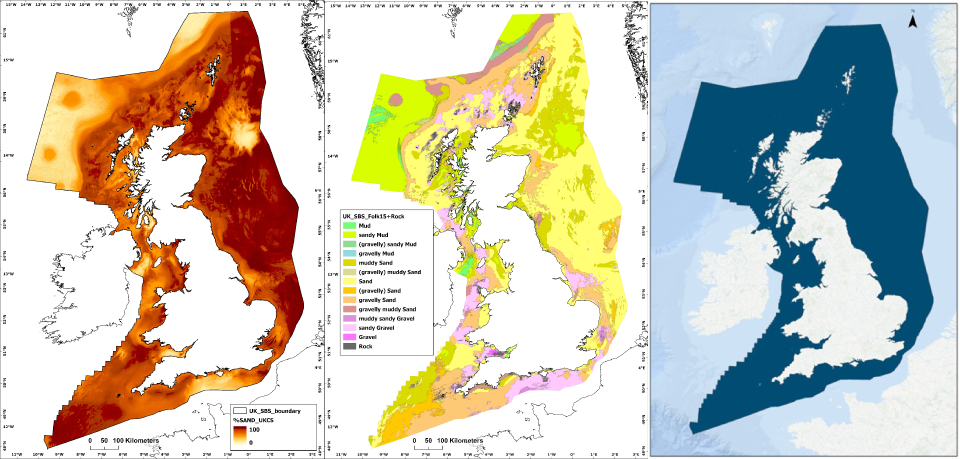
New seabed sediment maps reveal what lies beneath the waves

Characterising the distribution of seabed sediments (SBS) is critical for a wide range of applications, including marine ecosystem science, defence, mineral and aggregates assessments, offshore infrastructure siting and coastal management. 

BGS has developed the new national-scale BGS Predictive Seabed Sediments (UK) dataset aimed at supporting these applications. The dataset comprises four digital maps that portray SBS composition, including a classified map of sediment types, as well as the predicted proportions of gravel, sand and mud across the UK continental shelf.

aurora borealis

National coverage of magnetic field complete for the first time

Five UK-made quantum magnetometers are being installed across the UK to provide complete national coverage of the magnetic field for the first time.

Quantum magnetometers are highly sensitive instruments that can detect variations in the Earth’s magnetic field with extreme precision. These new sensors will provide data to BGS that will give scientists a more comprehensive understanding of how the magnetic field changes during extreme magnetic storms.

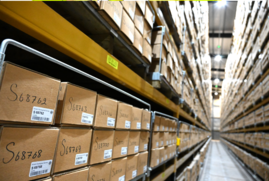
A photo of cores in boxes, stored on racking at the National Geological Repository

Why do we store geological core?

In a special facility just outside Nottingham, vast racks of geological core are carefully curated and stored in climate-controlled conditions. Part of the collections held within BGS’s National Geological Repository (NGR), this core is quietly energising the UK’s economy, supporting the nation’s growth agenda and energy transition aspirations.

In other news 

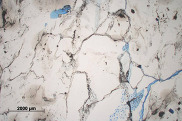
halite

Funding awarded for study on hydrogen storage potential in North Yorkshire

A new study has been awarded funding to explore the potential for underground hydrogen storage near the Knapton power plant.

BGS GeoIndex Beta map viewer application

New BGS GeoIndex viewer released for user testing

As our premium map-viewing application turns 25, a major upgrade has been made available as a beta release for user feedback.

An image of Cardiff Bay, with the Millennium Centre to the left and the Pierhead building in the background

New geological ‘pathways’ discovered beneath Welsh capital

 For the first time, scientists at BGS have used time-series data at the Cardiff Urban Geo-Observatory, which is run by BGS, to look at long-term trends for subsurface heat.

The new Green Heart space at Broad Marsh, Nottingham, which was developed on a brownfield site

New research published on brownfield land

National Brownfield Forum research on the interactions of policies affecting the planning and development of brownfield land has been published.


On the blog

sediment sampling

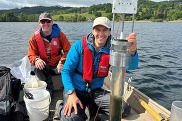
Esthwaite Water: applying novel approaches to understand lake-water nutrient pollution

Andi Smith (BGS) and Savannah Worne (Loughborough University) embarked on fieldwork in the Lake District, applying a novel stable isotope method for tracing phosphorus sources.

work experience placements at BGS

Opening up the geosciences: making work experience more accessible

BGS has been working with partners to make the geosciences more accessible to young people, including those from under-represented backgrounds.

A group of people smile into the camera. They are on a raft on Lake Bulusan.

PhD adventures in the Philippines 

Chris Bengt recounts his two-week field trip to Bulusan Volcano Natural Park in the Philippines to collect lake sediment cores, fresh soil and water samples.