Zambia's first critical minerals guide published and Kamchatka earthquake shows advancements in tsunami early warning systems

Having trouble viewing this email? View it as a Web page.

BGS Latest News
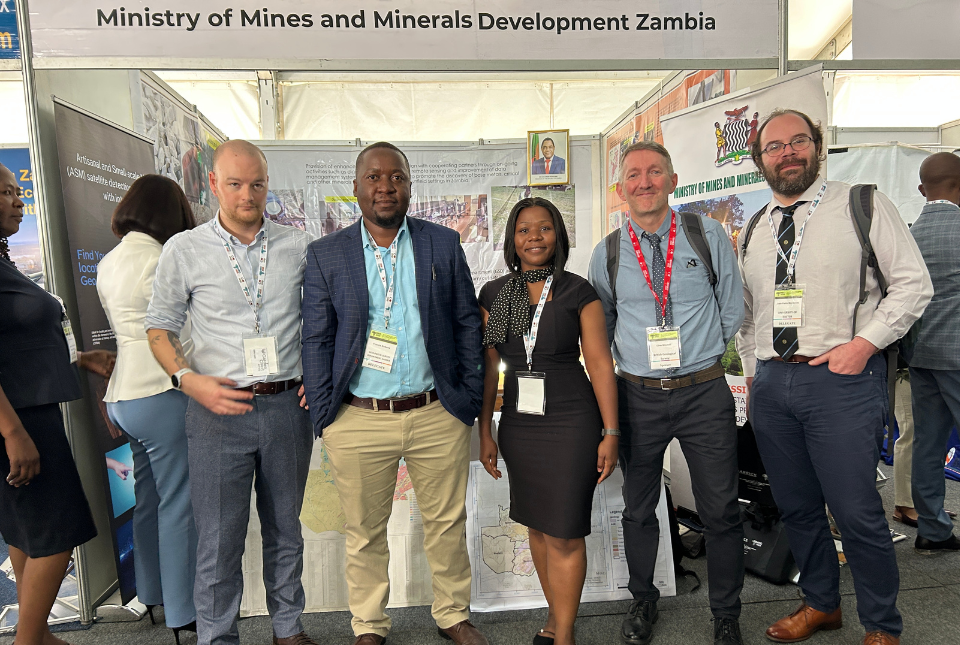
BGS and Ministry of Mines and Minerals colleagues at a conference together. They stand in a row, looking to calendar.

Zambia’s first critical minerals guide supports the country’s potential in global clean energy transition

‘Critical minerals potential of Zambia’, which is now available to read online, came about through a collaboration between the Zambian Ministry of Mines and Minerals Development and BGS. The new guide highlights the country’s current and potential critical mineral resources, including cobalt and lithium.

Critical minerals are essential to the global energy transition. Diversifying their associated supply chains is central to improving their resilience to global economic fluctuations. Recently, Zambia has boosted its critical mineral economy through increased production of manganese and nickel. In 2024, the Zambian government announced a national strategy to more than triple its copper production to 3 million metric tonnes annually by 2031.

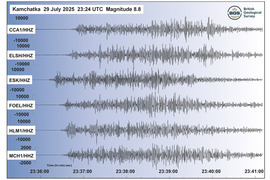
Kamatchatka earthquake seismogram

Kamchatka earthquake highlights the advances in tsunami early warning systems

The response to the 8.8 magnitude earthquake in Russia has emphasised how far scientific understanding of tsunamis has come over the last two decades, and the improved mitigation measures that are now in place.

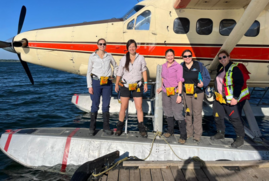
The EGRET team on day one of fieldwork, heading to the Fraser Lakes REE-enriched pegmatites on a float plane from La Ronge.

Funding awarded to UK/Canadian critical mineral research projects

BGS is part of a groundbreaking science partnership with Canadian colleagues, which aims to improve critical minerals mining and supply chains.

These research partnerships will protect national security interests by strengthening supply chains for critical minerals and reduce the environmental impact of mining.

In other news

An image of the rural countryside. It is summer and the view is very verdant. The sky is blue.

New journal article reveals snapshot of forever chemicals in shallow English soils

Per- and polyfluoroalkyl substances (PFAS) are known as ‘forever chemicals’ due to their durability and widespread presence in the environment, with some having adverse impacts on human health and the environment. 

BGS research has revealed data around the presence of PFAS in shallow English soils that will allow scientists to better understand background concentrations.

Cherry blossoms next to a armillary sphere sculpture at the ESA near Rome.

AI and Earth observation: BGS visits the European Space Agency

Earth observation scientist, Holly Hourston, travelled to the European Space Agency's heaquarters near Rome to learn how they are utilising machine learning to monitor and model natural hazards. 

Dr Marie Cowan

Why Northern Ireland is a 'Goldilocks' area for renewable home heating

Dr Marie Cowan, Director of the Geological Survey of Northern Ireland, spoke to the BBC
about the potential for Sherwood sandstone to help decarbonise our heating requirements.

A purple snake's head fritillary, with out of focus leaves in the background.

BGS environmental sustainability report 2024/25

Our latest annual Environmental Sustainability Report is now available to download, including highlights around waste management, sustainable IT and biodiversity gains across our sites.

A graphic promoting the podcast 'Core Questions'

Listen to our latest podcast episode 

What exactly is lithium salt, and could you sprinkle it on your chips?

BGS sustainable mineral resources scientist, Rowan Halkes answers our latest core question, and discusses where this metal is found, how it’s extracted, and why it’s so crucial for powering the shift to low-carbon technologies.

Listen in via Spotify or YouTube