Geological super regions set to boost annual investment in jobs and economic growth

Having trouble viewing this email? View it as a Web page.

BGS Latest News
Wind Turbine Landscape Photography (offshore). Credit: Pexels

‘Geological super regions’ set to drive annual      £40 billion investment in jobs and economic growth

The geological conditions underlying eight UK regions have been identified as ‘just right’ in terms of the country’s net zero energy ambitions. They could help unlock an estimated    £40 billion of annual investment through clean power and their potential to host multiple energy-transition technologies.

The subsurface has a vital role to play in the energy transition, acting as an enabler and helping deliver economic growth by providing: a sustainable heat source for geothermal energy; geological formations for secure storage of energy and carbon dioxide (CO2); rocks containing important resources for mineral extraction, and suitable geological foundation conditions for onshore and offshore wind power infrastructure projects.

The benefits of a stronger renewable sector for UK residents could include improved access to secure, affordable, sustainable energy and subsurface raw materials, contributing to economic prosperity and net zero targets for the UK.

Representatives from BGS and FloodTags sign the memorandum of understanding

New collaboration aims to improve availability of real-time hazard impact data

A new Memorandum of Understanding between BGS and FloodTags aims to fill this gap by using large language models to extract real-time and historic information from social media platforms and more than 150 000 online news sources.

The rvier Wensum in Norwich, Norfolk, England. You can see people on the water in canoes, and the houses by the river are multicoloured

Modern pesticides found in UK rivers could pose risk to aquatic life

New research shows that modern pesticides used in agriculture and veterinary medicines have been found for the first time in English rivers.

The data generated by the study represents one of the most comprehensive assessments of pesticides in any English river catchment to date and is widely applicable to other river catchments across the UK.

In other news


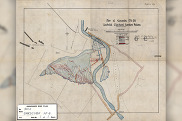
Abandoned mine plan at Garscube

Release of over 500 Scottish abandoned-mine plans 

Digital scans of over 500 historical abandoned-mine plans (non-coal) have been released by the National Geoscience Data Centre (NGDC) as part of BGS’s commitment to providing more open, accessible data for its users. 


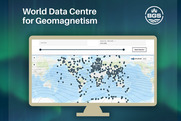
World Geomagnetic Data Centre

Upgraded web portal improves access to geomagnetism data

BGS’s geomagnetism portal, which holds data for over 570 observatories across the world, has received a significant update.


Eskdalemuir in the Scottish borders. It is a large, grey manor house with scientific equipment on the lawns to the back of the house.

Eskdalemuir Geomagnetic Observatory on BBC Landward

The BGS Geomagnetism team were featured on BBC Landward this month. The programme covered the history of weather forecasting at our Eskdalemuir Geomagnetic Observatory and the growing important of space weather research. The programme is now available on iPlayer and the segment starts around 5 minutes 15 seconds into the programme. 


BBC Sounds mines and minerals

BGS on BBC Radio 4 Rare Earth show

Pierre Josso, deputy director of the BGS-led UK Critical Minerals Intelligence Centre, was a guest on the BBC Radio 4's Rare Earth show, where he discussed how our relationship with raw materials has changed, the challenge of responsible mineral sourcing, and how we can reduce our consumption of them.


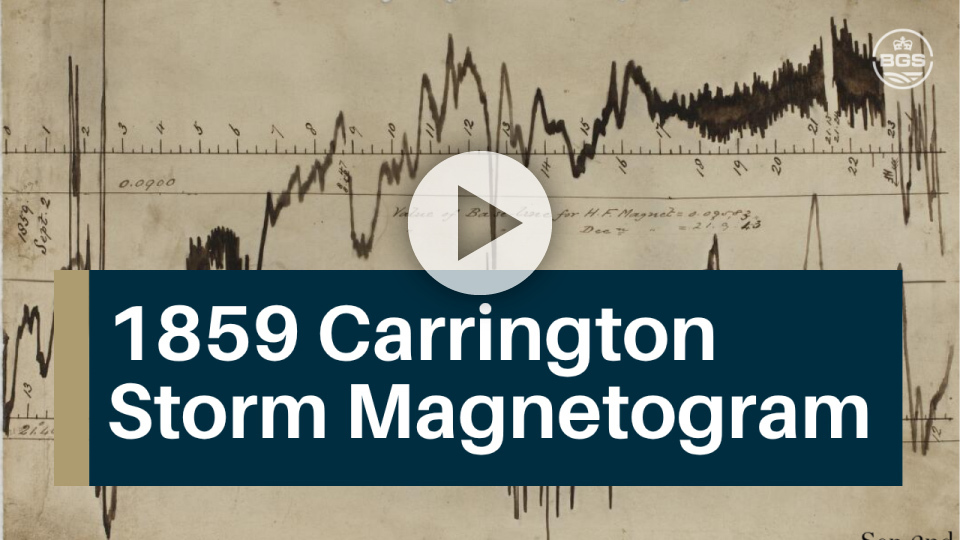
Latest video: 1859 Carrington Storm Magnetogram

YouTube Video Geomagnetic Storm Carrington Event

The Carrington Event, which occurred nearly 200 years ago in 1859, affected telegraph systems across the world and created aurora displays as far as the equator. BGS holds the original magnetogram from the event in our collections, which shows the storm's raw geomagnetic data. BGS geophysicist Dr Ciaran Beggan explains how these delicate historical records help us understand extreme space weather and prepare for future events.