BGS scientists join international expedition to study the seafloor near New England

Having trouble viewing this email? View it as a Web page.

BGS Latest News
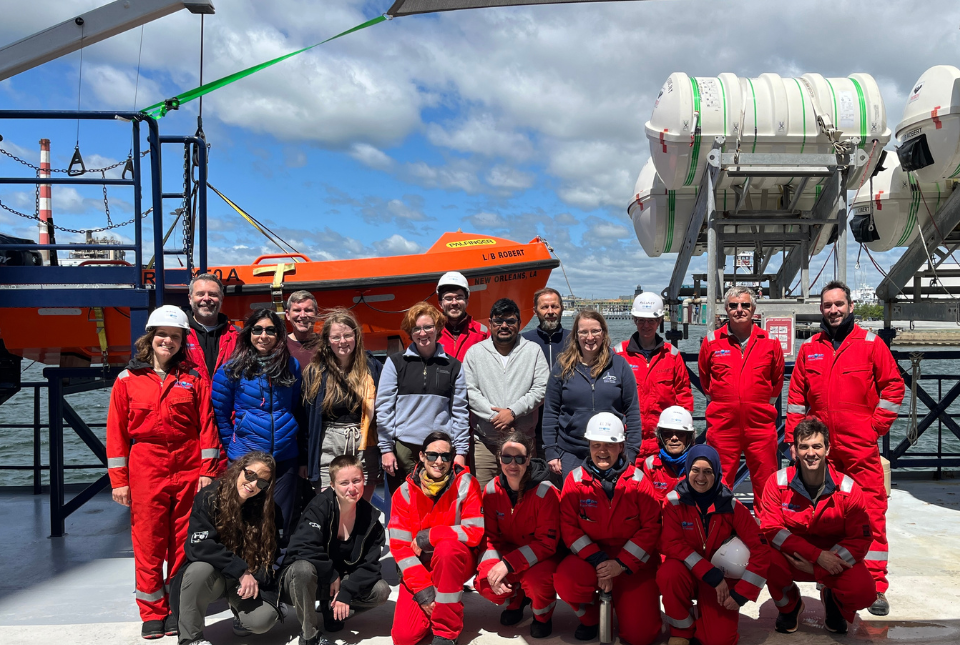
The IODP team stand together on the ship's deck. Some are wearing casual clothes, others are in red boilersuits and white hard hats.

BGS scientists join international expedition off the coast of New England

In the 1960s, scientists were surprised data clearly showed that there was fresh or freshened water under the ocean floor. How did it get there? How long has it been there? Scientists have been trying to find answers to these questions since their intriguing discovery. 

Most coastal communities rely on traditional onshore aquifers for fresh water; however, in many locations worldwide, onshore aquifers may have an offshore component too. Even though the existence of these waters has been known for decades, they remain virtually unexplored.

This month, an international team of scientists embarked on ECORD IODP Expedition 501 to New England, in order to take a closer look at this freshened water stored beneath the ocean floor.

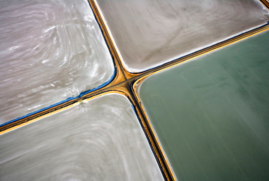
A close up of the image on the front cover of the report - tiles in various colours.

Latest mineral production statistics for 2019 to 2023 released

World Mineral Production has provided a reliable and continuous set of data covering the minerals that enter international trade since 1913.

The latest volume includes production figures for more than 70 mineral commodities over the five-year period from 2019 to 2023.

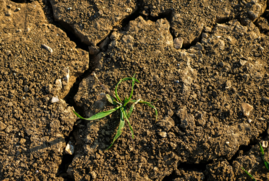
A plant grows up through parched soil.

Assessing the impact of drought on temperate soils

BGS scientists have contributed to a recent report that explores how drought could affect the UK's national soil resource

The new report pulls together key information on the impact of drought on temperate soils and the further research needed to fully understand it.

In other news

A headshot of Paul Monks, wearing a suit, blue shirt and purple tie

UKRI announce new Chair of the BGS Board

We are delighted to announce the appointment of Prof Paul Monks CB as the new Chair of the BGS Board. Prof Monks will join the board when he finishes this role as the chief scientific advisor for the Department for Energy Security and Net Zero (DESNZ) later in the year. 

Arclid Quarry in Bathgate, which produces industrial sand - piles of sand feature in the picture

UK Minerals Yearbook 2024 published

Providing comprehensive statistical data on the production, consumption and trade of UK minerals, the yearbook includes definitive updates to inform decision makers, the minerals industry and those interested in the contribution of minerals to the national economy.

Wind turbines standing in a field. It is a cloudy day in summer.

New map viewer reveals growing capacity and rare earth element content of UK wind farms

Wind energy has seen a significant rise across the UK over the last 30 years, playing a crucial role in decarbonisation and increasing security around our energy supply. Our new interactive tool highlights the development of wind energy installations over time, along with their magnet and rare earth content.

Geoscientist Magazine - Summer 2025 edition

BGS the cover story in Geoscientist's Summer 2025 edition

Over the past few decades, magnetic north has been moving at extraordinary rates. But what does this mean for those who use magnetic navigation systems, including the shipping industry, the military and the general public?

BGS Head of Geomagnetism Ciaran Beggan spoke to Geoscientist magazine about the importance of tracking magnetic north, its potential future movement and the possible implications. 


On the blog

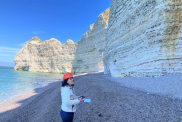
Dr Carole Nehme, examining the chalk cliffs at Étretat. She wears a hard hat. The sea is behind her.

Geology sans frontières

Chalk is one of the most misunderstood geological units. It is a common misconception that it is a uniform rock unit with very little structure or faulting. In reality, it has significant variations in physical properties and is often faulted. 

A good understanding of the Chalk Group is needed to better predict groundwater flow and engineering ground conditions. This requires good quality geological maps and 3D models fit for the 21st century, using all the available information including field data, geophysical borehole logs, geophysical surveys and biostratigraphical data.

BGS is now part of an international workshop to find out exactly how the Chalk varies across northern Europe.


BGS digital geology maps: we want your feedback

BGS Digital Geology Maps

BGS is asking for user feedback on its digital geological map datasets to improve data content and delivery. The maintenance and development of our geological data is a vital part of our survey role. This is especially important as technologies change and offer new ways to disseminate information. 

Implementing effective change requires input from all our stakeholder groups and we’d like to hear from you. What are your current priorities? What problems are being solved using our data? What would you like to see in the future? BGS values your input and would appreciate you completing this short questionnaire, providing as much context as possible.

> Take the survey