New opportunities for geothermal energy in Cheshire

Having trouble viewing this email? View it as a Web page.

BGS Latest News
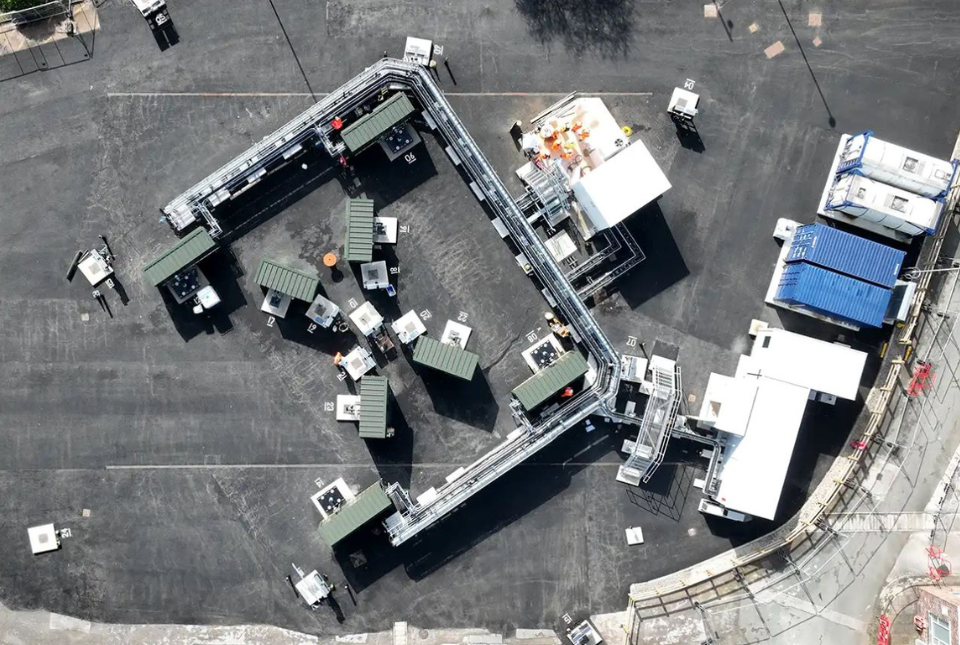
Aerial view of the UK Geoenergy Observatory in Cheshire, located in the University of Chester’s Thornton Science Park

World-class facility creates new opportunities for geothermal energy in Cheshire

The UK Geoenergy Observatory in Cheshire is a groundbreaking £8.3 million facility. It provides unique research opportunities that will help the UK explore the potential of geothermal energy to decarbonise the energy used for heating its homes and businesses, which is a critical step in tackling climate change.

Located in Thornton Science Park, the observatory offers researchers and industry access to at-scale experimental infrastructure. The facilities are needed to optimise and de-risk a range of subsurface energy storage systems, which will help to develop technologies related to utilising geothermal energy.

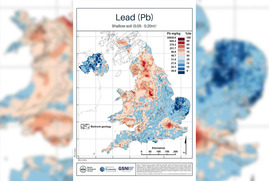
UK Topsoil Geochemistry Maps

New topsoil data provides most extensive snapshot of environmental pollution effects

The new maps pinpoint the distribution of 41 different chemical elements, providing invaluable insights across a wide range of disciplines. The data is available to view and download for free on the UK Soil Observatory (UKSO) web portal.

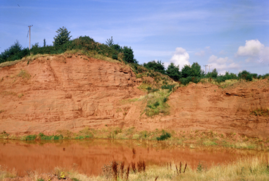
Kidderminster Formation Sandstone at Shepley Quarry. Sandstones high in the Kidderminster Formation, Sherwood Sandstone Group.

Next stage of funding awarded for project on hydrogen storage potential in the East Midlands

Following a successful bid, the East Midlands Storage (EMStor) consortium has been awarded strategic innovation funding from Ofgem. BGS will conduct essential studies on hydrogen behaviour in the subsurface to predict, measure and monitor underground hydrogen storage.

In other news

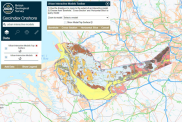
Liverpool and Warrington on the BGS GeoIndex Onshore tool.

What lies beneath Liverpool?

The geological secrets lying under the surface of Liverpool and Warrington have been unveiled for the first time on a new 3D interactive tool.


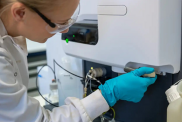
A lab worker in full PPE, including goggles, interacts with a machine.

BGS geochemists involved in new project developing early detection test for bladder cancer

BGS is combining its expertise with researchers from Queen’s University Belfast, the University of Dhaka and the International Agency for Research on Cancer to further develop a urine-based early detection test.

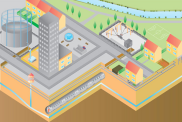
An illustration of a city, with a section of the subsurface including a tram and a watercourse

New community launched to support effective management of the subsurface

BGS and the Geological Society of London have accepted an invitation from the Government Office for Science (GO-Science) to launch a new network after its report, ‘The future of the subsurface foresight’, called for improved cross-sectoral work to address future issues.The initiative aims to increase knowledge exchange on subsurface issues between interested parties involved in subsurface policy and planning.

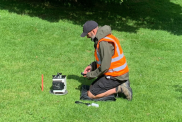
Gravity measurements being made over the buried sinkhole.

New research hub announced as part of £160 million investment

Focusing on quantum sensing, imaging and timing, the hub will be launched at the end of this year as part of an investment announced by the Science Secretary.


On the blog

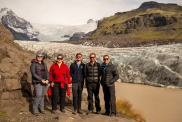
Svínafellsjökull. From left to right: Nicola Dakin (BGS); Anett Blischke (ÍSOR); Duncan Stevens (BGS); Dayton Dove (BGS); Andrew Finlayson (BGS).

BGS collaborates with Icelandic colleagues to assess windfarm suitability

BGS and the Icelandic Geological Survey (ÍSOR) have been awarded an Arctic Office NERC grant to assess Iceland’s offshore geological and geomorphological landscapes. 

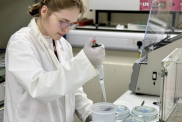
Paulina Baranowska, PhD student, preparing samples in the BGS Stable Isotope Facility, Keyworth. She is in full PPE.

Exploring the role of stable isotope geochemistry in nuclear forensics

Paulina Baranowska introduces her PhD research investigating the use of oxygen isotopes as a nuclear forensic signature.

Oita calligraphy. BGS © UKRI.

Electromagnetic geophysics in Japan: a conference experience

Juliane Huebert took in the fascinating sights of Beppu, Japan, while at a geophysics conference on using electromagnetic fields to look deep into the Earth and beyond.