BGS News - January 2024

Having trouble viewing this email? View it as a Web page.

BGS Latest News
A badger pauses with one foot up, looking towards the camera. It is in woodlands.

Burrow-detecting devices could protect flood defences

BGS scientists have trialled a new way of detecting animal burrows in clay flood embankments. The UK has over 7500km of embankments along its rivers and streams, protecting the communities and infrastructure behind them. 

But these vital flood defences can be weakened when burrowing animals like badgers, rabbits and now beavers move in and weaken their structural integrity. 

New devices being trialled by BGS use electrical resistivity to detect and map burrows in order to help find solutions.

> Read the full article

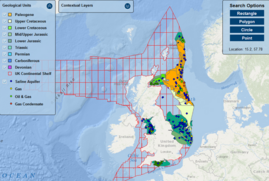
A map of CO2Stored, which shows CO2 Storage units offshore UK

More than 60 new CO2 storage units added to BGS national CO2 storage database

BGS has delivered its first major update of the national carbon dioxide storage database, CO2 Stored, adding more than 60 CO2 storage units located offshore UK.

> Read the full article

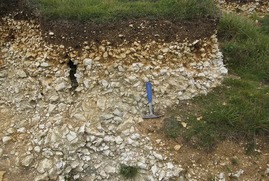
The Lewes Nodular Chalk Formation contributes to the chemistry of overlying soils in Culver Down on the Isle of Wight.

How BGS is helping the farming sector of Great Britain

Rural soils make up 85 per cent of the land area of the UK, with agricultural land use occupying the vast majority of that space.

New legislation concerning soil management and technology in modern farming has led to an increase in enquiries about BGS’s Soil Parent Material Model.

> Read the full article

Date for your diary

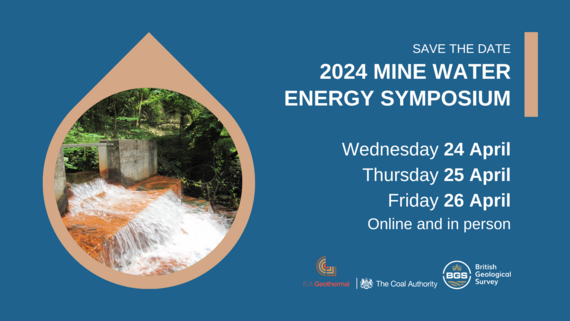
Symposium graphic, which shows mine water in an image on the left. On the right are the logos for IEA, The Coal Authority and BGS.

The 4th IEA Geothermal Mine Water Energy Symposium will take place from Wednesday 24 to Friday 26 April 2024.

The event will be held in person in the UK and online globally.

We are pleased to announce an open call for contributions for the symposium. The deadline for titles, speakers and a few sentences on the content of your proposed presentation (100 words maximum) is 4pm Monday 26 February 2024.

Requests for more information and offers of presentations should be sent to minewaterthermal_iea@bgs.ac.uk.


On the blog

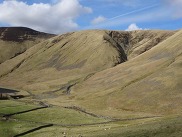
The Codleteth Burn catchment with its outlet fan system and recent debris flow deposits near Talla Linfoots.

Moving stones: faults, slopes and sediments

Fractured rock along faults can affect how sediment moves on upland slopes, with implications for the design of infrastructure.

Geological fieldwork in Scotland is helping us understand the issues – find out how in our new blog.

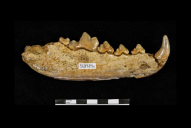
Fossil jaw of Canis lupus (Linnaeus, 1758) collected from Ilford, Essex and donated by Dr Richard Payne Cotton in 1878

Hungry like a wolf: new insights from old bones housed in the BGS museum collections

BGS scientists are studying the diets of ancient British wolves and how they adapted to changing environments to understand how present-day wolves might adapt to environmental and climate change.

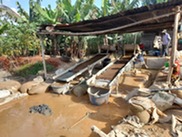
Gold mining activities (milled ore washing and sluicing) and community drinking water downslope of ASGM activities.

Linking geochemistry and health in artisanal and small-scale gold mining in the Kakamega-Vihiga gold belt, Kenya  

PhD candidate Maureene Auma Ondayo is investigating major and trace element exposure in the environment in Kenya, aiming to reduce exposure of humans to toxic chemicals linked to artisanal and small-scale gold mining.