Latest on the coronavirus situation in Allerdale and Cumbria

Having trouble viewing this email? View it as a Web page.

Coronavirus update header

Updates on the coronavirus situation in Allerdale

LFT testing

Cumbrian COVID cases continue to fall 

Cases of COVID-19 in Cumbria have fallen again in the week ending Friday 28 January as 3,969 new cases were recorded - a decrease of 763 or 16% - down from 4,732 new cases in the previous week. 

New cases decreased in all districts, with Copeland and Carlisle having the greatest decreases (-22% and -21%, respectively).

For the 2nd week in a row, the 5-11 age group had the greatest number of new cases in Cumbria (815 new cases) and the highest rate of new cases in Cumbria (2195 new cases per 100k population). 

However, new cases decreased from the previous week in all age groups, with the 0-4 age group having the greatest proportional decrease of 46%. 

In the week ending Monday 31 January, the number of new patients admitted to hospital with COVID-19 positive status in Cumbria decreased by 5 compared to the previous week. While the average number of patients with COVID-19 occupying hospital beds in the county decreased by 24 from the previous week.

Sadly, in the week to Friday 21 January there were 22 deaths with COVID-19 as cause of death. 

Key Points for Cumbria and districts in 2022 Week 4 (Ending Friday 28th January):

  • There were 3,969 new cases in Cumbria (a decrease of 763, -16% from 4,732 new cases in the previous week);
  • For the 3rd week in a row, Carlisle had the greatest number of new cases (+1,080 new cases);
  • For the 2nd week in a row, Carlisle also had the highest rate of new cases (995 new cases per 100k population);
  • Rates in all districts were below the national average rate (England 1,083 cases per 100k population);
  • Rates in all districts except Carlisle were below the regional average rate (North West 844 cases per 100k population);
  • Number of new cases decreased in all districts, with Copeland and Carlisle having the greatest decreases (-22% and -21%, respectively).
  • For the 2nd week in a row, the 5-11 age group had the greatest number of new cases in Cumbria (815 new cases);
  • For the 2nd week in a row, the 5-11 age group also had the highest rate of new cases in Cumbria (2195 new cases per 100k population);
  • New cases decreased from the previous week in all age groups, with the 0-4 age group having the greatest proportional decrease of -46%;
  • New cases in the under 50 age group accounted for 77% of total new cases (the same as the previous week);
  • Overall, new cases in the under 50 age group decreased by 17% and new cases in the 50+ age group decreased by 14%.

Read more

Latest from Colin Cox, Cumbria's Director of Public Health 

Colin Cox

Colin Cox, Cumbria’s Director of Public Health, said: “Thankfully the number of COVID cases in our county is continuing to fall – albeit slower than we’d like them to. 

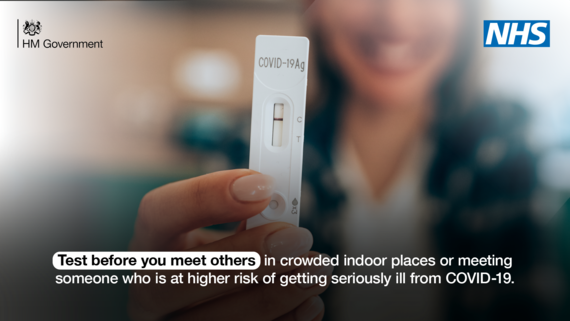
“With cases still highest amongst the 5-11 age group, I’d urge parents of school-age children to continue testing them regularly with lateral flow tests. Remember though, if they do test positive using a lateral flow, you no longer need to confirm this with a follow up PCR test – but they do need to self-isolate as per national guidance.

“While we have sadly recently seen the highest number of weekly deaths with Covid-19 for almost a year, these numbers are actually extremely low given the number of cases that we’ve seen over the last six weeks, reflecting the success of the vaccination and booster campaign in keeping the vast majority of people safe from serious harm. I am reasonably confident that we are now over the peak of omicron deaths and that these numbers will start to come down in the coming days.”


Ways we can help everyone stay safe

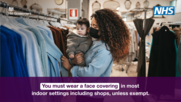
Face coverings

To help combat COVID-19 you should follow safer behaviours and actions that include:

  • Wear face coverings in crowded and enclosed spaces;
  • Wash your hands regularly;
  • Test regularly;
  • Stay at home when you feel unwell; and
  • Use the COVID-19 NHS App.

Self-isolation rules

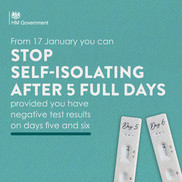
Rules on self isolation

For people who test positive for COVID-19 the self-isolation advice has changed.

You may leave self isolation on day 6 after 5 full days if you have two consecutive days of negative LFD tests.

The first test should be taken on day 5 after testing positive or symptoms started.

You should continue to self-isolate for up to 10 days if you still test positive until two negative LFD tests taken a day apart are seen.


Test and trace support payment

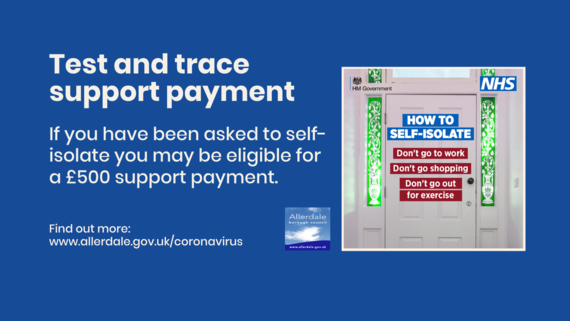
Test and Trace Support Payment: If you have been asked to self-isolate you may be eligible for a £500 support payment. Find out more at: www.allerdale.gov.uk/coronavirus


Business support grants

We currently have two support grants available to help businesses affected by rise of the Omicron COVID-19 variant.

This week we extended the deadline of the Omicron Hospitality and Leisure grant. You now have until 18 March 2022 to apply. But don't delay in getting your application to us, so we can get the grant money into your bank account as soon as possible.

Find out more on our website.


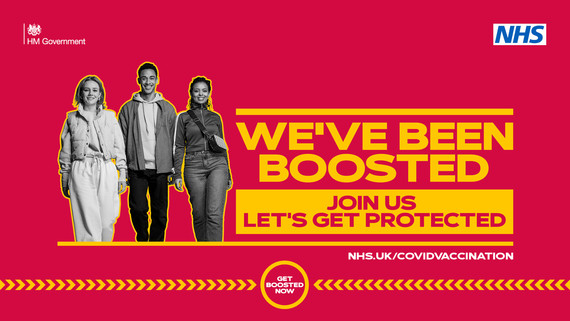
We've been boosted graphic

Have you had your booster jab?

More than 37.3 million adults have now had a booster and more than 91% of over-50s have been boosted.

116 million COVID-19 vaccinations have been given in England.

The vaccination programme is open to everyone with first and second doses also available.

Use the online NHS booking service or find COVID-19 walk-in vaccination site near you online.

Find out more about the vaccine on the local NHS website.

And remember, if you had COVID in December 2021, you can get boosted now.