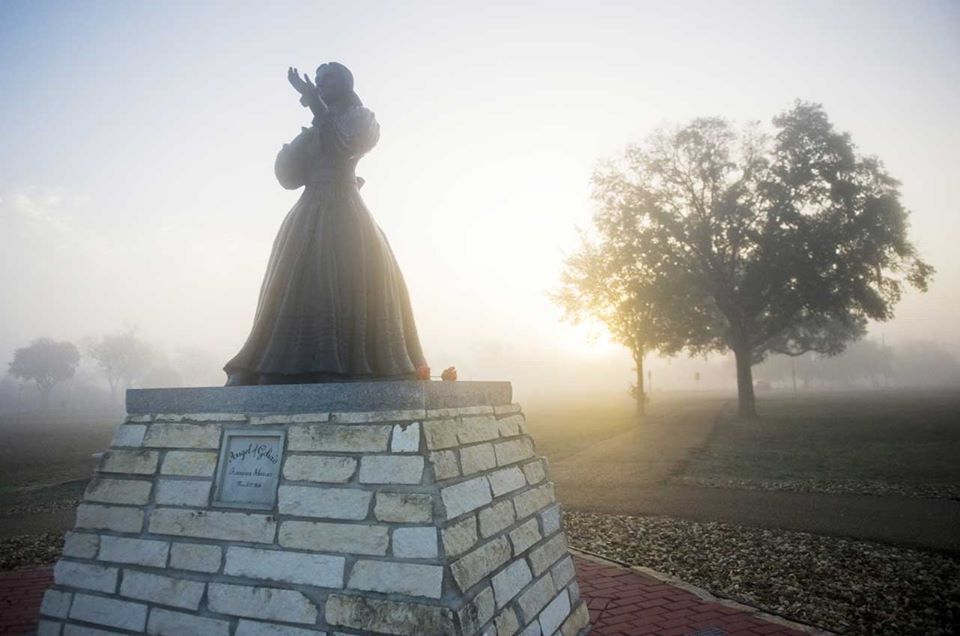
Amid the cruelties of the Texas war for independence, one notable woman committed acts of bravery and compassion. Francisca Alavez (also known by similar names) accompanied Mexican Army Captain Telesforo Alavez to Texas in March 1836. In seven incidents between March and April, she intervened with Mexican troops under command of Gen. José de Urrea to help capture Texian prisoners at Agua Dulce, Copano, La Bahia, Victoria and Matamoros.
At least 342 men were taken out of the fort on March 27 and shot under orders of Gen. Santa Anna in what was termed the Goliad Massacre. Alavez helped save the lives of many men, including 16-year-old Benjamin Hughes. Another survivor, Dr. J.H. Barnard, recalled that she pleaded for their lives, helped sneak out some troops at night, and hid some of the men. Her humanitarian acts included tending to wounds and sending messages and provisions to those still imprisoned.
The Texas Centennial of 1936 revived interest in Alavez with articles, a play, and a bronze bust and historical mural for Goliad's Memorial Auditorium. The Angel of Goliad marker was created in 2009. To discover more than 600 Official Texas Historical Markers commemorating Texas Independence, explore our Texas Independence Day marker map.
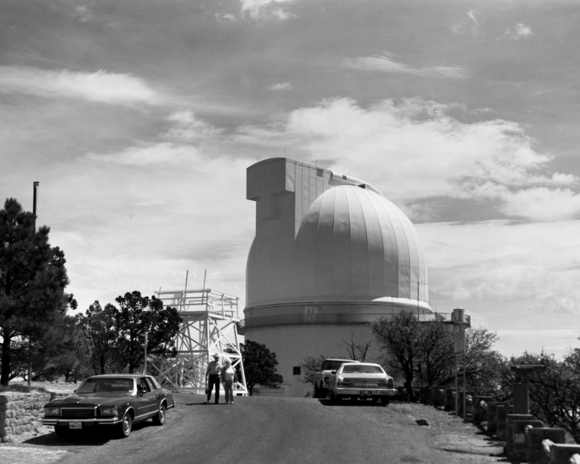
William J. McDonald (1844-1926) lived in Paris, Texas for almost 40 years, from 1887 until his death in 1926. Although he had an enormously successful career as a lawyer and banker, McDonald is best known for his groundbreaking million-dollar bequest to the University of Texas, which led to the establishment of the McDonald Observatory in the Davis Mountains of West Texas.
The McDonald Observatory has a significant record of accomplishments. When completed in 1939, it had the second largest telescope in the world. Its second telescope was the world’s third largest. In 1944, one of its astronomers discovered the atmosphere of Saturn’s moon Titan, the first detection of an atmosphere for any moon in the solar system. In 1969, the observatory bounced a laser beam off a reflector left on the moon by Neil Armstrong, which allowed measurement of its distance from Earth within an accuracy of a few inches. In 1991, it helped develop the Hubble Space Telescope, which it still uses for research. A McDonald Observatory telescope discovered the most powerful supernova known in 2005. Soon, the Giant Magellan Telescope, of which the McDonald Observatory is a founding partner, will operate the world’s largest telescope in Chile.
On April 7, a day before the total solar eclipse, join the Lamar County Historical Commission as it hosts the marker dedication for William J. McDonald.
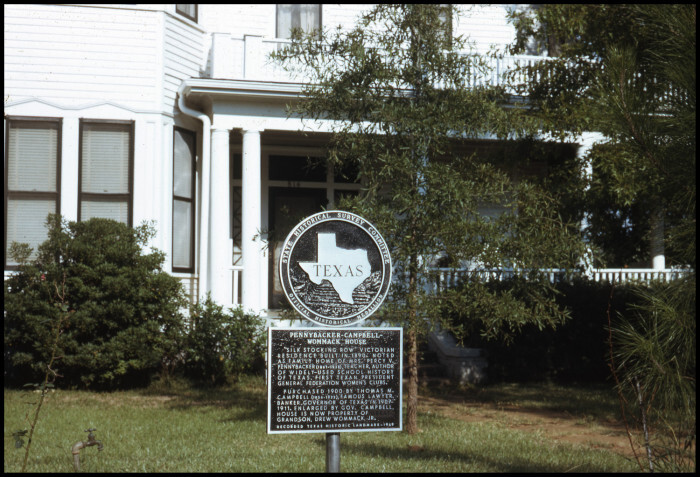
Historical markers are one of the most visible programs of the Texas Historical Commission. Found in all 254 counties, they commemorate historic events, organizations, individuals, and places of significance. Now through May 15, apply for a new Texas historical marker:
|