|
New STEM Toolkit Resource: STEM Fluency Skills One-Pager
STEM fluency skills encompass a range of abilities essential for success in science, technology, engineering, and mathematics fields. These include communication, creativity, critical thinking, collaboration, resilience, promptness, adaptability, time and materials management, and innovation. This one-pager explains what STEM fluency skills are and why they are important for success in STEM careers.
STEM Fluency Skills One Pager (PDF)
Previously Shared
Texas Mobile STEM Laboratory Application Window is Open
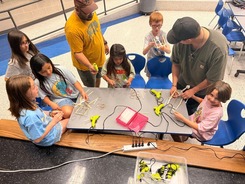
Through a partnership between the Texas Education Agency (TEA) and Learning Undefeated, the Texas Mobile STEM Lab will continue to provide STEM engagement opportunities for students during the 2026–2027 school year. Using custom-outfitted STEM learning spaces, the mobile labs offer engaging, hands-on educational experiences for kindergarten through grade 8 students and teachers. The application window is April 1, 2026, through May 29, 2026. All Texas public schools that offer classes for kindergarten through grades 8 are eligible to register for a free visit during the 2026–2027 school year. Apply on our STEM web page.

Texas EcosySTEM Professional Development
Statewide STEM Teacher Training (A TEALearn Badge can be earned for this training.)
This professional development prepares teachers for successful implementation of STEM instruction in their classrooms by immersing teachers directly in the role of STEM learner, engaging first-hand in high-impact STEM practices such as project-based learning, design-based challenges, and computational thinking.
|
Statewide STEM Leadership Training (A TEALearn Badge can be earned for this training.)
This immersive professional development prepares campus administrators to shape, support, and sustain STEM initiatives within their district or campus. Participants will learn by doing, engaging directly in the instructional approaches most critical to the STEM endeavor: project-based learning, design-based challenges, and computational thinking.
|
|