|
Thank you for subscribing to the TEA science newsletter. Today's newsletter provides information related to:
Updates Across the Agency:
- Science Assessment Resources Posted
- Texas Mobile STEM Lab Expansion
Additional information is included as a courtesy to educators:
- Texas Medical Association Science Teacher Awards
- NOAA Gulf of Mexico Data Atlas is Available
How helpful is the information in this newsletter?
TEKS in Focus highlights key concepts and student expectations to assist educators in implementing the science Texas Essential Knowledge and Skills (TEKS). A clear understanding of the changes taking place in science TEKS for the 2024 school year can directly impact student success. TEKS in Focus will highlight those changes along a vertical continuum from elementary school to high school for specific key concepts.
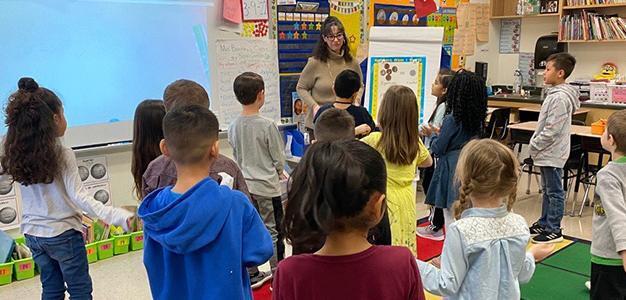
The elementary science TEKS for force and motion significantly increased rigor from previous TEKS, moving pushes and pulls with magnets to kindergarten and investigation of forces to grade 1. In middle school, each grade level focuses on one of Newton’s laws, and grade 8 investigates the three laws together. High school physics now studies Newton’s laws as separate student expectations, and Integrated Physics and Chemistry (IPC) studies the four fundamental forces. Download the full TEKS in Focus, October edition, for a complete view of the vertical changes within the study of force and motion.
Updates Across the Agency:
Science Assessment Resources Posted
The assessed curriculum documents, middle school reference materials, and blueprints are now available on the Science STAAR Resources page of the TEA website. These documents will be in effect for the Spring 2026 STAAR administration. The documents contain a “DRAFT” watermark to signify that they are not yet in effect. Once the 2024-2025 school year has concluded, the watermark will be removed, and these documents will replace the transition year documents.
For assessment questions, please use the Student Assessment Help Desk.
 |
|
Texas Mobile STEM Lab Expansion |
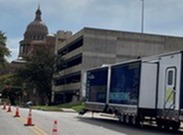
TEA is excited to announce that the Texas Mobile STEM Laboratory program is expanding to nine mobile units. Three labs will operate during the 2024-2025 school year, and the full nine-vehicle fleet will begin operating in 2025-2026. Click here to view the 2024-2025 campus selection.
Learning Undefeated has developed a wealth of STEM resources that are available on their website at no cost. Click here to access the free STEM engineering design challenges, which include TEKS-aligned K-8 STEM curriculum and lesson plans. We hope you find these resources useful when planning your STEM activities this upcoming school year.
Additional information included as a courtesy to educators:
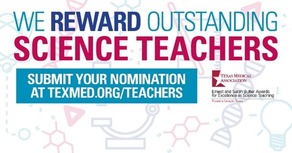
Texas Medical Association (TMA) Ernest and Sarah Butler Awards for Excellence in Science Teaching program is OPEN!
|
These awards honor K-12 private- and public-school teachers who share their energy and enthusiasm for science through creative and innovative methods to cultivate student interest in medicine and science. This year’s awards include the following:
- Grand Prize: One Texas science teacher will receive $20,000 plus a $5,000 school resource grant.
- Distinguished Awards: Three teachers (one at each level) will receive $7,000 and a $3,000 school resource grant.
- Rookie Award: A teacher with less than seven years’ experience will receive $5,000 and a $2,000 school resource grant.
TMA’s Board of Trustees oversees the annual Ernest and Sarah Butler Awards for Excellence in Science Teaching. Since 2009, TMA has collaborated with science curriculum experts at The University of Texas Charles A. Dana Center to review the applications and select winners.
All areas of science are welcome! Nominate or apply before Jan. 6, 2025, and learn more at www.texmed.org/Teachers! For questions or concerns, please contact SciTeacherAward@texmed.org.
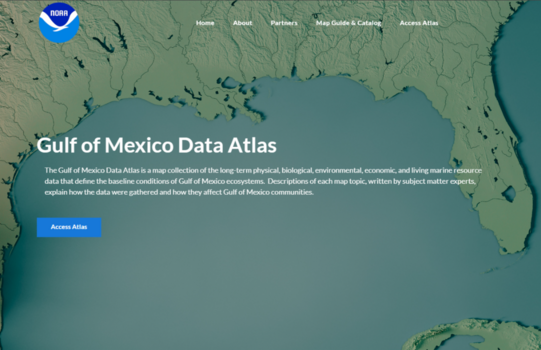 NOAA Gulf of Mexico Data Atlas
The Gulf of Mexico Data Atlas is an online, interactive data and map tool that allows users to view an extensive, growing collection of ecosystem-related datasets. It was developed in 2011 by NOAA's National Centers for Environmental Information (NCEI) and the Gulf of Mexico community. The Atlas provides over 200 map layers in over 60 subject areas resulting from collaborations between over 30 federal, state, non-governmental, and academic partners.
These links are provided by our colleagues in other parts of the Agency:
Student Assessment
Special Populations
Curriculum Standards and Student Support
|