|
Thank you for subscribing to the TEA science newsletter. Today's newsletter provides information related to:
Additional information included as a courtesy to educators:
- Science Near Me
- Discover STEM Walks with TalkSTEM
- NASA TechRise Student Challenge
- Center for the Success of English Learners (CSEL) Science
How helpful is the information in this newsletter?
TEKS In Focus
TEKS in Focus highlights key concepts and student expectations to assist educators in implementing the science Texas Essential Knowledge and Skills (TEKS). A clear understanding of the changes in science TEKS for the 2024 school year can directly impact student success. TEKS in Focus will highlight those changes along a vertical continuum from elementary school to high school for specific key concepts.
The key concepts related to forms of energy have undergone a few important changes. Early elementary grade levels each have a specific form of energy to study. Kinetic energy is formally introduced in middle school along with individual types of potential energy. Specificity regarding light energy was added to high school courses. Download the full TEKS in Focus, July edition, for a complete view of the vertical changes within the study of energy forms.
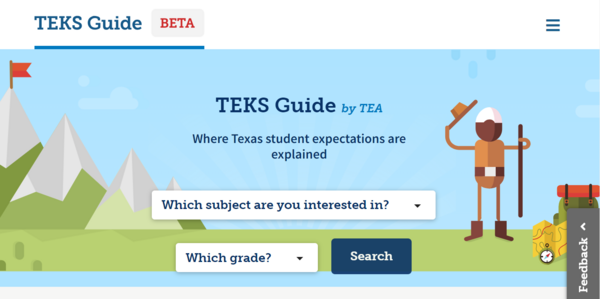
TEKS Guide 101 Recording is Now Available
The TEA Curriculum Science Team held TEKS Guide 101 webinars on June 6, June 21, and July 9. The recording of the July 9th session is available now on the TEA YouTube channel and the TEA Science webpage. The slide deck is also posted on the TEA Science webpage.
TEKS Guide Office Hours
The TEA Curriculum Science team will host office hours in early August on the following dates. TEA staff will respond to some common questions we’ve received from the field and be available for grade-band and role-specific questions and answers. While each date will focus on a specific grade band, please join us on any date you are available.
The remaining office hour sessions will be:
2024 CTE TEKS Review for Engineering Information
|
|
 |
The State Board of Education (SBOE) has begun the review and revision of Texas Essential Knowledge and Skills (TEKS) for a set of career and technical education courses for a new career cluster in engineering. The review includes courses from programs of study in engineering foundations, civil engineering, and mechanical and aerospace engineering.
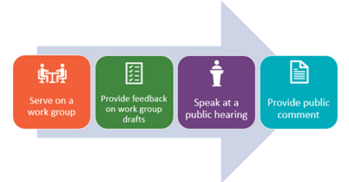
The SBOE’s TEKS review and revision process requires the direct participation of educators, parents, business and industry representatives, representatives from institutions of higher education, and employers. For more information and updates on the CTE engineering TEKS review, visit the 2024 CTE TEKS Review: Engineering web page.
Presidential Awards for Excellence in Math and Science Teaching (PAEMST) 2024-2025 Cycle Coming Soon
Do you know an experienced teacher worthy of national recognition? Are you doing great work that you want to share with others? The 41st cycle of the PAEMST awards program begins this fall. This year, the PAEMST awards will honor teachers of students in grades 7-12. Sign up to be notified when the window opens and be the first to nominate one or more of Texas’s greatest teachers, including yourself. Visit https://paemst.nsf.gov/.
Additional information included as a courtesy to educators:
 |
|
Science Near Me: Search for and Post STEM Opportunities and Events |
- Find STEM opportunities and events available in Texas
Use the “Search” function in the opportunity listing below to narrow your search to opportunities and events near you. Science Near Me is a free resource to help you quickly find opportunities to engage in all types of science, technology, engineering, and math (STEM) events, projects, and programs near you, in person and online.
- Register (and post) your STEM organization, opportunities, and events
Login or sign up to add an opportunity or organization to Science Near Me.
Discover STEM Walks with TalkSTEM: Empowering Teachers, Inspiring Students
TalkSTEM, a nonprofit organization, is dedicated to transforming STEM education. Talkstem provides free, high-quality materials for teachers to access video resources highlighting where can be found in a student’s surroundings. Educators can access the video library to enhance their lessons or create engaging STEM stop videos. The organization’s mission is to empower educators with the necessary tools to inspire the next generation of scientists, engineers, and innovators. Explore the world of STEM and make learning an adventure!
NASA TechRise Student Challenge |
|
 |
NASA is calling on middle and high school students to join the fourth NASA TechRise Student Challenge, which invites student teams to submit ideas for science and technology experiments to fly on a commercial high-altitude balloon. Students in grades 6–12 attending a U.S. public, private, or charter school — including those in U.S. territories — are challenged to team up with their schoolmates to design an experiment under the guidance of an educator. Administered by Future Engineers, the challenge offers participants hands-on insight into the payload design and suborbital flight test process, with the goal of inspiring a deeper understanding of space exploration, Earth observation, coding, electronics, and the value of test data. The challenge opens at the beginning of August, and teams should submit their experiment ideas by the challenge deadline on November 1, 2024.
A total of 60 winning teams will be selected to build their proposed experiment. Each winning team will receive $1,500 to build their experiment, a flight box to build it, and an assigned spot to test their experiment on a NASA-sponsored high-altitude balloon flight. Winning teams will also receive technical support from Future Engineers advisors, who will help students learn the skills needed to turn their experiment ideas into reality. No experience is necessary to join the NASA TechRise Challenge! To learn more about this exciting opportunity and how to get involved as a student, educator, or judge, visit the NASA TechRise Student Challenge page.
Center for the Success of English Learners (CSEL) Science
The Center for the Success of English Learners (CSEL) is a National Research and Development Center funded by the U.S. Department of Education, Institute of Education Sciences, to improve secondary education for English learners (ELs).
CSEL Science is hoping to recruit 4–6 science teachers at the 7th and/or 9th grade levels in each district that is interested in participating during the 2024–2025 school year. There is no cost for districts to participate; each participating teacher will receive a $1,800 stipend for implementing CSEL science methods for approximately 12 weeks.
The CSEL Science program focuses on developing the science knowledge and skills of secondary-level English learners and their English-proficient classmates. The methods used in CSEL have been validated as effective in experimental studies for both English learners and their English-proficient classmates. CSEL Science is aligned with state science standards and each district's scope and sequence.
For more information about CSEL Science, see the CSEL Science website. The information includes teacher and district benefits, teacher participation, science design principles, science resources, teacher testimonials, and teacher survey results.
As a further courtesy to our readers, here are links to materials provided by our colleagues in other parts of the Texas Education Agency.
Student Assessment
Special Populations
Curriculum Standards and Student Support
Thank you for your commitment to serving Texas students.
Science Team: Shawna Wiebusch, Liz Baker, and Carla Bailey
Curriculum Standards and Student Support Division help desk: https://helpdesk.tea.texas.gov/
Phone: 512-463-9581
|