|
Thank you for subscribing to the TEA science newsletter. Today's newsletter provides information related to:
- TEKS In Focus
- PAEMST Finalists Announced
- Instructional Materials Review and Approval (IMRA)
- Public Comment Requested on the Student Assessment Testing Calendar
- TEA Engagement Opportunities
Additional information is included as a courtesy to educators:
- Funding Opportunity from the National Academies of Science, Engineering, and Medicine
How helpful is the information in this newsletter?
 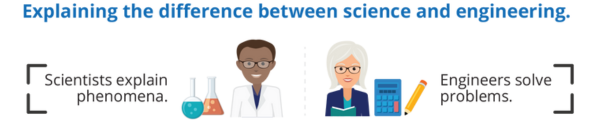 Each month, the TEKS in Focus feature will focus on concepts or student expectations from the 2024 Texas Essential Knowledge and Skills (TEKS). The new science TEKS introduce standards focused on bringing engineering into the science classroom. The table below highlights changes made to TEKS involving evaluating and communicating. The new expectations increase the variety of purposes for which students communicate and evaluate their findings. As scientists, students communicate and evaluate explanations of phenomena, and as engineers, students communicate and evaluate solutions to problems
Focus: Analyzing and Interpreting Data in Science TEKS
| |
Current Science TEKS
|
TEKS Implementing in 2024
|
|
Elementary
|
3.2.F communicate valid conclusions supported by data in writing, by drawing pictures, and through verbal discussion.
3.3.A analyze, evaluate, and critique scientific explanations by using evidence, logical reasoning, and experimental and observational testing;
|
3.3.B communicate explanations and solutions individually and collaboratively in a variety of settings and formats; and
3.3.C listen actively to others' explanations to identify relevant evidence and engage respectfully in scientific discussion.
|
|
Middle School
|
7.2.E analyze data to formulate reasonable explanations, communicate valid conclusions supported by the data, and predict trends.
7.3.A analyze, evaluate, and critique scientific explanations by using empirical evidence, logical reasoning, and experimental and observational testing, so as to encourage critical thinking by the student;
|
7.3.B communicate explanations and solutions individually and collaboratively in a variety of settings and formats; and
7.4.B make informed decisions by evaluating evidence from multiple appropriate sources to assess the credibility, accuracy, cost-effectiveness, and methods used; and
|
|
High School
|
BIO.2.H communicate valid conclusions supported by the data through methods such as lab reports, labeled drawings, graphic organizers, journals, summaries, oral reports, and technology-based reports.
BIO.3.A analyze, evaluate, and critique scientific explanations by using empirical evidence, logical reasoning, and experimental and observational testing, so as to encourage critical thinking by the student;
|
BIO.3.B communicate explanations and solutions individually and collaboratively in a variety of settings and formats; and
BIO.4.A analyze, evaluate, and critique scientific explanations and solutions by using empirical evidence, logical reasoning, and experimental and observational testing, so as to encourage critical thinking by the student;
|
Changes in Communicating and Evaluating Information
The new science TEKS broaden the formats that students will use to communicate and add attention to the settings where students share their findings. The new science TEKS also establish that students must communicate explanations and solutions and evaluate or critique explanations and solutions, emphasizing the communication purposes of scientists and engineers. While the TEKS have long called for students to evaluate and critique scientific explanations, they now call for evaluation of engineering designs. This reinforces the practice of iteration in scientific and engineering fields.
Adjusting Practice
Communication involves both sharing and receiving messages. Scientists and engineers share their findings and evaluate the findings of others through written, visual, and verbal formats. It is important for communication to be precise, clearly stated, and justified with evidence. Providing students with a Claim-Evidence-Reasoning frame can support them in sharing their findings. Using a variety of settings in the classroom and out of the classroom should be considered. Within the classroom, students can communicate individually, with a peer, a group, or the class. Out of the classroom, students may share their communications at a school event, for a local business or organization, or through a vetted website. Helping students to evaluate information for credibility begins with identifying relevant data. Students may use a Claim-Evidence-Reasoning frame to deconstruct an argument.
--------------------------------------------------------------------------------------------------
Purpose of TEKS in Focus: Each month, a concept or strand of student expectations is highlighted to enhance vertical TEKS alignment, rigor, and collective efficacy. The area of focus is not intended to suggest sequencing or pacing but rather to support an overall understanding of the changes to the TEKS. The information supplied can be considered when content is relevant to classroom needs.
Presidential Award for Excellence in Mathematics and Science Teaching (PAEMST)—Finalists
The Presidential Awards for Excellence in Mathematics and Science Teaching (PAEMST) awards are the nation's highest honors for teachers of mathematics, science, computer science, engineering, technology applications, and math- or science-related career and technical education courses. Awardees serve as models for their colleagues, inspiration to their communities, and leaders in improving mathematics and science education. Since 1983, more than 4,200 teachers have been recognized for their contributions in the classroom and to their profession.
The 2023-2024 review of applications for the PAEMST program is complete. This year’s cohort included kindergarten through grade 6 teachers of mathematics and science. Three finalists for each subject area were chosen to represent Texas in the national review. From the national review, one science and one mathematics teacher will be chosen as the 2023-2024 Texas awardees.
Presidential awardees receive a citation signed by the president of the United States, a trip to Washington, D.C., to attend a series of recognition events and professional development opportunities, and a $10,000 award from the National Science Foundation.
The three science finalists for 2023-2024 are:
-
Amber Chalmers, who teaches grade 5 science at Spring Houston Elementary School in Lancaster Independent School District, Lancaster, Texas
-
Kaya Jones, who teaches kindergarten through grade 5 students at Christie Elementary School in Plano Independent School District, Plano, Texas
-
Lindsey Leiker, who teaches grade 4 at Carolyn and Vernon Madden Elementary School in Fort Bend Independent School District, Sugar Land, Texas
Congratulations to Amber, Kaya, and Lindsey! We are proud of you and recognize the hard work and quality teaching you exemplify.
The 2024-2025 competition is scheduled to open in August 2024 for teachers of mathematics, science, computer science, engineering, technology applications, and math- or science-related career and technical education courses in grades 7 - 12. In Texas, eligible teachers who submit a completed application by the deadline will earn 25 hours of continuing professional education (CPE) credit. For more information, teachers can visit www.paemst.org or email tx_paemst@tea.texas.gov.
Instructional Materials Review and Approval (IMRA)
TEA seeks educators and subject-matter experts across Texas to serve as instructional materials reviewers for the new IMRA review process.
Selected reviewers will earn extra income while making a statewide impact. Reviewers will work in small teams to conduct quality reviews and collaborate with other educators to produce ratings and reports for assigned reading language arts, phonics, and mathematics products.
If you or your colleagues want to participate in the IMRA review process, please apply today! To learn more about the IMRA process, visit our website.
Development of the 2026–2027 Student Assessment Testing Calendar and Public Comments
A draft version of the 2026–2027 Student Assessment Testing Calendar has been posted on the Test Administration Resources webpage of the Texas Education Agency (TEA) website.
This calendar has minor changes to the format but maintains:
- two-week online testing windows for all State of Texas Assessments of Academic Readiness (STAAR®) assessments,
- the five-week testing window for STAAR Alternate 2, and
- the six-week testing window for the Texas English Language Proficiency Assessment System (TELPAS) and TELPAS Alternate.
TEA is accepting public comments on the draft version of the 2026–2027 Student Assessment Testing Calendar. Public comments on the draft calendar should be sent to Test.Calendar@tea.texas.gov by Friday, April 12, 2024.
If you have general questions about the Texas Assessment Program, contact TEA using the Student Assessment Help Desk.
Engagement Opportunities
We value our partners in the field and want to stay connected! Whether through site visits, review opportunities, or focus groups, we offer various ways for you to connect with TEA and contribute to the field of education. If you are interested in participating in engagement opportunities, fill out our interest form!
As a courtesy to our readers, the following additional information has been included.
Funding Opportunity from the National Academies of Science, Engineering, and Medicine: Empowering K-8 youth through place-based education
The National Academies of Sciences, Engineering, and Medicine’s Gulf Research Program is seeking proposals that engage children and youth in place-based educational activities that foster the development of scientific and environmental skills, competencies, and capabilities critical to solving complex issues in the Gulf of Mexico region now and in the future. Proposals will be accepted that support educational, service, and/or coordination activities for K-8 children and youth. Applications close April 10, 2024 @ 5pm Eastern Time.
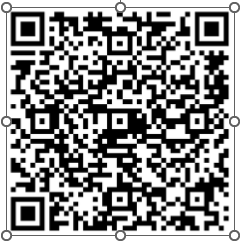
For more information and to review the full Request for Applications, please scan the QR code to visit the program website.
Thank you for your commitment to serving Texas students.
Science Team
Curriculum Standards and Student Support Division
Curriculum Help Desk
(512) 463-9581
|