|
Thank you for subscribing to the TEA science newsletter. Today's newsletter provides information related to:
- Newsletter Survey
- TEKS in Focus
- PAEMST - final call for applications
- PAEMST - call for National Selection Committee reviewers
- CTE TEKS Review - Engineering
- TXVSN courses
- Proclamation 2024 Update
- A Time Before Texas - Professional Development Opportunity
- Take Care of Texas Art Contest
How helpful is the information in this newsletter?
 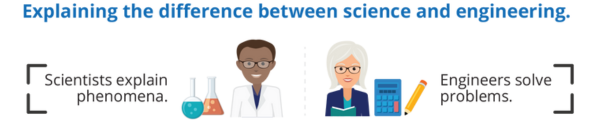 Each month, the TEKS in Focus feature will focus on concepts or student expectations from the 2024 Texas Essential Knowledge and Skills (TEKS). The new science TEKS introduce standards focused on bringing engineering into the science classroom. Students should be able to identify the differences between science and engineering purposes. The table below highlights changes made to TEKS involving analyzing and interpreting data. The new expectations increase the variety of purposes for which students analyze and interpret data; adding the expectation that students use data to compare and evaluate solutions to engineering problems. Engineers analyze data to determine how well a design fulfills criteria and compare designs for effectiveness and efficiency.
Focus: Analyzing and Interpreting Data in Science TEKS
| |
Current Science TEKS
|
TEKS Implementing in 2024
|
|
Elementary
|
4.2.C construct simple tables, charts, bar graphs, and maps using tools and current technology to organize, examine, and evaluate data;
4.2.D analyze data and interpret patterns to construct reasonable explanations from data that can be observed and measured;
|
4.2.B analyze data by identifying any significant features, patterns, or sources of error;
4.2.C use mathematical calculations to compare patterns and relationships; and
4.2.D evaluate a design or object using criteria.
|
|
Middle School
|
8.2.D construct tables and graphs, using repeated trials and means, to organize data and identify patterns; and
8.2.E analyze data to formulate reasonable explanations, communicate valid conclusions supported by the data, and predict trends.
|
8.2.B analyze data by identifying any significant descriptive statistical features, patterns, sources of error, or limitations;
8.2.C use mathematical calculations to assess quantitative relationships in data; and
8.2.D evaluate experimental and engineering designs.
|
|
High School
|
IPC.2.C collect data and make measurements with accuracy and precision;
IPC.2.D organize, analyze, evaluate, make inferences, and predict trends from data;
IPC.3.C draw inferences based on data related to promotional materials for products and services;
|
IPC.2.B analyze data by identifying significant statistical features, patterns, sources of error, and limitations;
IPC.2.C use mathematical calculations to assess quantitative relationships in data; and
IPC.2.D evaluate experimental and engineering designs.
|
Changes in Planning and Carrying Out Investigations
In science, students currently use data to support explanations of phenomena. The science TEKS to be implemented in 2024 expand student expectations to include using data to determine how well a solution meets the expected criteria and to compare solutions to problems as engineers. Key to distinguishing scientific practice from engineering design is the purpose of the work; scientists explain phenomena, and engineers solve problems related to phenomena. Both scientists and engineers must use a variety of tools to collect and analyze data, as well as use multiple representations of the data to support analysis and interpretation. Engineers use data analysis to determine how efficient and effective a solution is in regard to an engineering problem.
Adjusting Practice
Engineering problems have both criteria and constraints. For example, to address the need for clean drinking water while hiking in remote locations, an engineer might design a freshwater filtration that is lightweight, portable, and cost-effective while also filtering out harmful bacteria. The data collected from investigations allow engineers to compare designs for weight, portability, cost, and degree of filtration. As engineers, students will consider what needs their solutions should address. Some constraints and criteria may be provided by the teacher or developed in collaboration with the teacher prior to designing and testing solutions. Students will use the data collected to determine how well their design meets the criteria and constraints.
--------------------------------------------------------------------------------------------------
Purpose of TEKS in Focus: Each month, a concept or strand of student expectations is highlighted to enhance vertical TEKS alignment, rigor, and collective efficacy. The area of focus is not intended to suggest sequencing or pacing but rather to support an overall understanding of the changes to the TEKS. The information supplied can be considered when content is relevant to classroom needs.
Presidential Award for Excellence in Mathematics and Science Teaching (PAEMST)- Final call for applications
 Are you an innovative and passionate K–6 science, technology, engineering, and math (STEM) teacher?
You could receive the highest honor for a STEM teacher nationwide and a $10,000 prize! Don’t miss this opportunity! Apply before February 6, 2024!
Visit the Presidential Awards for Excellence in Mathematics and Science Teaching (PAEMST) website for more information.
In Texas, eligible teachers who submit a completed application by the application deadline (February 6, 2024) will receive 25 continuing professional education (CPE) hours.
 |
|
The National Science Foundation is looking for National Selection Committee Reviewers!
|
|
|
|
The National Science Foundation (NSF), the independent federal agency that administers the Presidential Awards for Excellence in Mathematics and Science Teaching (PAEMST) program, is seeking panelists for a National Selection Committee (NSC) that will review applications for the 2024 competition. This year’s NSC panelists will review applications from K-6th grade science, technology, engineering, and mathematics (STEM) teachers. The NSC will be conducted virtually, with no travel accommodations needed. As a panelist, you would complete independent reviews beginning April 1st, with panels tentatively taking place on one of the following dates:
- April 29-30, 2024
- May 2-3, 2024
- May 6-7, 2024
- May 9-10, 2024
If you are interested in serving as an NSC panelist for any of the above dates, please complete the online form by January 31, 2024.
CTE TEKS Review Work Group Application - Engineering
In 2024, the State Board of Education (SBOE) is scheduled to begin the review and revision of Texas Essential Knowledge and Skills (TEKS) for a set of career and technical education (CTE) courses for a new Engineering career cluster. The review will include courses for the following programs of study:
Engineering Foundations
- Engineering Design Process
- Introduction to Fluids
- Introduction to Mechanics of Materials
- Introduction to Statics
- Programming for Engineers
- Practicum in Engineering
Mechanical and Aerospace Engineering
- Aerospace Design I and II
- Mechanical Design I and II
Civil Engineering
- Construction Engineering and Management
- Civil Engineering I and II
- Surveying
The SBOE’s TEKS review and revision process requires the direct participation of educators, parents, business and industry representatives, and employers. The SBOE is now accepting applications for the 2024 CTE TEKS review engineering work groups. TEKS review work groups will convene in Austin for two to three face-to-face meetings which may include Saturdays. Additional days or virtual meetings may be scheduled if needed. TEA reimburses work group members for their travel and meal expenses. Work group members will be expected to complete an online orientation session and may be asked to complete pre-work exercises prior to their meetings. To access the application and more information regarding the 2024 CTE TEKS review for engineering, please visit the 2024 CTE TEKS Review: Engineering webpage at https://tea.texas.gov/academics/curriculum-standards/teks-review/2024-cte-teks-review-engineering.
The ideal applicant will have knowledge and experience in these specific engineering fields. We encourage educators to forward this information to qualified individuals within their networks. Interested individuals are encouraged to submit an application as soon as possible. Questions regarding the application or TEKS review process may be sent via email to teks@tea.texas.gov.
 |
|
Texas Virtual School Network (TXVN)
Do you have a student who needs a course that your school does not offer?
The Texas Virtual School Network (TXVSN) can help meet students’ needs through TEA-approved online courses. The TXVSN statewide course catalog provides schools and students access to high school, Advanced Placement, career and technical education, and dual credit courses for initial credit or credit recovery. The TXVSN courses are aligned to the Texas Essential Knowledge and Skills (TEKS) and taught by Texas-certified teachers trained in best practices in online instruction. Schools can use the TXVSN courses to create flexibility in a student’s schedule, allow a student to accelerate their learning, and address local teacher shortages. Students enrolled in a TXVSN course can generate funding regardless of whether the student is physically present at school while participating in the course. For more information about the courses offered through the TXVSN, please visit the TXVSN website or contact the TXVSN Help Desk.
|
Proclamation 2024 Update
The State Board of Education (SBOE) adopted instructional materials for Proclamation 2024 at the November meeting. The list of adopted materials and the TEKS Not Addressed report are available in the Proclamation 2024 section of the Proclamations webpage. The final Report of Required Corrections, cumulative Report of New Content, and the cumulative Report of Editorial Changes will be posted to the Proclamation 2024 section of the Proclamations webpage by the end of January. The changes or corrections on these three reports must be made by the publishers in the final versions of instructional materials provided to schools as a condition of adoption by the SBOE.
Texas Resource Review Science Reports
The science quality reviews conducted through the Texas Resource Review (TRR) are complete and the final reports are available on the TRR website. Quality reviews began in April 2023 with over 200 Texas science educators from across the state serving as reviewers. The final reports include:
Public comment requested on additional science instructional materials
The Substitutions and Content Updates webpage has been updated with requests by Proclamation 2024 publishers to update content in their adopted science materials.
The public is invited to review and comment on the proposed content changes. (NOTE: If you experience difficulties downloading this form, please check that Adobe is selected as your default PDF program. If you still have trouble opening the form, open your Downloads folder, right-click on the form, and select Open with and Adobe Acrobat.)
Please submit an Instructional Materials Help Desk ticket if you need assistance.
As a courtesy to our readers, the following additional information has been included.
 |
|
Take Care of Texas Art Contest |
The Texas Commission on Environmental Quality’s Take Care of Texas K–5 Kids Art Contest started January 3. The 2024 contest has a recycling theme. All artwork must depict positive ways to take care of the environment by recycling in addition to containing the phrase “Take Care of Texas” See the complete rules.
Contest sponsor Texas Chemical Council will award prizes to the creators of the best artwork and to the teacher with the most entries. The students that submit the best art can win a tablet or laptop.
Entries are accepted from January 3, 2024 to March 1, 2024.
Thank you for your commitment to serving Texas students.
Science Team
Curriculum Standards and Student Support Division
Curriculum Help Desk
(512) 463-9581
|